Cookstown Dental Centre
The Cookstown Dental Centre team caring for a patient in a treatment room

Cosmetic Dentistry · Cookstown

Assess the veneer and the tooth before planning a replacement.

A chipped, loose, or mismatched veneer needs an individual review. Compare repair and replacement, assess the tooth beneath, and coordinate shade and bite.

Request an appointment

Let’s find a time that works.

Need urgent dental help? Call (705) 291-2222.

Veneer Replacement in Cookstown

Replacing a veneer is a new clinical decision, not simply reordering a shell.

A veneer may need attention because it has chipped, loosened, developed a colour mismatch, or no longer meets your expectations. The visible problem can involve the veneer itself, its bond, the underlying tooth, or the way it meets other teeth. Age alone does not establish that every veneer needs replacement, and a cosmetic concern does not rule out a dental problem beneath the surface.

At Cookstown Dental Centre, we assess the restoration and supporting tooth before discussing the next step. Some localized issues may be considered for repair, while others require replacement or a different restorative plan. Removing an existing veneer can reveal limits or damage that affect the options. The consultation should explain those uncertainties, the desired appearance, and the care needed to reduce avoidable problems with any new restoration.


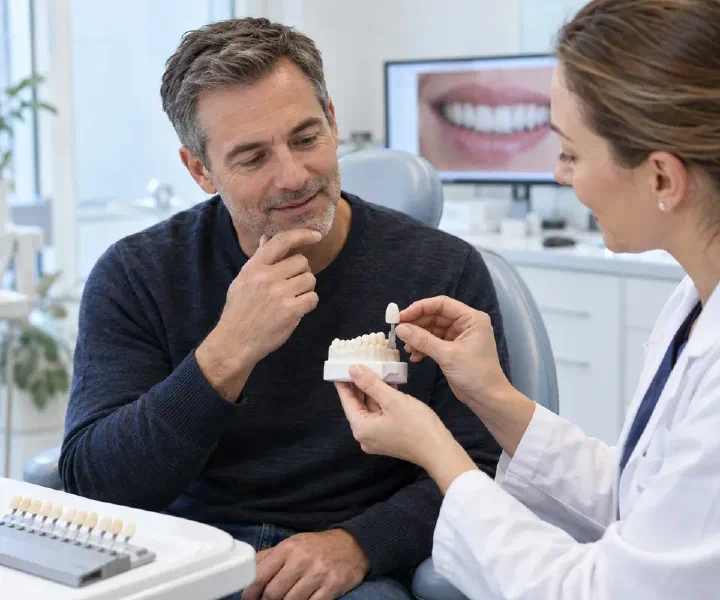
A dentist assessing an existing veneer with a patient and dental model

Planning together

Identify what has changed since the veneer was placed.

The history helps the dentist distinguish a material issue from a tooth, gum, or bite concern.

Chipping, cracks, or a loose veneer

Describe when the problem occurred and whether there was an injury or hard biting event. Save a detached piece if available and contact the clinic for advice. Do not glue it back yourself. The tooth and remaining restoration need assessment before deciding whether repair, rebonding, or replacement is appropriate.

A colour or gumline difference

A veneer may look different because of staining, a change in the underlying tooth, gum recession, or whitening of neighbouring teeth. The cause matters to the solution. Replacing the visible material alone may not address every colour concern, so the dentist examines the surrounding tissues and dental history as well.

Discomfort or a change in biting

Sensitivity, pain, food trapping, or an altered contact should be discussed separately from appearance. The clinician checks for underlying concerns and relevant bite findings. A new veneer should not be made solely to improve the front view while a symptom or damaging contact remains unexplained.

Understanding the options

Compare repair with a new restoration.

The condition of both the veneer and the tooth determines which options are reasonable.

A selected repair or other limited intervention

A small defect may sometimes be managed without removing the entire restoration. The dentist explains the expected appearance, durability, and limits of that choice. Repair can preserve existing structure in suitable cases, but it should not be used to conceal a larger failure or an underlying problem requiring treatment.

Replacement or a revised restorative approach

Replacement may be indicated when the defect, bond, tooth condition, or desired change cannot be managed adequately with a limited intervention. The remaining tooth may not always support the same design as before. Discuss the possibility of a different restoration if assessment or removal reveals a more extensive concern.

Care that fits

Coordinate the new veneer with the rest of the smile.

A replacement must fit the present mouth, which may differ from when the original veneer was made.

Shade, contour, and neighbouring restorations

Matching one veneer can be demanding because natural teeth and older dental work have different optical properties. Explain whether you want a close replacement or a broader change. If whitening is being considered, its timing should be coordinated before final shade decisions rather than after the new veneer has been selected.

Bite, habits, and future protection

Repeated chipping or debonding deserves a review of contacts and contributing habits. The clinician may discuss protection or a different restorative plan where appropriate. A replacement should not be promised to solve a recurring problem simply because it is new or made from a different material.

The appointment

Plan the replacement around the findings at each stage.

The sequence should leave room to reassess the tooth and confirm the proposed result.

  1. Examine and discuss the options

    The dentist reviews the veneer, tooth, gums, and relevant records. You discuss the main concern, alternatives, estimated stages, and uncertainties. If the condition beneath cannot be fully established until removal, understand how that could change treatment and cost before the procedure begins.

  2. Manage removal and any temporary stage

    When replacement is chosen, the clinician explains how the existing restoration will be managed and whether temporary coverage is needed. The tooth is reassessed as treatment proceeds. Report discomfort or temporary-restoration problems promptly rather than waiting for the definitive fitting if a new concern develops.

  3. Review appearance, contacts, and maintenance

    The final restoration is assessed for the agreed appearance and relevant function. Ask about cleaning, follow-up, and signs that need review. If you use a retainer or other appliance, its fit may need checking because the new veneer can change the surface it was designed to fit.

Frequently asked questions

Questions about veneer replacement

How long should a veneer last before replacement?

There is no universal replacement date. Material, tooth condition, bite, habits, and maintenance all influence service life. The dentist assesses the actual restoration rather than recommending removal solely because it has reached a particular age.

Can a chipped veneer be repaired?

Sometimes a localized repair is appropriate, depending on the material, defect, and tooth condition. Its appearance and durability may differ from replacement. The clinician explains the trade-offs and whether an underlying cause also needs attention.

Can a loose veneer simply be glued back on?

Professional rebonding may be considered in selected circumstances after assessing the tooth and restoration. Do not use household adhesives. A loose veneer can reflect a fit, bond, decay, or structural issue that must be understood before reattachment is attempted.

Will replacing one veneer match the others?

A close match may be possible, but existing materials and natural teeth can be difficult to reproduce exactly. Discuss the expected limits and shade process. Replacing every veneer is not automatically necessary, and each proposed replacement should have a clear reason.

Could I need a crown instead of another veneer?

Possibly, if the remaining tooth or underlying damage makes the previous design unsuitable. That is not inevitable. The dentist should explain the findings and alternatives, including any uncertainty that cannot be resolved until the existing veneer is removed.

Should I whiten before a veneer replacement?

If whitening is appropriate and desired, discuss it before final shade selection. Bleaching does not lighten the veneer like natural teeth. The dentist coordinates the timing so the replacement is planned around the intended surrounding colour.

Will my retainer fit over the new veneer?

It may need assessment or replacement because the tooth contour can change. Bring the appliance when requested and discuss retention before treatment. Do not force an old retainer over the new restoration or stop prescribed retention without a coordinated plan.

Real patient results

Before & after smile gallery.

Drag the centre line to compare each real case treated by our dental team. Every smile begins with a personal assessment and a plan shaped around the patient.

Areas We Serve

Neighbourhood dental care, close to home.

Located in Cookstown, Innisfil, our dental team welcomes patients from communities across South Simcoe, Barrie, and northern York Region.

Get directions
  • Cookstown
  • Innisfil
  • Simcoe
  • Lake Simcoe
  • Alcona
  • Stroud
  • Lefroy–Belle Ewart
  • Gilford
  • Churchill
  • Sandy Cove
  • Innisfil Heights
  • Fennell’s Corners
  • Bradford
  • Bradford West Gwillimbury
  • Bond Head
  • Newton Robinson
  • New Tecumseth
  • Alliston
  • Beeton
  • Tottenham
  • Adjala–Tosorontio
  • Everett
  • Loretto
  • Barrie
  • Essa
  • Thornton
  • Baxter
  • Angus
  • Egbert
  • Ivy
  • Utopia
  • York Region
  • East Gwillimbury
  • Queensville
  • Holland Landing
  • Sharon
  • Schomberg
  • Nobleton

Don’t see your community listed? Contact us—we regularly welcome patients from throughout the surrounding region.

Google reviews

Kind words from our patients.

Read what patients have shared about their visits to Cookstown Dental Centre.

A dentist having a friendly consultation with a patient in a bright dental clinic

Your next step

Ready to feel good about your next dental visit?

Whether you are new to the clinic or returning for care, our team is here to make booking simple and answer your questions.

Call Book Now WhatsApp

How can we help?

The Cookstown Dental team is here for you.

Need an appointment, have a question, or want to talk through your options? Choose the next step that works best for you.

Send us a note

We’ll get back to you as soon as we can.