Cookstown Dental Centre
The Cookstown Dental Centre team caring for a patient in a treatment room

Cosmetic Dentistry · Cookstown

Assess the space your teeth need before choosing an appliance.

Overlapping teeth need a space and bite assessment. Explore crowding severity, aligners and braces, cleaning concerns, and the decisions behind a treatment plan.

Request an appointment

Let’s find a time that works.

Need urgent dental help? Call (705) 291-2222.

Treatment for Crowded Teeth in Cookstown

Crowding is a space problem as well as a visible alignment concern.

When teeth overlap or rotate because they do not fit comfortably within the available space, the smile may look uneven and some surfaces may be harder to clean. The amount of visible overlap does not fully describe the problem. Tooth size, arch form, supporting tissues, and the way the upper and lower teeth meet all influence what can reasonably be changed.

At Cookstown Dental Centre, we assess the pattern of crowding and discuss your priorities before recommending a treatment route. A limited correction may suit some concerns, while others need comprehensive orthodontic planning or specialist input. Creating space involves clinical choices, not simply selecting the most discreet appliance. The proposal should explain those choices, their limits, and the retention needed after the teeth are moved.


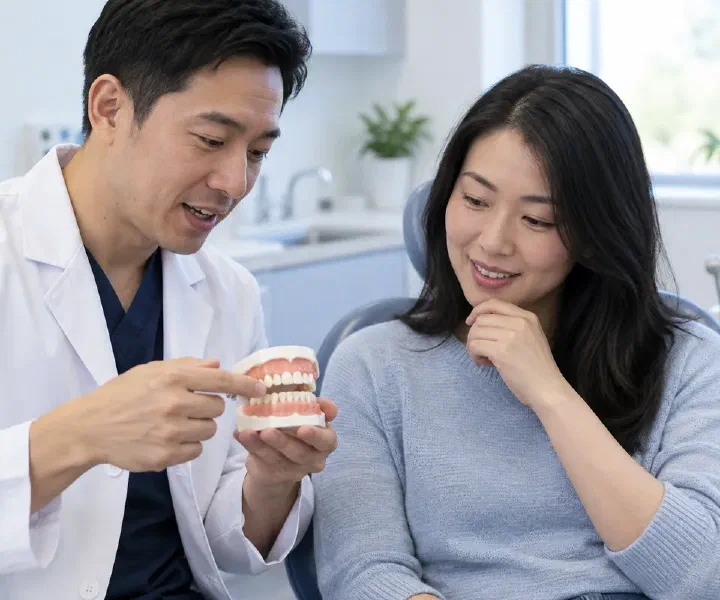
A dentist explaining a crowded tooth arrangement using a dental model

What we consider

Map the crowding before deciding how to create room.

A useful assessment looks beyond the most noticeable overlapping tooth.

Where the shortage of space occurs

Crowding can affect the front, the back, one arch, or several areas. The clinician assesses the whole pattern and how neighbouring teeth contribute. A single tooth that appears out of line may require movement elsewhere, so the treatment scope cannot be estimated reliably from that tooth alone.

How the teeth and jaws relate

The bite and the position of the teeth within supporting tissues influence available options. A plan that makes the front look straighter should also consider the resulting contacts. The clinician explains whether a broader relationship limits a small cosmetic correction or calls for an orthodontic specialist’s assessment.

Whether oral health is ready for movement

Gum condition, decay, restorations, and relevant symptoms are reviewed before active care. If crowded areas are difficult to clean, preventive support may be needed as part of preparation. Alignment should not begin on the assumption that moving the teeth will independently resolve every existing dental or gum concern.

Good to know

Space creation needs an individual explanation.

Different strategies have different limits. None should be assumed from the word crowding alone.

Movement within appropriate boundaries

Selected tooth movements may change how space is used, depending on the diagnosis and supporting structures. The clinician should explain the intended positions and why they are reasonable. A digital display that shows teeth fitting together does not by itself establish that every planned movement is suitable for the patient.

Additional procedures when indicated

Enamel reduction, extractions, or other measures may be discussed in some plans, but they are not automatic requirements for every crowded smile. Ask why a procedure is proposed, what alternatives were considered, and what compromise would result from avoiding it. Irreversible steps deserve a specific explanation and consent.

A limited goal with clear compromises

You may prefer to address a selected concern rather than the whole bite. That can only be considered after the limits are assessed. The plan should identify what remains unchanged and whether the smaller goal is clinically reasonable, rather than presenting partial alignment as equivalent to comprehensive correction.

Understanding the options

Choose the appliance around the movement required.

Appearance, daily responsibilities, and control of movement all belong in the comparison.

Clear aligner treatment

Aligners may be suitable for selected crowding patterns after assessment. They require prescribed wear, reviews, and sometimes attachments or other features. A removable appliance is not a shortcut around space planning. Ask how the proposed system addresses the actual rotations and contacts and what happens if progress differs from the plan.

Braces or specialist-led care

Another appliance or a specialist plan may be preferable for particular movements or more complex findings. The recommendation should explain the clinical reason, not simply describe one option as more traditional. Compare the expected scope, practical care, and limitations before choosing mainly on visibility or an advertised treatment time.

Practical guidance

Support the plan before, during, and after movement.

Daily care and follow-up influence whether the treatment remains manageable and the result can be maintained.

Improve access for cleaning now

Ask for a technique suited to overlapping surfaces instead of waiting for straightening to make cleaning easier. Plaque control remains important throughout treatment, and appliances can introduce new cleaning demands. Demonstration can help if floss or another interdental method is difficult to use in the crowded area.

Report appliance and bite changes

Attend reviews and explain poor fit, broken components, or unexpected discomfort. The clinician checks actual movement and relevant oral health findings. Do not adjust trays, attachments, or wires yourself to make a crowded tooth move faster or compensate for a stage that does not appear to fit.

Plan retention around the corrected position

Crowding can recur or change over time, so retention should be discussed before active treatment ends. Ask about design, wear, reviews, and replacements. A straighter appearance at the final visit is not a reason to assume the teeth will remain unchanged without ongoing support.

Frequently asked questions

Questions about treatment for crowded teeth

Can clear aligners treat crowded teeth?

They may be suitable for selected cases, but the amount and type of movement, bite, and supporting tissues matter. An assessment is needed before choosing the appliance. Some patterns benefit from a different approach or specialist planning.

Will I need teeth removed to make space?

Not necessarily. Space management is individualized, and extraction is only one possible consideration in certain plans. Ask why any irreversible step is recommended and what the alternatives would mean for the intended position, bite, and long-term result.

Can only the lower front teeth be straightened?

Sometimes a limited goal is reasonable, but both arches and their contacts still need assessment. Moving lower teeth can affect how they meet the upper teeth. The clinician explains whether an isolated approach is suitable and what it would leave unresolved.

Does crowding always cause gum disease?

No single alignment feature determines gum health. Crowding may make some surfaces harder to clean, but plaque control and other risk factors also matter. The dentist assesses your actual condition rather than treating straightening as a guaranteed cure or prevention for gum problems.

Is bonding an alternative to straightening crowded teeth?

Bonding changes shape rather than tooth position and can add bulk. It may address selected appearance concerns but is not interchangeable with orthodontics. The clinician can explain whether an additive approach would create acceptable contours and cleaning access in your case.

Why do my teeth look more crowded as I get older?

Tooth positions can change over time, including after previous orthodontic treatment. The pattern and supporting tissues need assessment, particularly if the change is recent or rapid. Bring old retainers and records if available rather than assuming one cause.

What keeps the teeth from overlapping again?

A prescribed retention plan helps support the result, along with ongoing reviews and oral health care. No appliance guarantees that change will never occur. Report fit problems early and clarify who will manage repairs or replacement after active treatment.

Real patient results

Before & after smile gallery.

Drag the centre line to compare each real case treated by our dental team. Every smile begins with a personal assessment and a plan shaped around the patient.

Areas We Serve

Neighbourhood dental care, close to home.

Located in Cookstown, Innisfil, our dental team welcomes patients from communities across South Simcoe, Barrie, and northern York Region.

Get directions
  • Cookstown
  • Innisfil
  • Simcoe
  • Lake Simcoe
  • Alcona
  • Stroud
  • Lefroy–Belle Ewart
  • Gilford
  • Churchill
  • Sandy Cove
  • Innisfil Heights
  • Fennell’s Corners
  • Bradford
  • Bradford West Gwillimbury
  • Bond Head
  • Newton Robinson
  • New Tecumseth
  • Alliston
  • Beeton
  • Tottenham
  • Adjala–Tosorontio
  • Everett
  • Loretto
  • Barrie
  • Essa
  • Thornton
  • Baxter
  • Angus
  • Egbert
  • Ivy
  • Utopia
  • York Region
  • East Gwillimbury
  • Queensville
  • Holland Landing
  • Sharon
  • Schomberg
  • Nobleton

Don’t see your community listed? Contact us—we regularly welcome patients from throughout the surrounding region.

Google reviews

Kind words from our patients.

Read what patients have shared about their visits to Cookstown Dental Centre.

A dentist having a friendly consultation with a patient in a bright dental clinic

Your next step

Ready to feel good about your next dental visit?

Whether you are new to the clinic or returning for care, our team is here to make booking simple and answer your questions.

Call Book Now WhatsApp

How can we help?

The Cookstown Dental team is here for you.

Need an appointment, have a question, or want to talk through your options? Choose the next step that works best for you.

Send us a note

We’ll get back to you as soon as we can.