Cookstown Dental Centre
The Cookstown Dental Centre team caring for a patient in a treatment room

Specialized Care · Cookstown

Treat jaw symptoms with a clear, conservative plan.

TMD treatment in Cookstown starts with identifying muscle and joint findings, then considers reversible care, symptom monitoring, and referral when needed.

Request an appointment

Let’s find a time that works.

Need urgent dental help? Call (705) 291-2222.

TMD Treatment in Cookstown

TMD describes a group of conditions, not one diagnosis.

Temporomandibular disorders can involve the jaw joints, the muscles used for chewing, or both. Pain, stiffness, limited movement, and some forms of locking can occur, but similar symptoms can also arise from dental disease or other medical problems. The first task is to understand which findings explain your symptoms rather than applying the same treatment to every sore or clicking jaw.

For many TMD concerns, care begins with reversible, conservative approaches and a review of how symptoms respond. The plan may include practical self-care, modifying aggravating habits, and selected additional treatment or referral. A painless click does not necessarily need treatment, and permanently changing the bite is not a routine way to manage TMD. The aim is better comfort and function with proportionate care, clear follow-up, and honest discussion of the limits of each option.


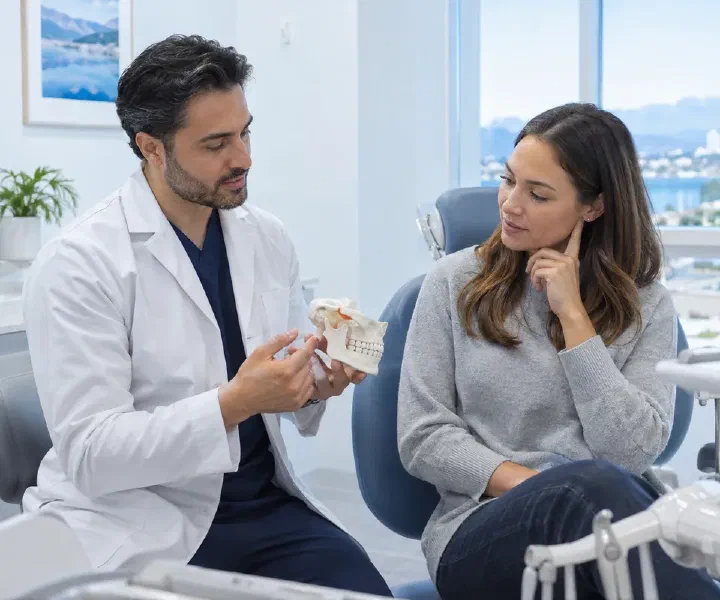
Dentist discussing jaw comfort and conservative TMD care with an adult patient

A closer look

Define the problem before choosing a treatment

The history and examination establish what is being treated and what needs a different pathway.

  1. Describe pain and movement together

    Tell the clinician where pain occurs, what brings it on, whether the jaw catches or locks, and how eating or speaking is affected. Previous injuries, dental treatment, habits, and symptom changes provide context. A sound alone does not tell us how damaged a joint is or whether an intervention will improve function.

  2. Consider other explanations

    The assessment may include teeth, gums, muscles, joints, and relevant medical symptoms. Infection, a painful tooth, nerve-related pain, or another condition can require different care. New severe symptoms or signs of systemic illness should not be labelled TMD simply because they occur near the jaw.

Practical guidance

A conservative starting point

The first plan should be understandable, practical, and reviewed rather than left open-ended.

Reduce aggravating loading for a period

Temporarily avoiding activities that clearly provoke pain, such as gum chewing or repeated wide opening, may help. Food choices can be adapted to comfort without assuming a permanently restricted diet is necessary. The clinician can guide a gradual return to normal function and advise when symptoms require another assessment.

Use gentle, individualized self-care

Awareness of daytime clenching and appropriate comfort measures may be useful, while specific exercises should be selected for the diagnosis. Avoid forceful stretching, repeated jaw manipulation, or internet routines that worsen symptoms. Self-care should reduce the burden of pain rather than turn into constant checking of every jaw movement.

Understanding the options

Consider additional treatments by their purpose

No single device or procedure is a universal answer for TMD.

A reversible appliance in selected circumstances

An appliance may be discussed for a defined reason, such as tooth protection, but evidence for pain benefit is limited and results vary. The design should avoid intentionally creating a permanent bite change. Persistent pain or a lasting change in tooth contacts during use warrants review rather than being accepted as a necessary stage of treatment.

Irreversible procedures need particular caution

Extensive tooth adjustment, orthodontic changes, or major restorative work should not be presented as routine cures for TMD. Surgical or other invasive approaches are reserved for selected circumstances after appropriate assessment. Ask what diagnosis supports the proposal, what alternatives exist, and what evidence and risks apply to your situation.

What we consider

When another clinician may help

Referral is based on the problem and its effect, not merely on how long you have tolerated it.

Persistent or complex pain

Symptoms that remain significant despite an appropriate initial plan may benefit from a clinician experienced in orofacial pain or another relevant discipline. The goal is to revisit the diagnosis and coordinate care. A referral should include useful history and previous treatment responses so you do not simply repeat the same unsuccessful approach.

Locking, major limitation, or other concerning findings

Marked restriction, a jaw stuck open, trauma, or a pattern suggesting another disease can need a different level of assessment. Imaging is selected when it can answer a relevant clinical question. Not every click needs a scan, but important changes should not be dismissed as ordinary tension without examination.

Planning together

Set goals that can be reviewed

Function and daily impact are often more useful than pursuing a completely silent joint.

Agree on a starting point

Record the main limitations, pain pattern, triggers, and any relevant movement findings. Goals may include more comfortable meals, less interference with work, or fewer episodes of restricted movement. A practical baseline makes it easier to tell whether the chosen care is helping without treating every occasional sound as a failure.

Reassess and adjust the plan

At review, discuss both improvement and any difficulty following the advice. The plan may be simplified, modified, or redirected if symptoms do not fit the original explanation. Medicines, sleep concerns, and broader pain conditions may need coordination with other healthcare professionals rather than independent changes to prescribed treatment.

Frequently asked questions

Questions about tmd treatment

What is the difference between TMJ and TMD?

TMJ refers to the temporomandibular joint itself. TMD refers to disorders affecting the jaw joints, chewing muscles, or related structures. Using the terms clearly helps distinguish the anatomy from a diagnosis that needs assessment.

Does a clicking jaw always need treatment?

No. Painless clicking without functional difficulty is common and may not need treatment. Pain, locking, changing movement, or a significant change in symptoms deserves assessment, but eliminating every sound is not automatically a useful treatment goal.

Can a nightguard cure TMD?

No appliance should be presented as a guaranteed cure. A selected device may have a defined role, but pain benefits vary and monitoring is important. Report worsening pain or a persistent bite change rather than continuing through significant symptoms.

Should my bite be permanently adjusted for jaw pain?

Permanent bite alteration is not a routine treatment for TMD. The diagnosis and conservative options should be considered first. A specific restoration problem is a separate question that requires its own clinical findings and explanation.

Will I need an MRI or another scan?

Not automatically. Imaging is considered when it is likely to answer a relevant question or change management. Many assessments begin with history and examination, while selected joint, trauma, or other concerns may justify further investigation.

Can I do jaw exercises I found online?

Exercises should match the diagnosis and your tolerance. Forceful stretching or repeated manipulation can worsen symptoms. Ask for individualized guidance and stop an activity that increases pain, locking, or restriction while seeking advice.

When should jaw symptoms receive urgent attention?

Breathing or swallowing difficulty, facial swelling with illness, significant trauma, or a jaw stuck open needs prompt appropriate assessment. Jaw discomfort with chest symptoms or breathlessness also requires urgent medical evaluation rather than assuming TMD.

Real patient results

Before & after smile gallery.

Drag the centre line to compare each real case treated by our dental team. Every smile begins with a personal assessment and a plan shaped around the patient.

Areas We Serve

Neighbourhood dental care, close to home.

Located in Cookstown, Innisfil, our dental team welcomes patients from communities across South Simcoe, Barrie, and northern York Region.

Get directions
  • Cookstown
  • Innisfil
  • Simcoe
  • Lake Simcoe
  • Alcona
  • Stroud
  • Lefroy–Belle Ewart
  • Gilford
  • Churchill
  • Sandy Cove
  • Innisfil Heights
  • Fennell’s Corners
  • Bradford
  • Bradford West Gwillimbury
  • Bond Head
  • Newton Robinson
  • New Tecumseth
  • Alliston
  • Beeton
  • Tottenham
  • Adjala–Tosorontio
  • Everett
  • Loretto
  • Barrie
  • Essa
  • Thornton
  • Baxter
  • Angus
  • Egbert
  • Ivy
  • Utopia
  • York Region
  • East Gwillimbury
  • Queensville
  • Holland Landing
  • Sharon
  • Schomberg
  • Nobleton

Don’t see your community listed? Contact us—we regularly welcome patients from throughout the surrounding region.

Google reviews

Kind words from our patients.

Read what patients have shared about their visits to Cookstown Dental Centre.

A dentist having a friendly consultation with a patient in a bright dental clinic

Your next step

Ready to feel good about your next dental visit?

Whether you are new to the clinic or returning for care, our team is here to make booking simple and answer your questions.

Call Book Now WhatsApp

How can we help?

The Cookstown Dental team is here for you.

Need an appointment, have a question, or want to talk through your options? Choose the next step that works best for you.

Send us a note

We’ll get back to you as soon as we can.