Cookstown Dental Centre
The Cookstown Dental Centre team caring for a patient in a treatment room

Specialized Care · Cookstown

Recognize clenching and reduce the strain it creates.

Teeth-clenching treatment in Cookstown considers daytime bracing, sleep-related activity, tooth damage, and jaw symptoms to build a practical, reversible care plan.

Request an appointment

Let’s find a time that works.

Need urgent dental help? Call (705) 291-2222.

Teeth-Clenching Treatment in Cookstown

Clenching can happen without the grinding sound.

Clenching involves holding the teeth together with force and may occur while awake or during sleep. Some people also brace the jaw without obvious tooth contact. You might first notice tired facial muscles, morning soreness, or repeated awareness that the teeth are pressed together during concentration. Those clues are useful, but they do not prove that clenching explains every headache, toothache, or jaw symptom.

Assessment considers the pattern of activity and any effects on teeth, restorations, muscles, and joints. The plan may combine awareness strategies, management of specific dental damage, and an appliance when there is a clear protective purpose. It should also consider other causes of pain and relevant sleep or medical concerns. Permanently changing the bite is not a routine solution for jaw symptoms attributed to clenching, and a guard should not be presented as a guaranteed way to stop the behaviour.


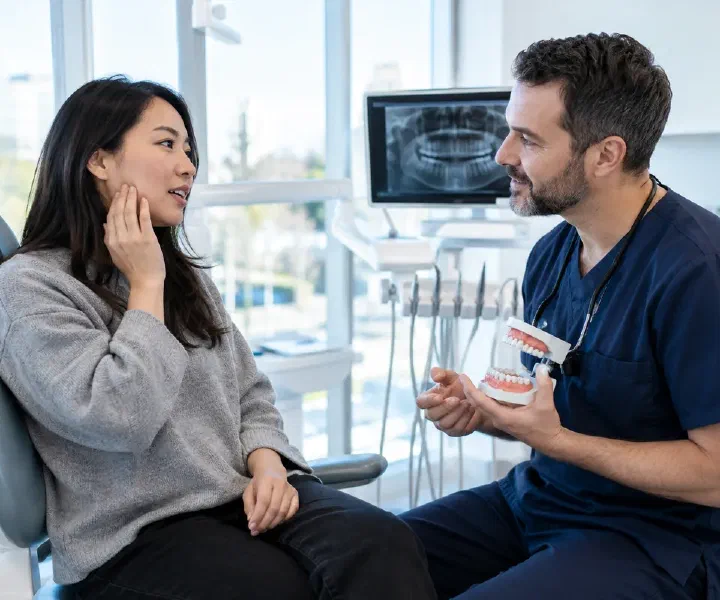
Dentist discussing daytime jaw clenching habits with a patient in a bright consultation room

Understanding the options

Awake and asleep are different patterns

Understanding when the activity occurs helps choose a useful intervention.

Clenching during concentration or stress

Daytime clenching may be noticed while driving, working, exercising, or using a screen. The useful starting point is identifying those moments without repeatedly testing the bite. Gentle reminders to release tooth contact and let the jaw rest can support awareness, alongside addressing practical triggers and avoiding forceful attempts to hold a “perfect” jaw position.

Activity during sleep

You may be unaware of sleep-related activity until a partner mentions it or symptoms prompt an assessment. Tooth wear alone does not prove that clenching is currently occurring every night. Sleep symptoms, medicines, and other factors may warrant medical discussion, while the dental plan focuses on the findings and realistic protective goals.

What we consider

Separate the activity from its effects

The examination asks both what may be happening and what actually needs treatment.

Teeth and restorations

The clinician checks for fractures, wear, tenderness, and restoration problems, while considering other contributors such as erosion or decay. A damaged tooth may need its own diagnosis and treatment rather than being explained away as clenching. The extent of damage also helps decide whether an appliance has a useful protective role.

Muscles, joints, and other pain sources

Jaw tenderness, movement, joint symptoms, and the history of pain are assessed together. Dental disease, other facial pain conditions, and medical causes may need consideration. A diagnosis should connect findings with symptoms rather than assume that muscle tension accounts for all discomfort simply because you acknowledge clenching during the day.

Practical guidance

Practical changes for daytime clenching

The aim is a manageable habit change, not continuous monitoring that adds tension.

Use brief, gentle awareness cues

A few reminders during activities linked with clenching can help you notice unnecessary tooth contact and release it. Avoid repeatedly squeezing to check whether the muscles are tense. If a cue increases preoccupation or discomfort, discuss another approach; the strategy should make the jaw’s workload easier rather than become another demanding task.

Reduce avoidable jaw loading

Chewing gum, biting objects, or repeatedly testing a sore tooth can add load to an already uncomfortable system. A temporary change in those habits may help while the cause is assessed. Significant pain, locking, or restricted opening needs clinical advice rather than forceful stretching or a self-directed exercise programme.

Good to know

Where a guard may help—and where it may not

A device should have a defined purpose and a way to judge whether it is suitable.

Protecting teeth from repeated contact

A custom appliance may be considered to protect vulnerable teeth or restorations when the findings support it. Its design, retention, and contacts need professional assessment. Protection does not mean the underlying muscle activity has stopped, and visible marks on the appliance do not by themselves measure the severity of a sleep disorder.

Monitoring comfort and the bite

Persistent jaw pain, tooth pressure, or a lasting bite change while using a device should be reported. An appliance should not be forced into use through significant symptoms. A general clenching or grinding guard is also not a substitute for a sleep apnea appliance or for medical assessment when sleep-related breathing concerns are present.

Step by step

Review whether the plan is helping

A useful follow-up looks at function and symptoms rather than promising complete elimination of every episode.

  1. Establish a practical baseline

    Record the main concern, when symptoms occur, and relevant tooth or restoration findings. The baseline might include comfort during eating, morning soreness, or awareness of daytime contact. This makes later review more meaningful than judging success only by whether you remember clenching once during a busy week.

  2. Adjust the plan when findings change

    If symptoms persist, the clinician revisits the diagnosis, appliance fit if applicable, and the practicality of self-care advice. Referral or medical coordination may be appropriate for a different pain or sleep concern. Medicines should not be stopped because clenching is suspected; discuss possible medication-related issues with the prescribing clinician.

Frequently asked questions

Questions about teeth-clenching treatment

Is clenching the same as grinding?

They are related forms of jaw-muscle activity, but clenching may involve sustained pressure without obvious sliding or noise. Both can occur while awake or asleep, and the assessment focuses on the pattern and its effects rather than sound alone.

Can I clench even when my teeth are not touching?

Some people brace or hold the jaw muscles tense without obvious tooth contact. Describe that experience during assessment. The clinician can consider muscle symptoms and other causes rather than limiting the discussion to visible tooth wear.

Will a nightguard stop me from clenching?

A guard may help protect teeth in an appropriate case, but it does not guarantee that muscle activity stops. Its purpose, fit, and effects on comfort and the bite should be reviewed rather than treating the device as a cure.

Does clenching explain all morning headaches?

No. Headaches can have several causes, and timing alone does not establish a dental source. Jaw symptoms may be part of the picture, but new, severe, or unusual headaches and relevant medical symptoms need appropriate medical assessment.

Should I change my bite to stop clenching?

Permanent bite changes are not a routine treatment for clenching-related jaw symptoms. An assessment should first identify the problem and consider reversible approaches. A specific damaged or high restoration is a separate clinical question requiring its own findings.

Can medicines contribute to clenching?

Medication history can be relevant, but do not stop or change a prescription yourself. Share the timing of symptoms with the dentist and prescribing clinician so any possible relationship can be evaluated within your overall medical care.

What should I do if a guard makes my jaw hurt?

Report persistent or worsening pain and follow the provider’s advice about use. The fit, design, jaw position, and other causes need review. Do not keep wearing or modifying it on your own in the hope that pain will inevitably settle.

Real patient results

Before & after smile gallery.

Drag the centre line to compare each real case treated by our dental team. Every smile begins with a personal assessment and a plan shaped around the patient.

Areas We Serve

Neighbourhood dental care, close to home.

Located in Cookstown, Innisfil, our dental team welcomes patients from communities across South Simcoe, Barrie, and northern York Region.

Get directions
  • Cookstown
  • Innisfil
  • Simcoe
  • Lake Simcoe
  • Alcona
  • Stroud
  • Lefroy–Belle Ewart
  • Gilford
  • Churchill
  • Sandy Cove
  • Innisfil Heights
  • Fennell’s Corners
  • Bradford
  • Bradford West Gwillimbury
  • Bond Head
  • Newton Robinson
  • New Tecumseth
  • Alliston
  • Beeton
  • Tottenham
  • Adjala–Tosorontio
  • Everett
  • Loretto
  • Barrie
  • Essa
  • Thornton
  • Baxter
  • Angus
  • Egbert
  • Ivy
  • Utopia
  • York Region
  • East Gwillimbury
  • Queensville
  • Holland Landing
  • Sharon
  • Schomberg
  • Nobleton

Don’t see your community listed? Contact us—we regularly welcome patients from throughout the surrounding region.

Google reviews

Kind words from our patients.

Read what patients have shared about their visits to Cookstown Dental Centre.

A dentist having a friendly consultation with a patient in a bright dental clinic

Your next step

Ready to feel good about your next dental visit?

Whether you are new to the clinic or returning for care, our team is here to make booking simple and answer your questions.

Call Book Now WhatsApp

How can we help?

The Cookstown Dental team is here for you.

Need an appointment, have a question, or want to talk through your options? Choose the next step that works best for you.

Send us a note

We’ll get back to you as soon as we can.