Cookstown Dental Centre
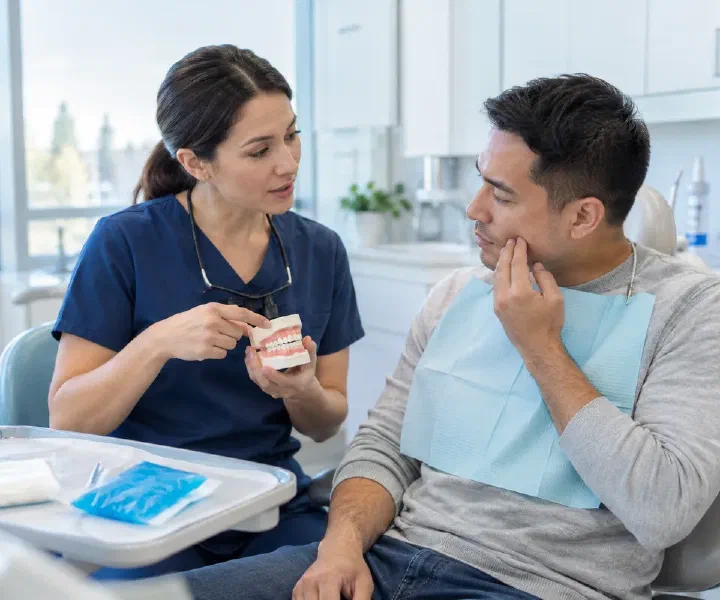
The Cookstown Dental Centre team caring for a patient in a treatment room

Specialized Care · Cookstown

Assess the wound and the injury behind it.

Soft-tissue dental injury care in Cookstown examines cuts to the lips, cheeks, gums, or tongue alongside bleeding, tooth damage, and possible trapped fragments.

Request an appointment

Let’s find a time that works.

Need urgent dental help? Call (705) 291-2222.

Soft-Tissue Dental Injury Treatment in Cookstown

A small cut can be part of a larger dental injury.

A fall, accidental bite, sharp object, or blow to the mouth can injure the lips, cheeks, tongue, or gums. Some wounds are shallow, while others are deeper, continue bleeding, or contain a fragment from a broken tooth. Swelling can make the injury difficult to judge, and the teeth or jaw may have been injured even when the soft-tissue wound is the most visible concern.

Assessment looks at the whole event: how it happened, when it occurred, whether bleeding is controlled, and whether there are signs of a head, facial, or dental injury. Gentle first aid may help while care is arranged, but a deep wound or a suspected embedded fragment should not be explored at home. Difficulty breathing, uncontrolled heavy bleeding, or significant head or facial trauma needs urgent medical attention rather than a routine dental appointment.


Dentist gently assessing an adult patient’s lip area after a minor mouth injury in a clean treatment room

Practical guidance

First steps while arranging care

Keep the response gentle and avoid making the wound more difficult to assess.

Control bleeding without probing the cut

For an accessible minor wound, gentle pressure with clean gauze or a clean cloth may help while you seek advice. Avoid repeatedly lifting the material to inspect the area or digging into the cut. Heavy bleeding that cannot be controlled, or blood affecting breathing, requires urgent medical assessment.

Protect the area from further injury

An external cold compress can help with swelling, with a barrier to protect the skin. Avoid harsh rinses, household adhesives, or substances placed directly into the wound. If there is a broken tooth fragment, keep it and bring it to the clinician rather than assuming all missing pieces have been safely accounted for.

Planning together

Details that change the assessment

The mechanism and the condition of the wound influence treatment planning.

How and when the injury happened

Describe a fall, collision, accidental bite, or object involved, including any possible contamination. Mention loss of consciousness, headache, vomiting, or other symptoms suggesting a head injury so appropriate medical care is considered. A dental wound should not distract from a more serious injury elsewhere.

Bleeding, medicines, and previous care

Tell the clinician whether bleeding has stopped, what first aid was used, and whether you take blood-thinning medicines or have a relevant medical condition. Do not stop prescribed medication yourself. If the wound may be contaminated, the clinician can advise whether medical review, including vaccination history where relevant, is needed.

A complete injury check

What the examination looks beyond the surface

The visible cut is assessed together with nearby teeth and structures.

Depth, location, and missing fragments

The clinician checks the wound margins, depth, tissue condition, and whether a foreign body or tooth fragment may be present. A cut through the lip or in a functionally important area may need a different approach from a small superficial injury. Imaging may be considered when it can help locate a suspected fragment.

Teeth, bite, and jaw function

Broken, displaced, tender, or loose teeth need assessment even if the soft tissue is the main source of bleeding. A changed bite or difficulty moving the jaw can indicate a broader injury. The examination should connect those findings with the accident rather than treating the wound as an isolated skin problem.

Understanding the options

Choosing wound care or further treatment

The appropriate setting depends on depth, contamination, location, and associated injuries.

When local care and monitoring may be enough

A minor wound with controlled bleeding and no concerning associated findings may be managed with cleaning advice and observation. The clinician explains how to keep the area comfortable and which changes should prompt review. The plan still includes any injured teeth, because soft-tissue healing does not establish that their internal tissues are unharmed.

When closure, exploration, or referral is needed

A deeper wound, persistent bleeding, embedded material, or an injury involving important structures may require additional treatment or referral. The clinician determines whether closure or specialist assessment is appropriate. Antibiotics and other medications are considered according to the wound and health history rather than prescribed automatically for every mouth cut.

Step by step

Healing and follow-up

The first appointment addresses the immediate injury; later review may address changes that emerge over time.

  1. Follow the wound-care instructions

    Use the cleaning, eating, and activity guidance provided for the actual wound. Avoid repeatedly stretching, biting, or testing the injured tissue. Ask whether stitches need removal and when a review is planned, especially if a tooth injury or a possible retained fragment was part of the assessment.

  2. Report worsening or unexpected symptoms

    Increasing swelling, discharge, persistent bleeding, fever, or pain that is not settling deserves a call. Difficulty breathing or swallowing requires urgent assessment. If a tooth later changes colour, becomes painful, or feels loose, arrange dental review even if the lip or gum wound has already healed.

Frequently asked questions

Questions about soft-tissue dental injury treatment

Do all cuts inside the mouth need stitches?

No. Small superficial wounds may heal with appropriate care, while deeper, gaping, or strategically located injuries may need closure or referral. An examination determines the approach rather than the amount of initial bleeding alone.

What if part of a broken tooth is missing?

Tell the clinician, especially if there is a lip or cheek wound. A fragment may be embedded or have gone elsewhere, and further assessment or imaging may be needed. Do not probe the wound yourself to search for it.

Can I use household glue to close a lip cut?

No. Household adhesives are not an appropriate substitute for wound assessment and can complicate treatment. Apply suitable gentle first aid and seek professional care for a deep, persistent, or concerning wound.

Should I stop blood thinners if the cut bleeds?

Do not stop prescribed medication independently. Use appropriate pressure while seeking advice and tell the clinician what you take. Uncontrolled heavy bleeding needs urgent assessment, with medication decisions coordinated by the responsible healthcare professionals.

Will antibiotics always be needed?

No. The decision depends on the wound, contamination, associated injuries, and medical history. Cleaning, closure when indicated, and follow-up may be more relevant than medication for a particular injury.

Why check the teeth if only my lip seems injured?

The same impact can damage teeth, supporting tissues, or the jaw without an obvious fracture. Some dental changes appear later, so an initial assessment and an appropriate follow-up plan help avoid overlooking an associated injury.

When should I go for urgent medical care?

Seek urgent help for breathing difficulty, uncontrolled heavy bleeding, a significant head or facial injury, or other serious symptoms. A dental appointment should not delay medical assessment when the injury may involve more than the mouth tissues.

Real patient results

Before & after smile gallery.

Drag the centre line to compare each real case treated by our dental team. Every smile begins with a personal assessment and a plan shaped around the patient.

Areas We Serve

Neighbourhood dental care, close to home.

Located in Cookstown, Innisfil, our dental team welcomes patients from communities across South Simcoe, Barrie, and northern York Region.

Get directions
  • Cookstown
  • Innisfil
  • Simcoe
  • Lake Simcoe
  • Alcona
  • Stroud
  • Lefroy–Belle Ewart
  • Gilford
  • Churchill
  • Sandy Cove
  • Innisfil Heights
  • Fennell’s Corners
  • Bradford
  • Bradford West Gwillimbury
  • Bond Head
  • Newton Robinson
  • New Tecumseth
  • Alliston
  • Beeton
  • Tottenham
  • Adjala–Tosorontio
  • Everett
  • Loretto
  • Barrie
  • Essa
  • Thornton
  • Baxter
  • Angus
  • Egbert
  • Ivy
  • Utopia
  • York Region
  • East Gwillimbury
  • Queensville
  • Holland Landing
  • Sharon
  • Schomberg
  • Nobleton

Don’t see your community listed? Contact us—we regularly welcome patients from throughout the surrounding region.

Google reviews

Kind words from our patients.

Read what patients have shared about their visits to Cookstown Dental Centre.

A dentist having a friendly consultation with a patient in a bright dental clinic

Your next step

Ready to feel good about your next dental visit?

Whether you are new to the clinic or returning for care, our team is here to make booking simple and answer your questions.

Call Book Now WhatsApp

How can we help?

The Cookstown Dental team is here for you.

Need an appointment, have a question, or want to talk through your options? Choose the next step that works best for you.

Send us a note

We’ll get back to you as soon as we can.