Cookstown Dental Centre
The Cookstown Dental Centre team caring for a patient in a treatment room

Specialized Care · Cookstown

Replace the device around today’s needs.

Sleep appliance replacement in Cookstown considers wear, changing teeth, fit, and current sleep treatment before new records, fitting, and follow-up are planned.

Request an appointment

Let’s find a time that works.

Need urgent dental help? Call (705) 291-2222.

Sleep Appliance Replacement in Cookstown

A replacement is an opportunity to reassess, not simply duplicate.

A sleep appliance may eventually need replacement because of wear, damage, repeated repairs, changes in the teeth, or a treatment need that the existing design no longer meets. There is no single replacement date that fits every device. A review of the appliance and the mouth helps determine whether repair, adjustment, or a new device is the more appropriate choice.

The medical plan also matters. An appliance made several years ago may have been based on a different dental condition, symptom pattern, or treatment setting. Replacement should reconnect those details with current care rather than copying the old device without review. If a new appliance is selected, updated records, fitting, guided adjustment, and follow-up remain important. The aim is a device that suits your present oral condition and can be evaluated within the ongoing sleep-treatment plan.


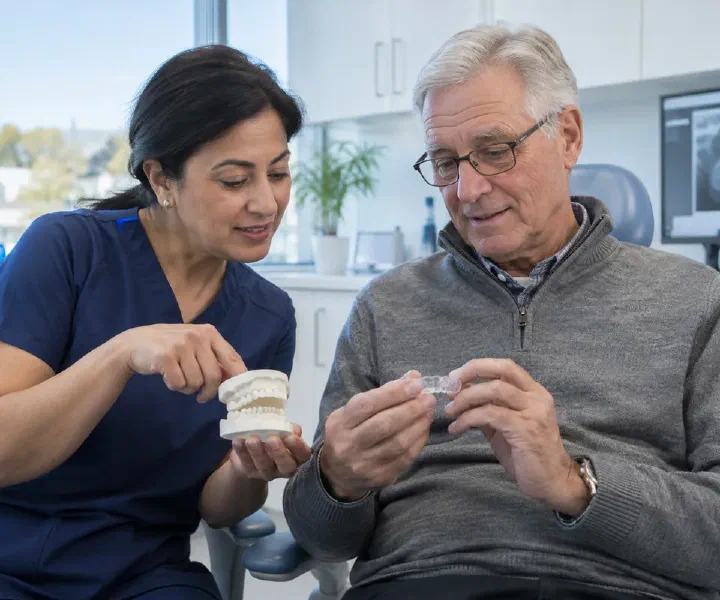
Older adult holding a clear sleep appliance while a dentist explains replacement options with a dental model

Understanding the options

Why replacement is being considered

Understanding the reason helps decide whether a new device will solve the actual problem.

The appliance has reached a practical limit

Material breakdown, repeated fractures, poor retention, or unavailable components may make further repair less worthwhile. The clinician should explain which finding limits continued use. Age alone is not enough to describe the problem, and a newer device is not automatically better if the existing appliance remains suitable and functioning properly.

The mouth or treatment needs have changed

New crowns, missing teeth, periodontal changes, or a different medical treatment plan can alter what the appliance must do. A device that once fitted well may now load the wrong areas or fail to seat. Replacing it without understanding those changes risks reproducing the same discomfort or retention problem.

Planning together

Review the old device before ordering the new one

Its history can identify useful features and problems that should not be repeated.

What worked in daily use

Bring the old appliance and describe comfort, handling, cleaning, travel, and how consistently you could use it. Explain which features helped and which made treatment difficult. Practical experience can inform design discussions, while the clinician still needs to assess which options are appropriate for the teeth, jaw, and medical recommendation.

What happened medically and dentally

Provide recent sleep reports, current treatment details, and a list of significant dental changes. Mention renewed sleep symptoms, jaw pain, or a lasting bite change. The replacement plan should identify whether further dental treatment or medical reassessment is needed before records are taken or a new device is ordered.

Step by step

Building a replacement around current findings

The sequence protects against making a new appliance for an unstable situation.

  1. Confirm suitability and complete necessary care

    The clinician reassesses tooth support, gum health, restorations, jaw function, and the bite. Active disease or imminent restorative changes may need attention first. If oral support has become less suitable, the next step may be a different design, specialist input, or reconsideration of the medical treatment options rather than another identical appliance.

  2. Take updated records and agree on the design

    New impressions or scans and jaw records reflect the present mouth. The proposed device, expected limitations, cost, and follow-up should be explained before ordering. Previous settings are useful history, but they are not automatically transferable between designs or appropriate after significant oral or medical changes.

  3. Fit, adjust, and assess the result

    The replacement is checked for seating, retention, comfort, and safe handling, followed by the prescribed adjustment process. The medical team determines how effectiveness should be verified. A new device that feels familiar still needs review because its mechanics and the condition of the mouth may differ from the previous appliance.

Good to know

Plan the transition between devices

Avoid an unexplained gap in treatment or unsafe use of the old appliance.

Whether the old appliance can still be used

The provider should assess its condition before recommending continued wear during fabrication. A broken or poorly fitting device may not be appropriate, even if it is the only appliance available. Do not force it onto changed teeth or use a loose component while waiting for the replacement to arrive.

How sleep treatment continues meanwhile

If appliance use is interrupted, coordinate with the clinician managing your sleep condition. The appropriate interim approach depends on the medical situation and existing treatments. Do not independently stop CPAP or substitute a general nightguard, and ask who to contact if the fabrication timeline changes or symptoms worsen.

Planning together

Protect the value of the replacement

The new device needs a maintenance plan as well as a delivery appointment.

Keep records and care instructions

Retain the model information, setting history, provider details, and cleaning guidance. Use the recommended products and storage method rather than assuming the new material tolerates the same routine as the old device. Bring the appliance to reviews and tell your dentist about it before restorations or extractions are planned.

Report fit and bite changes early

Persistent tooth pressure, jaw pain, a lasting bite change, or poor seating should be assessed. Early review may allow a focused correction before the device becomes difficult to use. Periodic dental checks and medical follow-up remain important even if the replacement is comfortable and your partner reports less snoring.

Frequently asked questions

Questions about sleep appliance replacement

How many years should a sleep appliance last?

There is no universal lifespan. Material, design, handling, wear, repairs, and changes in the mouth all matter. A clinical review can determine whether the device remains suitable or whether repair, adjustment, or replacement is more appropriate.

Can you simply copy my old appliance?

The old device provides useful information, but the mouth and treatment needs should be reassessed. Updated records may be needed, and a setting from one design should not automatically be transferred to another without clinical review.

Do I need new impressions or scans?

Often, updated records are appropriate because teeth, restorations, and tissue support can change. The clinician decides what information is needed to make a replacement that fits the current mouth rather than reproducing an outdated shape.

Will replacement solve discomfort from the old device?

It may help when the cause is an unsuitable or damaged appliance, but pain can have other causes. The assessment should identify the problem first so a new device does not reproduce the same pressure or jaw symptoms.

Can I use the old appliance while waiting?

Only if the provider considers its condition and fit suitable. A cracked device, loose part, or appliance that no longer seats may be unsafe or harmful. Ask for an interim treatment plan if continued wear is not appropriate.

Will the new appliance need sleep testing?

The medical team determines the follow-up testing needed to evaluate effectiveness. A replacement may differ in design or setting, so comfort and a familiar appearance alone do not establish that it provides the same therapeutic result.

What if my dental health no longer supports an appliance?

The clinician can discuss whether preparatory treatment, a different approach, or referral is appropriate. The sleep-care team should also be involved so medical treatment continues through a suitable alternative rather than an unsupported device choice.

Real patient results

Before & after smile gallery.

Drag the centre line to compare each real case treated by our dental team. Every smile begins with a personal assessment and a plan shaped around the patient.

Areas We Serve

Neighbourhood dental care, close to home.

Located in Cookstown, Innisfil, our dental team welcomes patients from communities across South Simcoe, Barrie, and northern York Region.

Get directions
  • Cookstown
  • Innisfil
  • Simcoe
  • Lake Simcoe
  • Alcona
  • Stroud
  • Lefroy–Belle Ewart
  • Gilford
  • Churchill
  • Sandy Cove
  • Innisfil Heights
  • Fennell’s Corners
  • Bradford
  • Bradford West Gwillimbury
  • Bond Head
  • Newton Robinson
  • New Tecumseth
  • Alliston
  • Beeton
  • Tottenham
  • Adjala–Tosorontio
  • Everett
  • Loretto
  • Barrie
  • Essa
  • Thornton
  • Baxter
  • Angus
  • Egbert
  • Ivy
  • Utopia
  • York Region
  • East Gwillimbury
  • Queensville
  • Holland Landing
  • Sharon
  • Schomberg
  • Nobleton

Don’t see your community listed? Contact us—we regularly welcome patients from throughout the surrounding region.

Google reviews

Kind words from our patients.

Read what patients have shared about their visits to Cookstown Dental Centre.

A dentist having a friendly consultation with a patient in a bright dental clinic

Your next step

Ready to feel good about your next dental visit?

Whether you are new to the clinic or returning for care, our team is here to make booking simple and answer your questions.

Call Book Now WhatsApp

How can we help?

The Cookstown Dental team is here for you.

Need an appointment, have a question, or want to talk through your options? Choose the next step that works best for you.

Send us a note

We’ll get back to you as soon as we can.