Cookstown Dental Centre
The Cookstown Dental Centre team caring for a patient in a treatment room

Specialized Care · Cookstown

Keep sleep treatment and oral health under review.

Sleep appliance follow-up in Cookstown checks comfort, tooth support, bite changes, device wear, and the need to reconnect with your sleep-care clinician.

Request an appointment

Let’s find a time that works.

Need urgent dental help? Call (705) 291-2222.

Sleep Appliance Follow-Up in Cookstown

A comfortable appliance still needs periodic assessment.

Once a sleep appliance becomes part of your routine, it is easy to judge it mainly by whether you can sleep with it. Comfort matters, but it is only one part of follow-up. Teeth and gums can change, components can wear, and the jaw or bite may respond differently over time. Meanwhile, changes in weight, health, or sleep symptoms may require medical reassessment.

Follow-up therefore connects two responsibilities: the dental provider monitors the appliance and the mouth, while the sleep-care clinician oversees the medical treatment and appropriate testing. A previous satisfactory result does not eliminate the need to report new symptoms. The review is a chance to identify small fit or cleaning problems, document changes, and decide whether continued use, adjustment, repair, or further medical evaluation is appropriate.


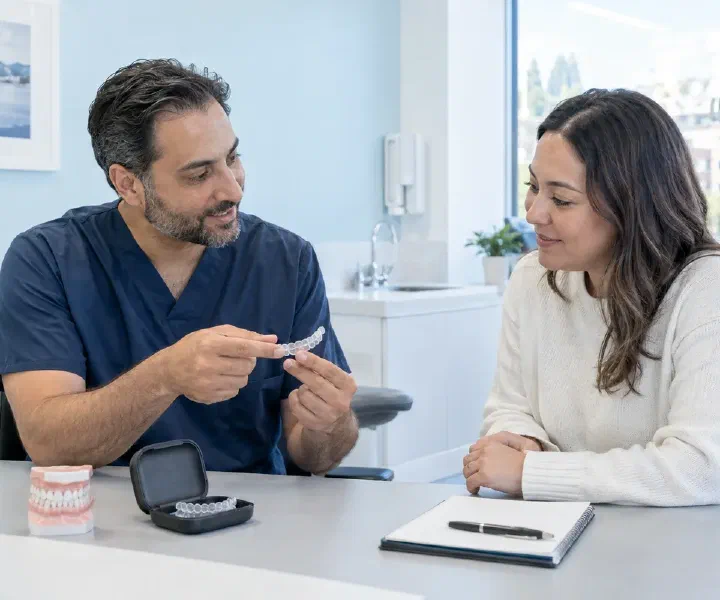
Dentist checking a patient’s sleep appliance and discussing ongoing comfort and follow-up

What we consider

What the dental review checks

The mouth and the device are assessed together because either can change the treatment experience.

Teeth, gums, and bite contacts

The clinician looks for pressure-related problems, changes in tooth stability, gum inflammation, and differences in how the teeth meet. Baseline records help interpret these findings. New fillings, crowns, extractions, or periodontal treatment should be discussed because an appliance made for an earlier dental condition may no longer fit or load the teeth appropriately.

Appliance condition and jaw comfort

Retention, seating, adjustment mechanisms, wear, and damage are checked alongside jaw movement and symptoms. A device can look acceptable in its case but behave differently when worn. Tell the clinician about pain, restricted opening, or morning symptoms so the review addresses function rather than only inspecting the plastic and hardware.

Practical guidance

Bring the information that affects the next decision

A useful review includes both regular use and the reasons for missed use.

Your actual experience with the appliance

Describe how often you use it, whether it stays in place, and what makes use difficult. Dryness, handling problems, travel, pressure, or discomfort may have practical solutions. An honest account helps the provider improve the plan; it is more useful than reporting ideal use while leaving an important obstacle unexplained.

Changes in health and sleep symptoms

Share new diagnoses, weight changes, medicines, daytime sleepiness, and observations of snoring or breathing pauses. These may need review by the medical team even if the appliance still fits. A dental adjustment cannot be assumed to address every change in sleep health, so the information should reach the clinician managing the condition.

Understanding the options

Dental follow-up and sleep testing answer different questions

Both can be necessary even when you feel better.

What the dental appointment can establish

The visit can assess oral suitability, fit, comfort, device integrity, and potential dental side effects. It can also support prescribed adjustments and identify a need for repair or replacement. These findings are important, but they do not measure whether airway obstruction is adequately controlled throughout sleep.

What medical reassessment adds

The sleep-care clinician determines the need for follow-up testing and reviews the broader medical treatment. Objective results can show whether the appliance is meeting its purpose at the current setting. Symptom improvement and partner reports support the discussion, but they should not be used alone to declare sleep apnea successfully treated.

Step by step

When a review identifies a problem

The response should match the cause rather than defaulting to more advancement.

  1. Address the oral or mechanical issue

    A pressure point, worn connector, new restoration, or changing gum support may require different action. The provider may adjust fit, arrange repair, recommend dental treatment, or discuss replacement. If a device is damaged or unsafe to wear, ask for clear instructions about use and how to coordinate an interim sleep-treatment plan.

  2. Confirm the effect of the change

    After a modification, the appliance should be checked in the mouth and symptoms reviewed. Significant setting or treatment changes may also require medical follow-up. Keep records of the device and setting so later clinicians can understand what changed rather than reconstructing the history from an unlabelled appliance alone.

Planning together

Between scheduled reviews

Contact the team when something changes instead of waiting for the calendar.

Oral changes worth reporting

Persistent jaw pain, a lasting bite change, loose teeth, a device that no longer seats, or a broken component needs review. Do not force the appliance or repair it with household glue. A new crown or other dental procedure may justify a fit check even when the sleep treatment itself has not changed.

Sleep changes worth sharing

Renewed symptoms, witnessed breathing pauses, or increasing daytime sleepiness should reach the medical team. Do not independently stop prescribed therapy or substitute a general nightguard. If appliance use is interrupted, the responsible clinicians can help determine an appropriate temporary approach while the dental issue is resolved.

Frequently asked questions

Questions about sleep appliance follow-up

How often should a sleep appliance be reviewed?

The schedule depends on the treatment stage, oral findings, device, and medical plan. Early titration may need closer review, followed by periodic monitoring. Contact the provider sooner when symptoms, fit, or health circumstances change.

Do I need reviews if I no longer snore?

Yes. Quieter sleep does not prove that apnea is controlled, and it does not reveal dental side effects or device wear. Both dental monitoring and the medical follow-up plan remain relevant even when symptoms seem improved.

Can the appliance gradually change my bite?

Changes in tooth contacts can occur and should be monitored. Report a bite that remains different after removal or a new difficulty chewing. The provider can compare baseline findings and decide whether the device or treatment plan needs adjustment.

Should I bring the appliance to routine dental appointments?

Bring it to planned appliance reviews and tell your dental team that you use it when other treatment is considered. New restorations or changes in tooth support can affect fit and may require coordination with the appliance provider.

What if I have stopped using it because it hurts?

Tell both the dental provider and the clinician managing your sleep condition. The pain needs assessment, and the interruption may require an interim medical treatment plan. Do not simply resume at a more advanced setting or force the device into place.

Does a previous successful sleep test mean no further testing is needed?

Not necessarily. Changes in symptoms, health, weight, treatment, or the device may prompt reassessment. The medical team determines testing needs; a past result is useful history rather than a guarantee of unchanged effectiveness indefinitely.

When should the device be replaced?

Replacement depends on condition, fit, component availability, dental changes, and treatment needs rather than a universal expiry date. A review can distinguish a repairable problem from a situation where a new device or a different treatment approach is more appropriate.

Real patient results

Before & after smile gallery.

Drag the centre line to compare each real case treated by our dental team. Every smile begins with a personal assessment and a plan shaped around the patient.

Areas We Serve

Neighbourhood dental care, close to home.

Located in Cookstown, Innisfil, our dental team welcomes patients from communities across South Simcoe, Barrie, and northern York Region.

Get directions
  • Cookstown
  • Innisfil
  • Simcoe
  • Lake Simcoe
  • Alcona
  • Stroud
  • Lefroy–Belle Ewart
  • Gilford
  • Churchill
  • Sandy Cove
  • Innisfil Heights
  • Fennell’s Corners
  • Bradford
  • Bradford West Gwillimbury
  • Bond Head
  • Newton Robinson
  • New Tecumseth
  • Alliston
  • Beeton
  • Tottenham
  • Adjala–Tosorontio
  • Everett
  • Loretto
  • Barrie
  • Essa
  • Thornton
  • Baxter
  • Angus
  • Egbert
  • Ivy
  • Utopia
  • York Region
  • East Gwillimbury
  • Queensville
  • Holland Landing
  • Sharon
  • Schomberg
  • Nobleton

Don’t see your community listed? Contact us—we regularly welcome patients from throughout the surrounding region.

Google reviews

Kind words from our patients.

Read what patients have shared about their visits to Cookstown Dental Centre.

A dentist having a friendly consultation with a patient in a bright dental clinic

Your next step

Ready to feel good about your next dental visit?

Whether you are new to the clinic or returning for care, our team is here to make booking simple and answer your questions.

Call Book Now WhatsApp

How can we help?

The Cookstown Dental team is here for you.

Need an appointment, have a question, or want to talk through your options? Choose the next step that works best for you.

Send us a note

We’ll get back to you as soon as we can.