Cookstown Dental Centre
The Cookstown Dental Centre team caring for a patient in a treatment room

Restorative Dentistry · Cookstown

Understand the cause before planning another dental implant.

A failing implant needs a diagnosis before replacement is considered. Explore support loss, removal decisions, site healing, alternatives, and a revised treatment plan.

Request an appointment

Let’s find a time that works.

Need urgent dental help? Call (705) 291-2222.

Replacement of Failing Dental Implants in Cookstown

Replacing an implant begins with deciding what has actually failed.

A problem with an implant restoration can involve the crown, attachment, screw, surrounding tissues, or the implant itself. These are not interchangeable diagnoses. A loose crown may be repairable without replacing the implant, while loss of integration or advanced support problems can call for a different discussion, including removal in some cases.

At Cookstown Dental Centre, the first step is a focused assessment and review of the treatment history. The plan should identify the affected part, why it may have failed, and whether preservation remains reasonable. If implant removal and possible replacement are discussed, the sequence also needs to address the site, interim function, alternatives, and factors that could affect another attempt. Replacement should not be promised before those questions are answered.


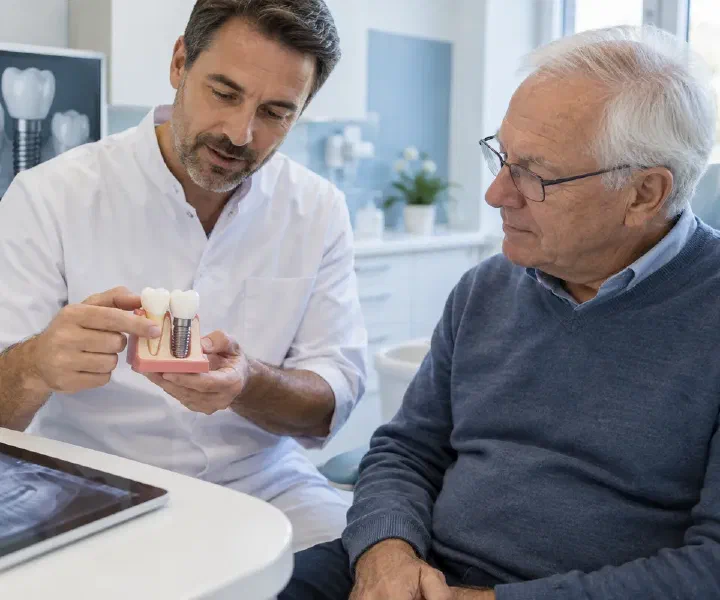
A dentist reviewing implant replacement planning and records with a patient

What we consider

Separate prosthetic trouble from implant failure.

The examination determines whether the support itself is affected.

Crown and component problems

A fracture, loose screw, or damaged attachment may involve the restoration while the implant remains usable. Compatible repair or a new prosthesis may be possible. The clinician evaluates these parts separately so that replacing the implant is not assumed simply because the visible tooth has stopped functioning.

Inflammation and supporting bone

The tissues and bone are assessed using clinical findings and relevant images, with previous records when available. Disease severity and the overall situation influence treatment options. Some cases may be considered for disease management, while others require discussion of a poor prognosis and possible removal.

Integration, position, and structural condition

Movement of the implant body, implant damage, or an unsuitable position can affect whether it can support a useful restoration. These findings differ from routine component wear. The provider explains the diagnosis and any need for specialist assessment before a definitive replacement plan is chosen.

Planning together

Review the history before repeating the original approach.

Understanding the circumstances helps build a more realistic next plan.

Collect records and the sequence of events

Original implant details, surgical and restorative records, and previous images can be valuable. Describe when symptoms began, whether there were repeated repairs, and what treatment has already been attempted. This information helps distinguish a recent mechanical event from a longer pattern of tissue or support changes.

Reassess health, cleaning, and loading factors

Medical changes, smoking, periodontal history, cleaning access, and functional forces may influence the next decision. Discuss practical barriers openly. A revised plan should address relevant modifiable factors where possible, without claiming that one factor necessarily explains every implant failure or guarantees success if changed.

Understanding the options

Consider preservation, removal, and alternatives fairly.

The recommendation should connect the likely benefit with the condition of the site.

Treat or repair when the implant remains usable

Depending on the diagnosis, tissue treatment, prosthetic repair, or a revised restoration may be considered. The outlook and limits should be explicit, including how response will be assessed. Continuing treatment is not automatically preferable if the implant cannot reasonably support a maintainable result.

Remove when retention is no longer appropriate

Removal may be discussed for an implant with an unsuitable prognosis or another significant problem. The method and site management depend on the case. A new implant, a bridge, a removable replacement, or another plan should be considered according to the resulting conditions and your goals.

The appointment

Plan the site and interim replacement as separate stages.

Removal does not automatically mean a new implant can be placed immediately.

  1. Assess the removal and tissue-management needs

    The clinician explains the proposed approach and whether referral is appropriate. Infection, bone defects, anatomical relationships, and the existing restoration affect planning. Discuss how the area will be managed afterward and what uncertainty remains about the support available for a future implant.

  2. Allow healing or reconstruct support when indicated

    Some sites need healing time, grafting, or other treatment before another implant is considered. The sequence depends on the defect and clinical response. Immediate replacement may be possible only in selected circumstances and should not be presented as the expected answer for every failed implant.

  3. Reassess before committing to a new restoration

    Updated examination and records help determine whether the revised plan remains suitable. The final implant and prosthesis design may differ from the original. Include cleaning access, support, loading, and maintenance in the decision so another implant is not simply placed into an unchanged problematic arrangement.

Practical guidance

Keep function and expectations realistic during the transition.

Temporary care and future monitoring are important parts of the plan.

Discuss appearance and eating needs early

An interim appliance or another temporary arrangement may be considered, with limits based on the healing site. Explain your daily needs before removal. Instructions should clarify use, cleaning, and pressure avoidance where relevant, rather than leaving the transition period as an afterthought.

Set a monitoring plan for whichever option is chosen

A replacement implant is not guaranteed to succeed simply because it is new. Follow-up should reflect the previous problem and current risk. If you choose a non-implant option, its fit, supporting teeth or tissues, and maintenance also need review as part of ongoing care.

Frequently asked questions

Questions about replacement of failing dental implants

Does a loose implant crown mean the implant must be replaced?

No. The crown or a connection may be the affected part while the implant remains stable. A professional assessment distinguishes these problems. Avoid repeatedly testing movement and bring any detached components or available implant records to the appointment.

Can every failing implant be saved?

No. Some conditions may be managed, while others have a poor outlook that makes removal appropriate. The diagnosis, extent of support loss or damage, position, and ability to maintain the restoration influence the decision and any specialist recommendation.

Can a new implant be placed at the same appointment as removal?

Only selected situations may allow immediate replacement. Infection, bone defects, stability, and the proposed position all matter. Healing or reconstruction may be needed first, so timing should be decided after assessment rather than promised from the outset.

Will I need bone grafting afterward?

Possibly, depending on the defect and future treatment plan. Not every site has the same needs, and grafting does not guarantee suitability for another implant. The clinician explains the intended purpose, timing, alternatives, and reassessment needed before further treatment.

Does one failure mean another implant will fail too?

Not automatically, but the previous failure deserves investigation and may affect planning. A replacement has its own risks and cannot be guaranteed. The revised approach should address relevant findings and compare implant and non-implant options for the current site.

What can replace the tooth while the area heals?

A temporary appliance or another interim arrangement may be considered according to the site and treatment. It must avoid interfering with healing or the planned reconstruction. Discuss appearance and function needs early so the limitations and timing are clear.

Should I seek a second opinion before removal?

A second opinion can be useful when you want clarification about the diagnosis, prognosis, or alternatives. Bring records and the proposed plan. Urgent symptoms still need timely care, and the review should focus on the current findings rather than promises of a guaranteed rescue.

Real patient results

Before & after smile gallery.

Drag the centre line to compare each real case treated by our dental team. Every smile begins with a personal assessment and a plan shaped around the patient.

Areas We Serve

Neighbourhood dental care, close to home.

Located in Cookstown, Innisfil, our dental team welcomes patients from communities across South Simcoe, Barrie, and northern York Region.

Get directions
  • Cookstown
  • Innisfil
  • Simcoe
  • Lake Simcoe
  • Alcona
  • Stroud
  • Lefroy–Belle Ewart
  • Gilford
  • Churchill
  • Sandy Cove
  • Innisfil Heights
  • Fennell’s Corners
  • Bradford
  • Bradford West Gwillimbury
  • Bond Head
  • Newton Robinson
  • New Tecumseth
  • Alliston
  • Beeton
  • Tottenham
  • Adjala–Tosorontio
  • Everett
  • Loretto
  • Barrie
  • Essa
  • Thornton
  • Baxter
  • Angus
  • Egbert
  • Ivy
  • Utopia
  • York Region
  • East Gwillimbury
  • Queensville
  • Holland Landing
  • Sharon
  • Schomberg
  • Nobleton

Don’t see your community listed? Contact us—we regularly welcome patients from throughout the surrounding region.

Google reviews

Kind words from our patients.

Read what patients have shared about their visits to Cookstown Dental Centre.

A dentist having a friendly consultation with a patient in a bright dental clinic

Your next step

Ready to feel good about your next dental visit?

Whether you are new to the clinic or returning for care, our team is here to make booking simple and answer your questions.

Call Book Now WhatsApp

How can we help?

The Cookstown Dental team is here for you.

Need an appointment, have a question, or want to talk through your options? Choose the next step that works best for you.

Send us a note

We’ll get back to you as soon as we can.