Cookstown Dental Centre
The Cookstown Dental Centre team caring for a patient in a treatment room

Cosmetic Dentistry · Cookstown

Choose retention that suits your teeth and daily care.

Compare clear, wire-and-acrylic, and fixed orthodontic retainers. Understand fit, cleaning, wear instructions, repairs, and how each option supports your result.

Request an appointment

Let’s find a time that works.

Need urgent dental help? Call (705) 291-2222.

Orthodontic Retainers in Cookstown

The right retainer depends on more than how visible it is.

Retainers support tooth position after orthodontic movement. Some are removable, while others are bonded behind selected teeth. Each design brings a different combination of appearance, cleaning access, durability, and responsibility. A familiar-looking appliance is not automatically the best option for every bite, and one design may not meet every need on its own.

At Cookstown Dental Centre, the discussion connects the appliance to the treatment you have had and the way you will use and maintain it. We review fit, relevant dental work, and practical concerns such as cleaning or a history of breakage. Clear instructions should cover daily wear where prescribed, checks, and what to do if something changes. Retention is ongoing care, so replacement and repair arrangements deserve attention when the appliance is first selected.


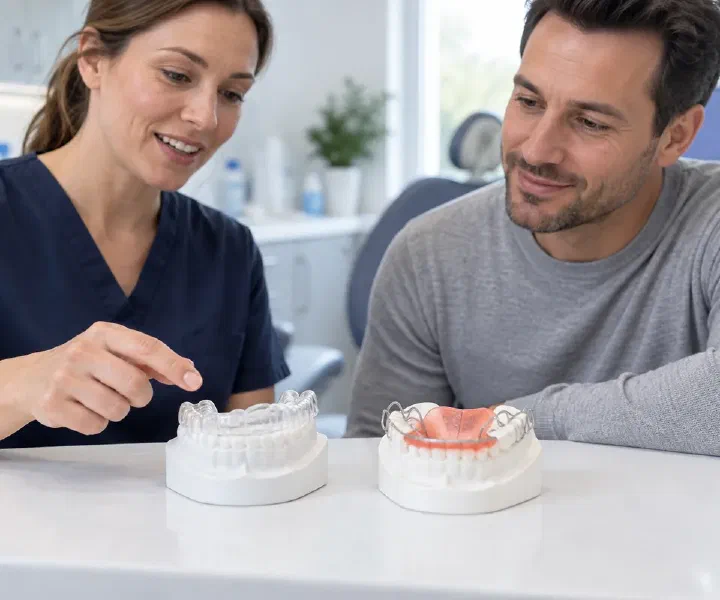
Clear and wire-and-acrylic retainers displayed with a dental model

Understanding the options

Three designs, different responsibilities.

The clinician recommends a design or combination after assessing the teeth, bite, and retention needs.

Clear removable retainers

These closely follow tooth surfaces and are often chosen for their discreet appearance. They need the prescribed wear routine, careful cleaning, and protection from heat or damage. Their fit can be affected by tooth movement or later dental work, so a change in seating should be assessed rather than ignored.

Wire-and-acrylic removable retainers

Often called Hawley retainers, these use a different design with an acrylic component and wire. Suitability depends on the retention goals and bite. Appearance and feel differ from a clear shell. The clinician explains care and any professionally managed adjustments rather than suggesting that the wire should be bent at home.

Fixed bonded retainers

A wire may be bonded behind selected teeth to support their position. Cleaning around it and checking the bonds remain essential. It does not necessarily retain every tooth in the arch, and a removable appliance may also be prescribed. A loose bond can allow movement even when the wire still appears present.

Care that fits

Choose around the mouth you have now.

A retainer should fit the clinical situation as well as your preferences. Several details can change the recommendation.

Bite contacts and dental work

The way the teeth meet, available space, restorations, and planned treatment all matter. Tell the clinician about upcoming crowns, bonding, or other work before a retainer is made. A restoration that changes tooth shape can affect appliance fit and may require coordinated timing or a new appliance afterward.

Cleaning access and practical use

Discuss manual dexterity, gum health, routines, and past appliance difficulties. A fixed design still needs effective cleaning, while a removable design relies on consistent use and safe storage. The most suitable choice is one whose clinical requirements and daily responsibilities can both be met reliably.

Practical guidance

Keep the appliance working as intended.

Follow instructions for the specific design. Advice suitable for one material or appliance may not suit another.

Clean without changing its shape

Use the cleaning method recommended for your retainer and keep up tooth and gum care. Avoid heat and home adjustments that could alter fit. For a bonded wire, ask how to clean around the attachment points and demonstrate the technique if you are unsure about access.

Protect removable appliances between wears

Store the retainer in its case instead of a tissue, pocket, or loose bag. Keep it away from pets and heat. If it is lost or damaged, contact the clinic promptly for advice; waiting until movement is obvious can turn an appliance replacement into a different clinical problem.

Notice changes early

Report a retainer that rocks, lifts, suddenly feels tight, or has a sharp edge. For fixed retention, a loose bond or bent wire needs review even if nothing hurts. Do not use the absence of pain as evidence that the appliance is still holding every intended tooth correctly.

Good to know

Agree on the long-term arrangements at delivery.

Receiving a retainer should include enough instruction to know what normal use and follow-up look like.

Wear and review instructions

Ask for the prescribed schedule and when it will be reviewed. Do not copy another person’s wear pattern or assume that comfortable fit means you can stop. The clinician explains who checks retention and how those visits relate to routine dental examinations and any ongoing orthodontic follow-up.

Repair and replacement planning

Clarify whom to contact, how a replacement is assessed, and what costs may apply. An old scan may not always represent the current teeth accurately. Future appliances should be based on a clinically appropriate fit and plan, particularly after dental work or a period without effective retention.

Changes in future treatment

Tell any treating dentist that you use retainers before a procedure that alters tooth shape or contacts. Bring the removable appliance when asked. Coordinating restoration and retention helps identify fit issues promptly rather than discovering at home that a newly treated tooth prevents the appliance from seating.

Frequently asked questions

Questions about orthodontic retainers

Which type of retainer lasts longest?

Durability varies with design, material, wear, care, and the individual bite. There is no single lifespan that applies to everyone. Ask how to recognize wear or damage and arrange checks rather than keeping an appliance solely because it has not completely broken.

Is a fixed retainer enough on its own?

Sometimes additional removable retention is prescribed because a fixed wire supports only selected teeth or addresses only part of the retention need. The clinician explains the intended coverage and why a combination may be recommended in your case.

Can I choose a clear retainer instead of a wire design?

You can discuss that preference. The recommendation also depends on the bite, previous treatment, oral health, and practical needs. A discreet appearance is one consideration, but the appliance must be clinically appropriate and manageable for long-term care.

Do retainers replace a nightguard?

Not automatically. Retention and management of grinding or clenching have different purposes, even when appliances look similar. Tell the clinician about both needs so the design is coordinated. Do not substitute one device for another without advice.

What should I do if a bonded wire feels loose?

Contact the clinic for assessment and avoid bending or pulling it. Describe whether the wire is sharp or a bond has detached. A loose section may allow tooth movement, so it should be checked even if the rest of the wire remains attached.

Can I use hot water to disinfect a removable retainer?

Heat can distort some retainer materials and affect fit. Follow the cleaning instructions for your specific appliance and ask before using unfamiliar products. A distorted retainer should be assessed rather than reshaped with more heat at home.

Will I need retention for many years?

Long-term retention is commonly part of maintaining orthodontic results. Your clinician sets the wear and review plan. Teeth can continue to change over time, so stopping or reducing wear should be discussed rather than based only on how long ago treatment finished.

Real patient results

Before & after smile gallery.

Drag the centre line to compare each real case treated by our dental team. Every smile begins with a personal assessment and a plan shaped around the patient.

Areas We Serve

Neighbourhood dental care, close to home.

Located in Cookstown, Innisfil, our dental team welcomes patients from communities across South Simcoe, Barrie, and northern York Region.

Get directions
  • Cookstown
  • Innisfil
  • Simcoe
  • Lake Simcoe
  • Alcona
  • Stroud
  • Lefroy–Belle Ewart
  • Gilford
  • Churchill
  • Sandy Cove
  • Innisfil Heights
  • Fennell’s Corners
  • Bradford
  • Bradford West Gwillimbury
  • Bond Head
  • Newton Robinson
  • New Tecumseth
  • Alliston
  • Beeton
  • Tottenham
  • Adjala–Tosorontio
  • Everett
  • Loretto
  • Barrie
  • Essa
  • Thornton
  • Baxter
  • Angus
  • Egbert
  • Ivy
  • Utopia
  • York Region
  • East Gwillimbury
  • Queensville
  • Holland Landing
  • Sharon
  • Schomberg
  • Nobleton

Don’t see your community listed? Contact us—we regularly welcome patients from throughout the surrounding region.

Google reviews

Kind words from our patients.

Read what patients have shared about their visits to Cookstown Dental Centre.

A dentist having a friendly consultation with a patient in a bright dental clinic

Your next step

Ready to feel good about your next dental visit?

Whether you are new to the clinic or returning for care, our team is here to make booking simple and answer your questions.

Call Book Now WhatsApp

How can we help?

The Cookstown Dental team is here for you.

Need an appointment, have a question, or want to talk through your options? Choose the next step that works best for you.

Send us a note

We’ll get back to you as soon as we can.