Cookstown Dental Centre
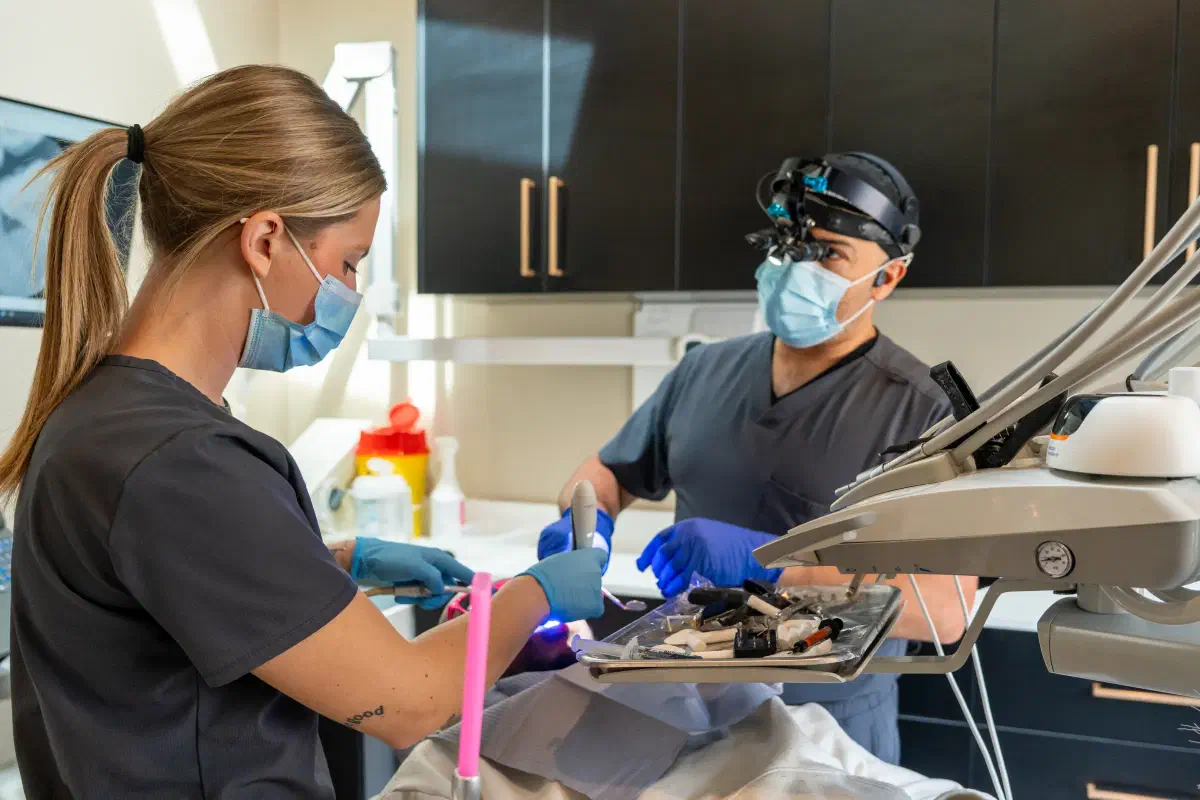
The Cookstown Dental Centre team caring for a patient in a treatment room

Restorative Dentistry · Cookstown

Assess the molar, treat the canals, and plan the final restoration.

Molar root canal care considers complex anatomy and the tooth’s remaining strength. Explore diagnosis, treatment stages, referral, and protection after treatment.

Request an appointment

Let’s find a time that works.

Need urgent dental help? Call (705) 291-2222.

Molar Root Canals in Cookstown

Saving a back tooth involves more than treating the space inside it.

Root canal treatment may be considered when a molar’s pulp is irreversibly inflamed or infected and the tooth can be restored. Molars can have complex root and canal anatomy, and they also carry substantial chewing demands. The plan therefore needs to address both treatment inside the tooth and the restoration that will protect and seal it afterward.

At Cookstown Dental Centre, the assessment begins with your symptoms, clinical tests, appropriate imaging, and the amount of sound tooth remaining. A painful molar does not automatically need a root canal, and root canal treatment cannot make every severely damaged tooth restorable. We discuss the diagnosis, reasonable alternatives, and whether the case should involve an endodontist before defining the treatment sequence.
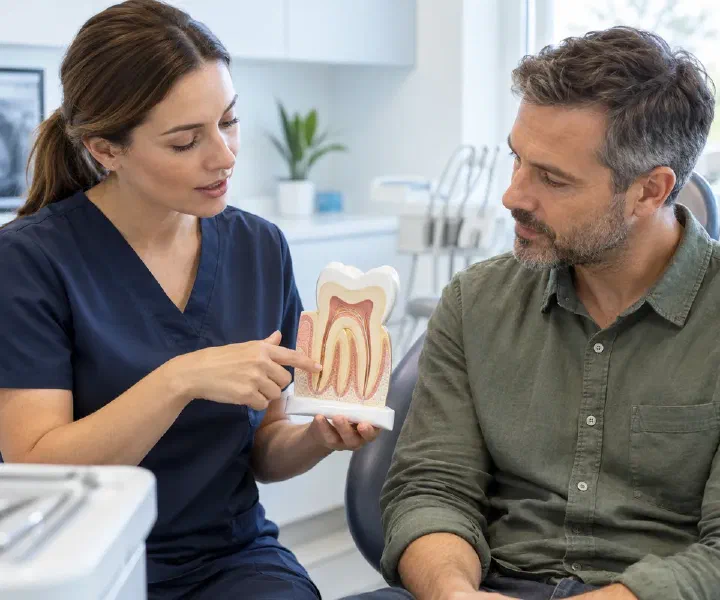
A dentist reviewing a molar root canal model with a patient

What we consider

Establish whether the molar is suitable to keep.

Diagnosis and restorability are separate questions that both need an answer.

The pulp and tissues around the roots

Temperature responses, biting symptoms, examination, and indicated images help assess the source of pain or infection. Findings are interpreted together because no single symptom identifies every condition. The dentist should explain why root canal treatment is recommended rather than treating any deep filling as an automatic indication.

Cracks and remaining tooth walls

A large old restoration, missing cusp, or suspected crack can affect the outlook. The clinician evaluates whether a useful final restoration can be supported. Some cracks limit the options despite technically possible canal treatment, so structural concerns belong in the decision before treatment begins.

Gum support and the wider bite

The molar’s periodontal support, position, opposing teeth, and role in chewing influence the plan. Preserving a tooth is considered within that context. A treatment recommendation should include how the tooth will function afterward, not simply whether the canals can be accessed.

Good to know

Allow for the anatomy and access a molar presents.

Back teeth can require additional planning without every case being equally complex.

Canal number and shape vary

Molars often contain several canals, with anatomy that can be narrow, curved, or difficult to locate. The exact arrangement is assessed individually. Additional imaging or specialist care may be appropriate in selected cases; the number of roots visible to a patient does not reliably describe the full canal system.

Referral can be part of preserving the tooth

An endodontist may be recommended for complex anatomy, difficult access, previous treatment, or other findings. The reason for referral should be clear, along with who will provide the final restoration. Specialist involvement is a planning decision, not a reason to leave the tooth without a completion plan.

The appointment

Coordinate canal treatment with the restorative phase.

The sequence may involve one or more appointments according to the findings.

  1. Prepare and treat the internal spaces

    After appropriate anaesthesia and isolation, the clinician accesses, cleans, and treats the canals using the planned technique. The details and timing vary with the case. Tell the team about discomfort or difficulty tolerating the appointment so they can respond during treatment rather than afterward.

  2. Seal and protect the tooth between stages

    A temporary or definitive restoration is placed according to the treatment stage. Follow instructions about chewing and cleaning, particularly when large areas of tooth are missing. If a temporary comes out or the tooth fractures, contact the clinic rather than waiting for the scheduled next step.

  3. Complete the planned final restoration

    A molar may need coverage of weakened chewing surfaces, often with an onlay or crown depending on the remaining structure. The dentist explains the appropriate option and timing. Canal treatment and final restoration should be understood as connected parts of preserving the tooth, even when different providers deliver them.

Understanding the options

Discuss preservation and alternatives with the prognosis in view.

The choice should include what each option requires after the first procedure.

Root canal treatment and restoration

When suitable, this approach aims to retain the natural tooth while treating the internal disease. Its outlook depends on infection control, structural condition, sealing, and follow-up. Ask about uncertainties, the final restoration, and any additional appointments rather than considering the canal procedure in isolation.

Extraction and replacement planning

Removal may be considered when the tooth cannot be predictably restored or when another informed choice is made. Replacement options and the consequences of leaving the space should be discussed as appropriate. Extraction is not simply the end of the comparison if future chewing support or tooth movement matters.

Practical guidance

Protect the treated molar and report changes.

Recovery and longer-term care should follow the instructions for your actual treatment.

Monitor symptoms without repeatedly testing the tooth

Some tenderness can occur after care, but increasing pain, swelling, a high bite, or a lost temporary needs contact. Avoid hard chewing on a tooth awaiting its final restoration. Seek urgent help for spreading swelling or difficulty swallowing or breathing rather than waiting for routine follow-up.

Keep the restoration and surrounding tissues maintained

A root-treated tooth can still develop decay or fractures. Clean around the restoration and attend recommended reviews, including any assessment of healing. If the final crown or filling later loosens, arrange care even without temperature sensitivity; the absence of a vital pulp does not remove structural risk.

Frequently asked questions

Questions about molar root canals

Do all painful molars need root canals?

No. Pain can come from several conditions, including a crack, bite problem, or gum issue. Clinical tests and appropriate imaging help establish the diagnosis. Root canal treatment is recommended according to the pulp and surrounding tissue findings, not pain alone.

Are molar root canals different from front-tooth treatment?

The purpose is similar, but molars can have more complex canal anatomy and different chewing demands. Access and restoration planning can also differ. The clinician assesses the individual tooth rather than assuming every molar has the same number of canals or difficulty.

Will I need an endodontist?

Some cases can be managed without referral, while others benefit from specialist care because of anatomy, previous treatment, or other complexity. Ask why referral is recommended and how the final restorative work will be coordinated after the canal treatment.

Will the procedure hurt?

Appropriate anaesthesia and comfort measures are planned, but experiences vary. Tell the clinician about current pain, previous anaesthetic difficulties, or anxiety before treatment. During the appointment, report discomfort so it can be addressed rather than assuming you must tolerate it.

Does the molar always need a crown afterward?

The remaining walls, cusps, bite, and existing damage guide the restoration. Many treated molars need protection of weakened chewing surfaces, but the exact design is individualized. The dentist should explain why a crown, onlay, or another option suits the tooth.

Can I delay the final restoration if the tooth feels fine?

Follow the advised completion schedule. A comfortable tooth can still be vulnerable to fracture or leakage when it has only temporary protection. If timing or cost is difficult, discuss a staged plan and its limits rather than leaving the next step open-ended.

Can a treated molar develop another problem later?

Yes. Reinfection, decay, cracks, or restoration failure can occur. Ongoing care and prompt assessment of changes remain important. Root canal treatment aims to retain the tooth but does not guarantee that it will never need further treatment.

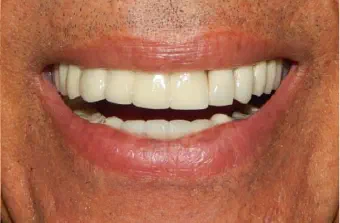
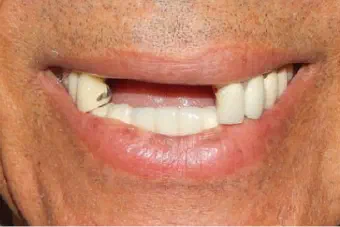
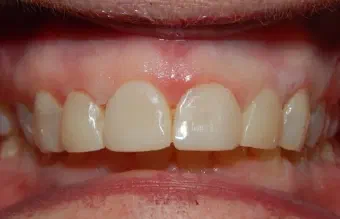
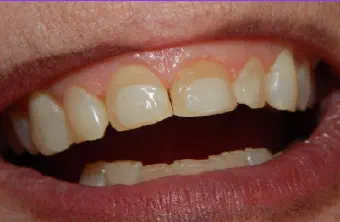
Real patient results

Before & after smile gallery.

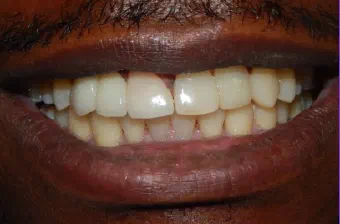
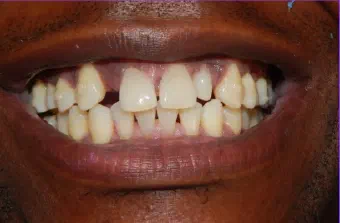
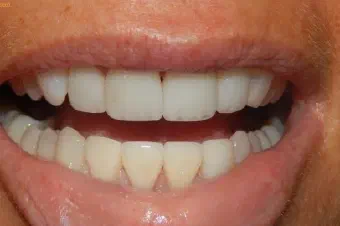
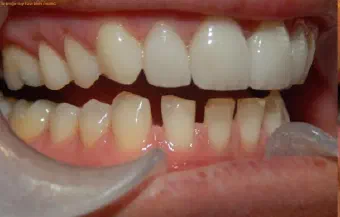
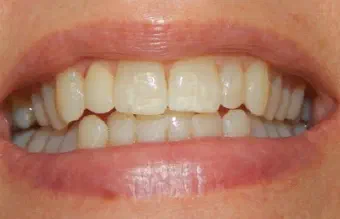
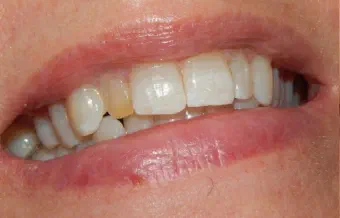
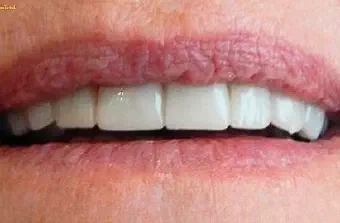
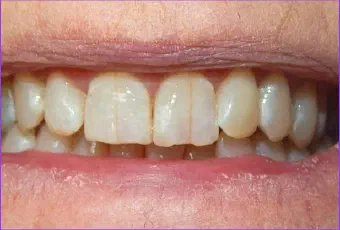
Drag the centre line to compare each real case treated by our dental team. Every smile begins with a personal assessment and a plan shaped around the patient.

Areas We Serve

Neighbourhood dental care, close to home.

Located in Cookstown, Innisfil, our dental team welcomes patients from communities across South Simcoe, Barrie, and northern York Region.

Get directions
  • Cookstown
  • Innisfil
  • Simcoe
  • Lake Simcoe
  • Alcona
  • Stroud
  • Lefroy–Belle Ewart
  • Gilford
  • Churchill
  • Sandy Cove
  • Innisfil Heights
  • Fennell’s Corners
  • Bradford
  • Bradford West Gwillimbury
  • Bond Head
  • Newton Robinson
  • New Tecumseth
  • Alliston
  • Beeton
  • Tottenham
  • Adjala–Tosorontio
  • Everett
  • Loretto
  • Barrie
  • Essa
  • Thornton
  • Baxter
  • Angus
  • Egbert
  • Ivy
  • Utopia
  • York Region
  • East Gwillimbury
  • Queensville
  • Holland Landing
  • Sharon
  • Schomberg
  • Nobleton

Don’t see your community listed? Contact us—we regularly welcome patients from throughout the surrounding region.

Google reviews

Kind words from our patients.

Read what patients have shared about their visits to Cookstown Dental Centre.

A dentist having a friendly consultation with a patient in a bright dental clinic

Your next step

Ready to feel good about your next dental visit?

Whether you are new to the clinic or returning for care, our team is here to make booking simple and answer your questions.

Call Book Now WhatsApp

How can we help?

The Cookstown Dental team is here for you.

Need an appointment, have a question, or want to talk through your options? Choose the next step that works best for you.

Send us a note

We’ll get back to you as soon as we can.