Cookstown Dental Centre
The Cookstown Dental Centre team caring for a patient in a treatment room

Restorative Dentistry · Cookstown

Identify the connection before repairing a loose implant screw.

Loose implant screw repair depends on the implant system, component condition, and bite. Learn why professional assessment and compatible parts matter.

Request an appointment

Let’s find a time that works.

Need urgent dental help? Call (705) 291-2222.

Loose Implant Screw Repair in Cookstown

The screw is one part of a larger restoration system.

Some implant restorations use screws to connect or retain components. If a screw loosens, the crown, bridge, or another part may move or click. A similar feeling can also arise from a different mechanical problem or movement of the implant itself. The affected connection must be identified before treatment is selected.

At Cookstown Dental Centre, the assessment includes the restoration, implant records when available, tissues, and biting contacts. Professional repair follows the requirements of the specific component system; it is not a task for a household tool or a universal replacement screw. The clinician also considers why loosening occurred, particularly if it has happened before, so the discussion addresses the cause as well as the immediate loss of stability.


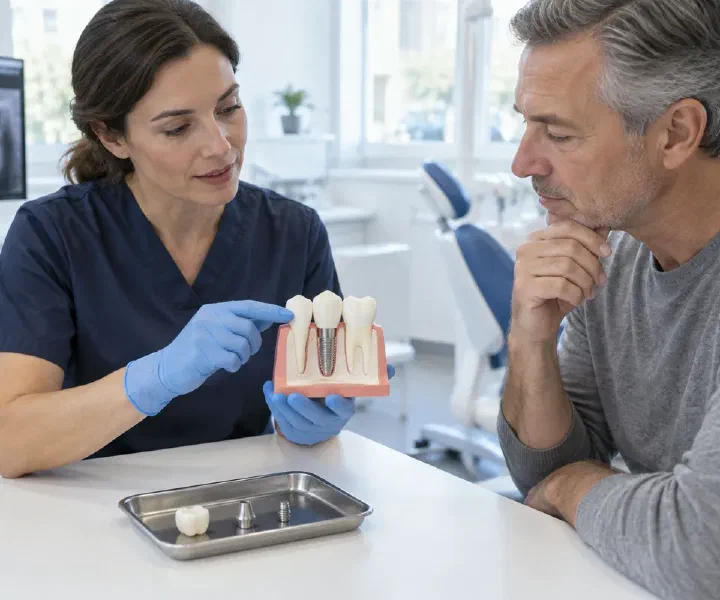
A dental professional showing implant connection components during a consultation

Good to know

Distinguish loosening from damage or loss of support.

The same symptom does not always lead to the same repair.

A screw that has loosened

A compatible, serviceable connection may be managed professionally after assessment of the components and restoration. The clinician checks the arrangement and follows the appropriate system requirements. The presence of a loose screw does not by itself establish that every other part is sound or ready for reuse.

A fractured component or moving implant

A broken screw, damaged interface, or movement of the implant body creates a different situation. Retrieval, replacement, additional assessment, or referral may be needed. These possibilities are why simply applying more force to a moving restoration can worsen the problem rather than solve it.

Planning together

Gather the information that helps identify the system.

Component compatibility can affect both the repair method and timing.

Bring implant and restoration records

An implant card, treatment summary, or details from the original provider can help identify the relevant system. Different components may look similar while having different specifications. If records are unavailable, the clinician may need further investigation before ordering parts or attempting a definitive repair.

Describe the sequence of symptoms

Explain when movement started, whether the bite changed first, and whether previous repairs were performed. Mention any detached pieces, swelling, or pain. A history of repeated loosening can influence the assessment of fit and function rather than being treated as an unrelated series of small incidents.

What we consider

Examine the factors that affect connection stability.

A repair should account for how the whole restoration is functioning.

The component interfaces

The clinician evaluates the relevant screw, connection surfaces, and associated parts for damage or wear. Reuse depends on their condition and the system requirements. A component that cannot provide a suitable connection may need replacement rather than being retained simply to shorten the appointment.

The restoration’s fit

A crown or bridge should fit its supporting arrangement appropriately. Distortion, incomplete seating, or other fit concerns may contribute to repeated problems. The provider considers whether servicing the screw alone is sufficient or whether the restoration needs modification, replacement, or additional investigation.

The bite and loading pattern

Contacts and functional forces influence the restoration. A high contact, grinding pattern, or changes elsewhere in the mouth may be relevant. These findings are assessed alongside the connection; they should not be used to assume every loose screw is caused by clenching without supporting evidence.

The appointment

Expect a repair sequence tailored to the findings.

Accessing the connection is part of professional care, not a home adjustment.

  1. Assess and obtain access where appropriate

    The clinician examines the restoration and relevant records before planning access. The method depends on the design, and the existing crown or bridge may need professional removal. Any uncertainty about component condition or the possibility of additional work should be explained before proceeding.

  2. Manage the affected components

    The repair may involve a suitable existing component or a compatible replacement, according to the findings and system requirements. Fractured or damaged parts can require a different process. The provider should explain whether the appointment completes treatment or is one stage in resolving a more complex problem.

  3. Verify the connection and restore the access

    The restoration is checked for stability, fit, and bite, and the access is managed as appropriate for the design. You receive instructions about use and review. A persistent click or new high bite should prompt contact rather than an attempt to adjust the restoration yourself.

Practical guidance

Avoid actions that can turn a repair into a larger problem.

Protect the area while arranging care and after any new change.

Do not use improvised tools or adhesives

Trying to tighten, bend, or glue a component can damage the connection and obscure the original problem. Avoid hard chewing on a moving restoration and retain loose parts safely. If swallowing or inhalation of a part is suspected, seek appropriate urgent medical advice rather than treating it only as a dental repair.

Treat recurrence as information

If the same restoration loosens again, report it promptly and describe the interval since repair. A review of the design, fit, components, and loading may be needed. Continuing to use the restoration until it detaches can create additional damage and make the original cause harder to resolve.

Frequently asked questions

Questions about loose implant screw repair

Is a loose implant screw the same as a loose implant?

No. A screw can loosen within the prosthetic connection while the implant body remains stable. Movement can also involve the implant itself. Professional assessment is needed to identify which part is affected and select the appropriate treatment.

Can any dentist use a standard screw to fix it?

Implant components are system-specific and must be compatible with the existing arrangement. There is no universal screw for all implants. Available records, component identification, and the clinical findings influence whether repair can proceed directly or needs additional coordination.

Why not just tighten it more firmly?

More force is not a substitute for identifying the system and cause. Incorrect handling can damage components or the connection. Professional repair follows the appropriate requirements and includes assessment of fit, condition, and the bite rather than tightening by guesswork.

What if the screw has broken?

A fractured component can require retrieval, replacement, or additional specialist assessment, depending on its location and the condition of the connection. Keep any detached pieces and contact the clinic. Do not probe the implant or attempt to remove a fragment yourself.

Will the crown be damaged during access?

The access method depends on the restoration design and existing condition. The clinician should explain the proposed approach and any relevant limitations before treatment. Sometimes a restoration can be retained; other findings may make repair or replacement necessary.

Does repeated loosening mean I grind my teeth?

Grinding can be one contributing factor, but repeated loosening can also involve fit, design, or component condition. It should not be diagnosed from one symptom alone. The dentist evaluates the pattern and explains which findings support the proposed plan.

How should I care for the area after repair?

Follow the specific use and cleaning instructions provided. Report renewed movement, clicking, swelling, or a changed bite promptly. Ongoing implant reviews remain necessary because repairing a mechanical connection does not replace assessment of the surrounding tissues.

Real patient results

Before & after smile gallery.

Drag the centre line to compare each real case treated by our dental team. Every smile begins with a personal assessment and a plan shaped around the patient.

Areas We Serve

Neighbourhood dental care, close to home.

Located in Cookstown, Innisfil, our dental team welcomes patients from communities across South Simcoe, Barrie, and northern York Region.

Get directions
  • Cookstown
  • Innisfil
  • Simcoe
  • Lake Simcoe
  • Alcona
  • Stroud
  • Lefroy–Belle Ewart
  • Gilford
  • Churchill
  • Sandy Cove
  • Innisfil Heights
  • Fennell’s Corners
  • Bradford
  • Bradford West Gwillimbury
  • Bond Head
  • Newton Robinson
  • New Tecumseth
  • Alliston
  • Beeton
  • Tottenham
  • Adjala–Tosorontio
  • Everett
  • Loretto
  • Barrie
  • Essa
  • Thornton
  • Baxter
  • Angus
  • Egbert
  • Ivy
  • Utopia
  • York Region
  • East Gwillimbury
  • Queensville
  • Holland Landing
  • Sharon
  • Schomberg
  • Nobleton

Don’t see your community listed? Contact us—we regularly welcome patients from throughout the surrounding region.

Google reviews

Kind words from our patients.

Read what patients have shared about their visits to Cookstown Dental Centre.

A dentist having a friendly consultation with a patient in a bright dental clinic

Your next step

Ready to feel good about your next dental visit?

Whether you are new to the clinic or returning for care, our team is here to make booking simple and answer your questions.

Call Book Now WhatsApp

How can we help?

The Cookstown Dental team is here for you.

Need an appointment, have a question, or want to talk through your options? Choose the next step that works best for you.

Send us a note

We’ll get back to you as soon as we can.