Cookstown Dental Centre
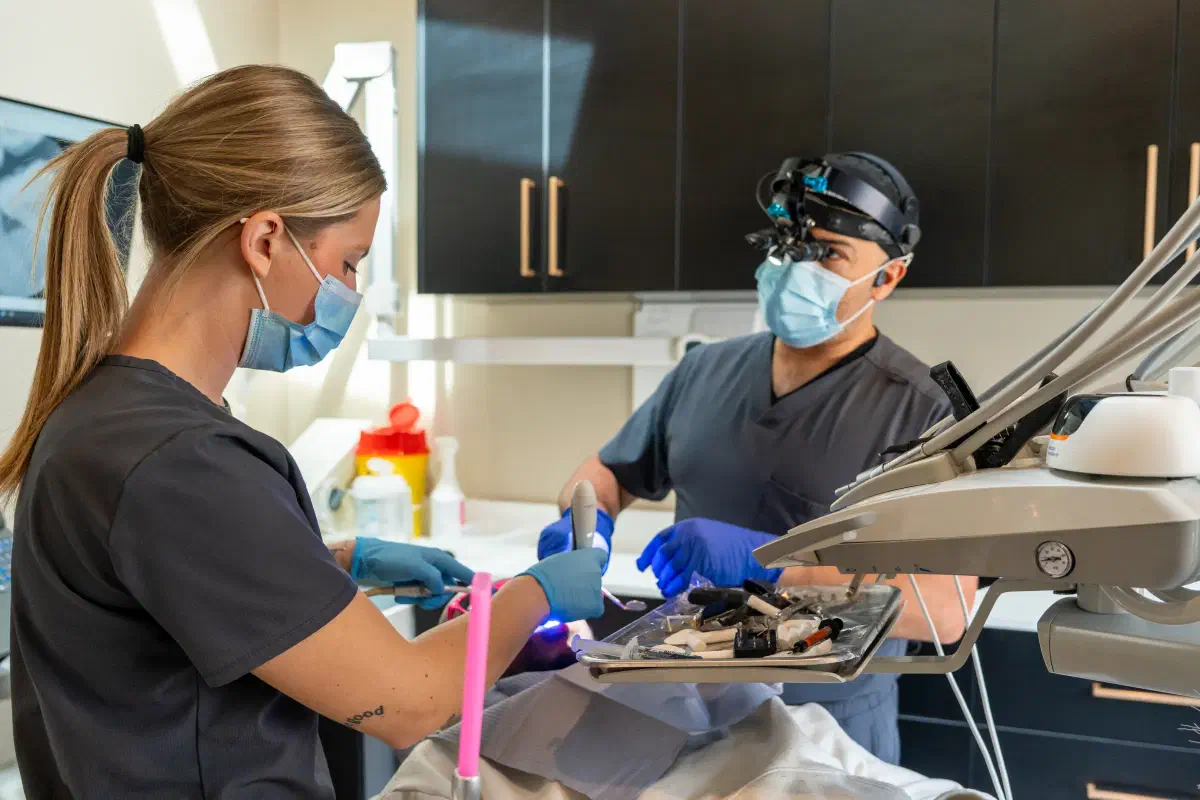
The Cookstown Dental Centre team caring for a patient in a treatment room

Specialized Care · Cookstown

Treat jaw pain according to the source and the effect on daily function.

Jaw pain care begins with diagnosis and usually considers conservative options first. Explore dental causes, muscle and joint findings, referral, and review.

Request an appointment

Let’s find a time that works.

Need urgent dental help? Call (705) 291-2222.

Jaw Pain Treatment in Cookstown

The jaw is where the pain is felt, but not always where its cause begins.

Jaw pain may involve the chewing muscles, temporomandibular joints, teeth, supporting tissues, or another condition. It can affect eating, speaking, opening, or comfort at rest. A useful treatment plan begins by distinguishing these possibilities rather than assuming that the bite is responsible or that every patient needs the same appliance.

At Cookstown Dental Centre, we assess the symptoms, relevant dental findings, movement, and health history. Many jaw concerns are approached with conservative, reversible measures and review, while other findings call for dental treatment, medical evaluation, or specialist care. The goal is appropriate relief and function with the least unnecessary intervention. New jaw discomfort with chest pain, breathlessness, or other acute medical warning signs needs emergency medical attention rather than a routine dental visit.
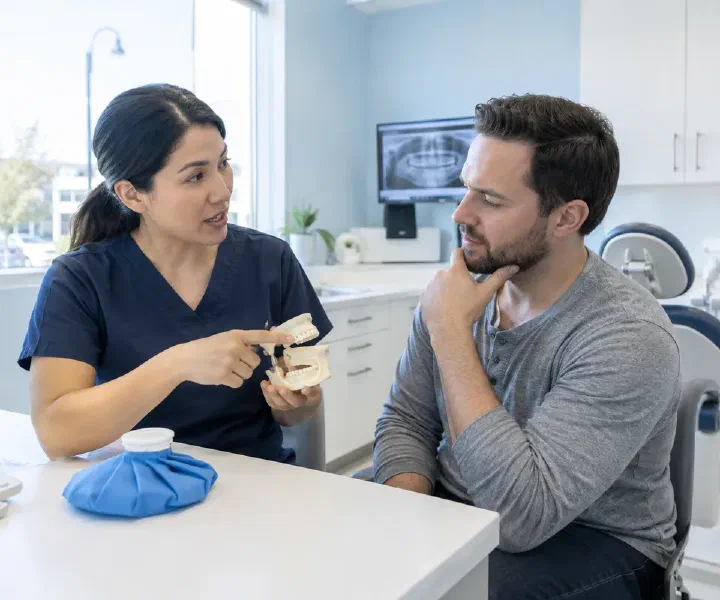
A clinician discussing conservative jaw care with a patient and a jaw model

What we consider

Identify the likely source before selecting treatment.

Several conditions can coexist and require different responses.

Teeth, gums, and recent dental treatment

A cracked tooth, pulp condition, infection, or high restoration can produce pain during jaw use. The dentist examines relevant structures and uses tests or images when indicated. Treating a diagnosed tooth problem is different from altering otherwise healthy teeth because the pain is broadly felt in the jaw.

Muscle and joint-related findings

Tenderness, movement patterns, painful clicking, and locking may contribute to a TMD assessment. The clinician considers the symptoms together rather than diagnose from one sound or tender spot. Many cases do not require invasive treatment, and the plan should reflect the particular finding and functional limitation.

Medical and other facial-pain conditions

Headaches, nerve-related pain, ear symptoms, systemic disease, or other problems may need evaluation outside dentistry. The dentist should identify when the pattern does not fit a clear dental source. Referral can prevent unnecessary procedures and support coordinated care when more than one condition is present.

Practical guidance

Begin with appropriate conservative measures when the diagnosis supports them.

Self-care should be tailored to symptoms and avoid forceful manipulation.

Reduce activities that aggravate the pain

The provider may discuss temporarily modifying difficult foods or habits such as gum chewing and sustained clenching. The aim is comfortable function, not an indefinite restriction without review. Advice should account for nutrition and daily needs and be revised if it does not produce the expected response.

Use instructed comfort measures and movement

Heat or cold, appropriate medication advice, or guided exercises may be considered according to the assessment. Do not force painful opening or follow aggressive manipulation videos. The clinician or relevant therapist should explain what is suitable and which symptoms mean a measure should be stopped or reassessed.

Understanding the options

Consider an appliance or referral for a defined reason.

Neither should be treated as the automatic next step for every sore jaw.

A monitored intraoral appliance in selected cases

A guard or splint may be discussed for protection or another conservative purpose, with the evidence limits for pain relief explained. It must fit appropriately and be reviewed. Stop and contact the provider if it causes pain or a persistent bite change rather than assume those effects are necessary.

Additional professional assessment or supportive therapy

Persistent dysfunction, an unclear diagnosis, or more complex findings may benefit from an orofacial-pain clinician, physiotherapist, oral surgeon, or medical provider as appropriate. The referral should address a specific question. It does not mean that increasingly invasive treatment is inevitable or that conservative options have no further role.

Good to know

Avoid irreversible treatment without a clear supporting indication.

A proposed dental change should solve an identified dental problem.

Permanent bite changes are not general TMD care

Reshaping natural teeth, placing crowns, or moving teeth has not been established as a routine effective treatment for TMD and can worsen problems. A separate restorative or orthodontic need may exist, but it should be explained independently rather than sold as a guaranteed cure for jaw pain.

Surgery belongs to selected diagnoses and careful review

Joint procedures are not the starting point for most jaw pain. If a more invasive option is proposed, ask about the diagnosis, evidence, risks, conservative alternatives, and expected benefit. A second opinion may help before an irreversible intervention with uncertain relevance to the symptoms.

Step by step

Measure progress and respond to a changing pattern.

The review should consider what you can comfortably do, not just a pain score.

  1. Agree on practical goals and timing

    The plan may focus on eating more comfortably, opening with less restriction, or reducing episodes. Clarify how long to try the recommended measures and when to return. A defined review prevents temporary advice from becoming an indefinite routine without checking whether the diagnosis and treatment still fit.

  2. Reassess persistent symptoms and adverse effects

    Tell the clinician what helped, what did not, and whether an appliance or exercise caused problems. The plan can be revised or further assessment arranged. Lack of improvement should prompt thought about the diagnosis rather than an automatic escalation to permanent bite alteration.

  3. Escalate urgent medical or infection signs

    Seek emergency care for jaw pain with chest symptoms or breathlessness, new neurological symptoms, major injury, or breathing or swallowing difficulty. Rapidly spreading swelling also needs urgent assessment. A history of TMD should not be used to explain away a new presentation with those warning features.

Frequently asked questions

Questions about jaw pain treatment

Is all jaw pain a TMJ problem?

No. Teeth, muscles, joints, infections, nerve conditions, headaches, and other medical issues can cause pain in the jaw region. The assessment identifies the likely source and whether more than one problem is present before a treatment plan is chosen.

Will I need a nightguard?

Not automatically. An appliance may have a defined role in selected cases, but it is not a universal jaw-pain treatment. The dentist should explain the purpose, evidence limits, fit checks, and review rather than prescribe it solely because the jaw hurts.

Should I stretch the jaw as far as possible?

Do not force painful or restricted movement. Exercises should follow an appropriate assessment and individualized instruction. Aggressive stretching or self-manipulation can aggravate symptoms and may be unsuitable for some causes of limited opening or joint pain.

Can adjusting my bite cure TMD?

Permanent bite changes are not routine evidence-based care for TMD and can make problems worse. A specific high restoration may need focused correction, but that is different from broadly reshaping teeth to treat unexplained jaw pain.

How long will conservative treatment take to help?

The response depends on the diagnosis and individual circumstances. The provider should set a review point and practical goals rather than promise one timetable. Persistent or worsening symptoms need reassessment, especially if function is deteriorating or a measure causes new problems.

Why might I need another type of clinician?

Some patterns benefit from medical, physiotherapy, or specialist orofacial-pain assessment. Referral helps clarify the diagnosis or provide relevant care outside the dental procedure itself. The purpose should be explained so the treatment remains coordinated.

When could jaw pain be a medical emergency?

New jaw pain with chest discomfort, breathlessness, or other acute systemic symptoms needs emergency assessment. Major injury, new neurological signs, breathing or swallowing difficulty, and rapidly spreading swelling are also urgent. Do not assume an existing TMD diagnosis explains every new episode.

Real patient results

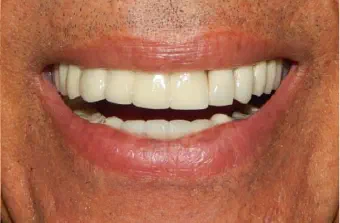
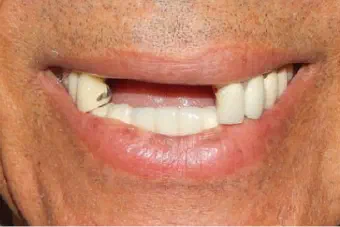
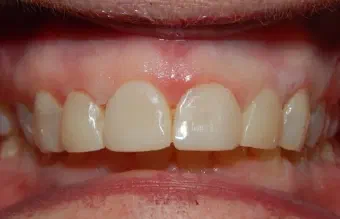
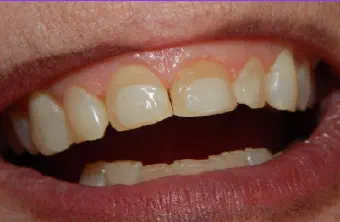
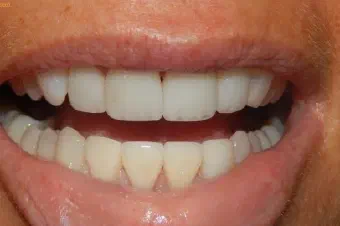
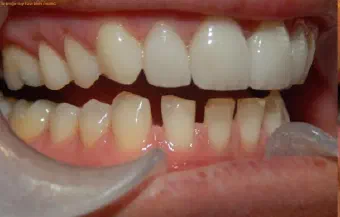
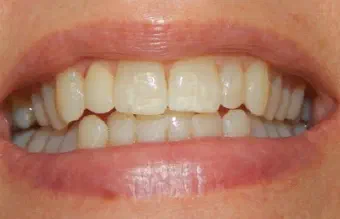
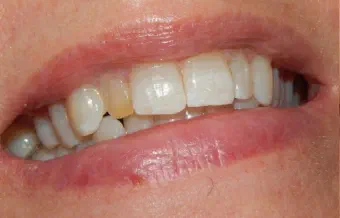
Before & after smile gallery.

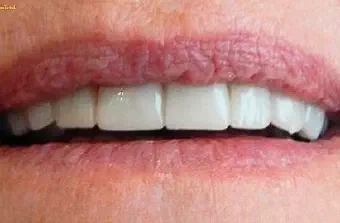
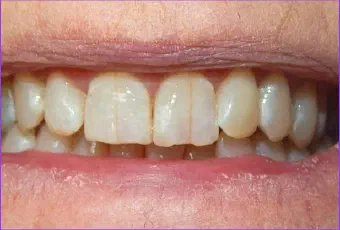
Drag the centre line to compare each real case treated by our dental team. Every smile begins with a personal assessment and a plan shaped around the patient.

Areas We Serve

Neighbourhood dental care, close to home.

Located in Cookstown, Innisfil, our dental team welcomes patients from communities across South Simcoe, Barrie, and northern York Region.

Get directions
  • Cookstown
  • Innisfil
  • Simcoe
  • Lake Simcoe
  • Alcona
  • Stroud
  • Lefroy–Belle Ewart
  • Gilford
  • Churchill
  • Sandy Cove
  • Innisfil Heights
  • Fennell’s Corners
  • Bradford
  • Bradford West Gwillimbury
  • Bond Head
  • Newton Robinson
  • New Tecumseth
  • Alliston
  • Beeton
  • Tottenham
  • Adjala–Tosorontio
  • Everett
  • Loretto
  • Barrie
  • Essa
  • Thornton
  • Baxter
  • Angus
  • Egbert
  • Ivy
  • Utopia
  • York Region
  • East Gwillimbury
  • Queensville
  • Holland Landing
  • Sharon
  • Schomberg
  • Nobleton

Don’t see your community listed? Contact us—we regularly welcome patients from throughout the surrounding region.

Google reviews

Kind words from our patients.

Read what patients have shared about their visits to Cookstown Dental Centre.

A dentist having a friendly consultation with a patient in a bright dental clinic

Your next step

Ready to feel good about your next dental visit?

Whether you are new to the clinic or returning for care, our team is here to make booking simple and answer your questions.

Call Book Now WhatsApp

How can we help?

The Cookstown Dental team is here for you.

Need an appointment, have a question, or want to talk through your options? Choose the next step that works best for you.

Send us a note

We’ll get back to you as soon as we can.