Cookstown Dental Centre
The Cookstown Dental Centre team caring for a patient in a treatment room

Restorative Dentistry · Cookstown

Use a temporary removable tooth with clear expectations and care.

A flipper tooth is a lightweight removable partial option for selected temporary needs. Explore appearance, fit, eating limits, healing, and the next restoration.

Request an appointment

Let’s find a time that works.

Need urgent dental help? Call (705) 291-2222.

Flipper Teeth in Cookstown

A flipper can fill a visible space while a longer-term plan is arranged.

A flipper is a common name for a small removable partial denture, often made with an acrylic base and one or a few artificial teeth. It may be considered as a temporary replacement during healing or while another restoration is planned. The design is usually more limited than a definitive prosthesis and should not be assumed to provide the same durability or chewing support.

At Cookstown Dental Centre, we assess the space, supporting tissues, remaining teeth, and the reason a temporary replacement is needed. If an extraction, graft, or implant site is healing, the appliance must be coordinated with that care. The plan should explain wear, cleaning, handling, and when it will be reviewed or replaced. A discreet appearance is useful only when the appliance is also appropriate for the current mouth.


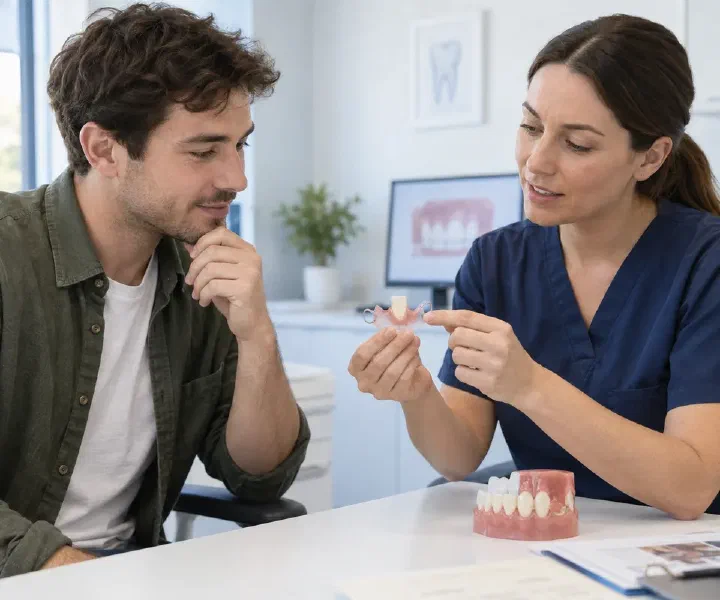
A dentist showing a small removable temporary front-tooth appliance to a patient

Care that fits

Identify the temporary role before choosing the appliance.

A flipper should have a purpose and an expected next step.

Appearance during a healing period

A removable tooth may help fill a visible gap after suitable planning. The clinician assesses whether the base can be used without unsuitable pressure on the site. A healing extraction or graft area may require specific adjustments and instructions rather than an appliance that is worn continuously without review.

An interim option before definitive care

A flipper may be considered while you compare or arrange a bridge, implant, or another replacement. It is a temporary stage with its own limits. The plan should identify what remains to be decided so a short-term appliance does not become an unreviewed long-term substitute by default.

What we consider

Check support, fit, and the site beneath it.

A small appliance still depends on the surrounding mouth and a suitable design.

Remaining teeth and retention

The clinician assesses how the appliance will be supported and retained without damaging or overloading other teeth. A design that feels loose or needs force to seat should be reviewed. Do not bend any retention element yourself or assume that biting it into place is an appropriate insertion method.

Tissues and any recent procedure

The base may contact areas changing during healing, which can alter fit. The dentist coordinates the appliance with extraction or surgical care. Pressure on a healing site should not be accepted simply to keep the artificial tooth in a preferred cosmetic position.

The opposing bite and available room

The artificial tooth must fit within the space and contact plan. An appearance-focused appliance may have restricted functional use. The clinician explains those limits and checks whether the design is appropriate rather than treating a flipper as a small version of a full-strength permanent bridge.

Practical guidance

Use it according to the intended limits.

Instructions should make everyday handling straightforward and protect both the appliance and the mouth.

Eating and wear advice

Ask whether and how the appliance should be used during meals and when it should be removed. The answer depends on its design and any healing site. Do not test it on hard or sticky foods to establish its strength or assume that a comfortable first day means unrestricted function is suitable.

Cleaning and storage

Clean the appliance and mouth with the recommended method and store it safely when out. Avoid wrapping it in a tissue or leaving it where it can be damaged or discarded. A small acrylic appliance can be fragile, and cleanliness does not compensate for a crack or poorly fitting surface.

Handling and fit changes

Follow the demonstrated insertion and removal technique. If it rocks, pinches, or no longer seats, arrange review rather than trimming or heating it yourself. Tissue changes after treatment can alter fit even when the appliance has not been visibly damaged.

Understanding the options

Compare temporary options without confusing them with the final plan.

Different sites and preferences may call for a different interim approach.

A removable acrylic option

A flipper may offer a relatively simple temporary appearance solution in a suitable case. It requires handling and may have limited function and durability. The clinician should explain those compromises openly so the appliance is not expected to perform like a definitive restoration merely because it replaces a visible tooth.

Another temporary or definitive route

Other interim designs or a different timing may be appropriate depending on the site and planned treatment. In some situations leaving the area without an appliance temporarily may be discussed. Compare the clinical and practical implications rather than assume every gap must be filled immediately with the same device.

The appointment

Review healing and move toward the agreed endpoint.

Temporary care still needs appointments and a plan for changes.

  1. Check early comfort and tissue response

    The clinician assesses the appliance after delivery or as healing progresses and makes indicated adjustments. Report soreness, bleeding, or pressure over a surgical site. A cosmetic temporary tooth should not interfere with the biological goals of the treatment it is bridging.

  2. Reassess before long-term use or replacement

    When the next stage is ready, review the current mouth and final restoration plan. Do not assume the flipper should be kept indefinitely because it remains intact. Its suitability, materials, and support need reassessment if the temporary period becomes longer than originally expected.

Frequently asked questions

Questions about flipper teeth

What is a flipper tooth?

It is a common term for a small removable partial denture, often acrylic and used temporarily for one or a few missing teeth. The exact design varies. Ask what its intended role, wear instructions, and functional limits are in your case.

Can I eat normally with a flipper?

Follow the instructions for the specific appliance and treatment stage. Some designs have restricted use and are not intended for heavy chewing. A temporary tooth that looks natural should not be assumed to function like a definitive bridge or implant crown.

Can it be worn over an implant or graft site?

Only if the treating clinician considers it suitable and coordinates the fit and use. Pressure on healing tissues may need to be avoided. Discuss the appliance before surgery and report rubbing or discomfort promptly.

Can a flipper be a permanent replacement?

It is often intended as an interim option, and long-term suitability should be assessed rather than assumed. Durability, support, hygiene, and tissue changes matter. If definitive treatment is delayed, arrange review of whether the temporary appliance remains appropriate.

Will it look like my natural tooth?

A suitable appearance can be planned, but shade, shape, base visibility, and material limits should be discussed. The design must also fit the site and bite. Cosmetic matching should not override a healing or support concern.

What if it feels loose or tight?

Contact the clinic for a fit review. Do not heat, trim, or bend it yourself or force it into place by biting. The cause may be a tissue change, appliance damage, or another issue requiring assessment.

Should I sleep with it in?

Follow the clinician’s wear instructions, particularly after a recent procedure. Long-term and immediate postoperative advice may differ. Ask for a clear routine rather than assuming the schedule for another person’s partial denture applies to your temporary appliance.

Real patient results

Before & after smile gallery.

Drag the centre line to compare each real case treated by our dental team. Every smile begins with a personal assessment and a plan shaped around the patient.

Areas We Serve

Neighbourhood dental care, close to home.

Located in Cookstown, Innisfil, our dental team welcomes patients from communities across South Simcoe, Barrie, and northern York Region.

Get directions
  • Cookstown
  • Innisfil
  • Simcoe
  • Lake Simcoe
  • Alcona
  • Stroud
  • Lefroy–Belle Ewart
  • Gilford
  • Churchill
  • Sandy Cove
  • Innisfil Heights
  • Fennell’s Corners
  • Bradford
  • Bradford West Gwillimbury
  • Bond Head
  • Newton Robinson
  • New Tecumseth
  • Alliston
  • Beeton
  • Tottenham
  • Adjala–Tosorontio
  • Everett
  • Loretto
  • Barrie
  • Essa
  • Thornton
  • Baxter
  • Angus
  • Egbert
  • Ivy
  • Utopia
  • York Region
  • East Gwillimbury
  • Queensville
  • Holland Landing
  • Sharon
  • Schomberg
  • Nobleton

Don’t see your community listed? Contact us—we regularly welcome patients from throughout the surrounding region.

Google reviews

Kind words from our patients.

Read what patients have shared about their visits to Cookstown Dental Centre.

A dentist having a friendly consultation with a patient in a bright dental clinic

Your next step

Ready to feel good about your next dental visit?

Whether you are new to the clinic or returning for care, our team is here to make booking simple and answer your questions.

Call Book Now WhatsApp

How can we help?

The Cookstown Dental team is here for you.

Need an appointment, have a question, or want to talk through your options? Choose the next step that works best for you.

Send us a note

We’ll get back to you as soon as we can.