Cookstown Dental Centre
The Cookstown Dental Centre team caring for a patient in a treatment room

Cosmetic Dentistry · Cookstown

Understand the limits before changing enamel shape.

Enamel reshaping removes a small amount of tooth surface permanently. Explore candidacy, sensitivity concerns, bite assessment, and ways to preserve structure.

Request an appointment

Let’s find a time that works.

Need urgent dental help? Call (705) 291-2222.

Enamel Reshaping in Cookstown

The question is not only what could look different.

Enamel reshaping can be a conservative-looking procedure, but it changes natural tooth structure that cannot be replaced by the body. The decision therefore starts with whether the tooth is suitable and whether the desired improvement is worth making. Existing wear, sensitivity, restorations, and the way the teeth meet may limit or rule out further reduction.

At Cookstown Dental Centre, we explain those limits before discussing a new outline. Enamel reshaping, recontouring, and enameloplasty are overlapping names for the same general approach. This page focuses on candidacy and preserving tooth structure, while a specific edge-refinement plan considers the precise area to be changed. You should understand both the expected benefit and why the dentist may recommend another option.


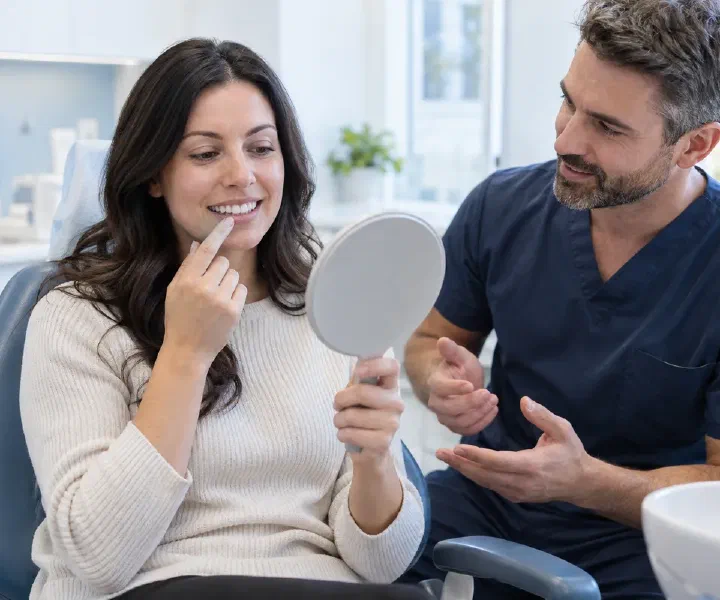
A patient using a hand mirror while discussing the limits of enamel reshaping

Good to know

Three reasons to pause before cosmetic reduction.

A small visible irregularity is not enough information to decide on treatment. Share symptoms and previous care so the assessment reflects the tooth’s full history.

Sensitivity that needs explanation

A tooth that reacts to cold, touch, or biting may have a concern that should be assessed first. Reshaping is not a general treatment for unexplained sensitivity. Describe when symptoms occur and whether they linger so the dentist can distinguish a cosmetic request from a problem needing different care.

Wear that is already progressing

Flattened edges, thinning surfaces, or repeated chipping can indicate ongoing forces or exposure that need attention. Removing more enamel may not fit that situation. The dentist reviews the pattern and discusses the cause rather than smoothing away evidence without considering what will happen next.

A larger positional concern

A tooth that is rotated, protruding, or crowded may look uneven because of its position. Surface reduction does not correct the root position or every biting relationship. An orthodontic assessment may offer a more appropriate discussion than trying to disguise substantial misalignment by changing enamel contours.

Planning together

Bring the details that affect suitability.

The dentist can assess the current surfaces more usefully when previous changes and daily habits are understood. Mention even a small procedure performed elsewhere.

Previous reshaping or restorations

Tell us if the tooth has been polished, filed, bonded, veneered, or repaired before. Records may clarify what was altered and which surfaces are natural tooth. A proposed adjustment should account for existing treatment rather than assuming the visible outline represents untouched enamel.

Habits and biting demands

Describe grinding, clenching, nail biting, or using teeth to hold objects. Mention any protective appliance and whether it fits. These details help assess loading and maintenance, particularly when the reason for the cosmetic concern is a pattern of wear rather than a stable natural shape.

The outcome you would accept

Explain whether you want a subtle change or a noticeably different tooth size. The available enamel may only allow a limited refinement. A candid discussion can prevent treatment from beginning with an expectation that would require more structure to be removed than the clinician considers appropriate.

Understanding the options

Preserve options by comparing the direction of change.

Removing material is only one way to affect an outline. The alternatives should be considered before a permanent alteration is made.

Adding where structure is missing

Bonding may be relevant when an edge needs length or a defect needs rebuilding. It has its own limits, including maintenance and bite considerations. Comparing an additive approach with reshaping helps identify whether the cosmetic goal can be addressed without reducing another healthy surface to match a worn one.

Changing position or accepting variation

Tooth movement may be relevant to a position concern, while a harmless shape difference may need no treatment. Both can be discussed without assuming that a quick contour change is preferable. The right choice reflects the benefit, clinical limits, time, and the degree of change you actually want.

The appointment

Make the decision before the enamel is altered.

The assessment and consent are meaningful parts of care. A short procedure should not compress the opportunity to understand what is being proposed.

  1. Establish the starting condition

    The dentist examines the tooth, surrounding tissues, and bite and obtains additional information when clinically needed. We discuss whether reshaping is reasonable at all. If a symptom or underlying concern needs investigation, the cosmetic decision can wait until that information is available.

  2. Define a limited adjustment

    For a suitable tooth, the proposed surface and endpoint are explained. Ask what amount of difference is realistic and whether the procedure is expected to affect appearance, a rough edge, or another specific feature. Consent should be to that defined change, not to open-ended reduction.

  3. Review and maintain the result

    After controlled adjustment and finishing, the tooth is checked for the intended shape and functional contacts. We explain what to report and how ordinary care continues. A later wish for more change requires reassessment because the previous procedure affects the structure and options that remain.

Frequently asked questions

Questions about enamel reshaping

How do I know whether I have enough enamel?

A dental assessment is needed. Appearance or a photograph cannot reliably show how much suitable structure is available at the proposed area. The clinician considers wear, previous treatment, symptoms, and any additional records needed to judge the plan.

Is enamel reshaping reversible?

No. Removed natural enamel does not grow back. Adding a restoration later is a different procedure with its own requirements. This makes an explanation of the amount, purpose, risks, and alternatives important even for a modest adjustment.

Can thin teeth be reshaped?

Thin or worn areas may make further reduction unsuitable. The dentist needs to examine the tooth and understand the cause of any loss. A request for a smoother outline does not override the need to preserve the remaining structure.

Does reshaping treat tooth grinding?

No. It does not by itself resolve the cause of grinding or clenching. If wear is related to those forces, the broader issue should be assessed. Cosmetic changes may need protection or a different plan depending on the findings.

Is it always better than bonding because no material is added?

No. Removing and adding have different implications. The appropriate direction depends on what is missing, what is excessive, and what the tooth can support. A material-free procedure is not automatically the more conservative choice for every concern.

Will the dentist reshape any tooth I request?

Only when the proposed change is clinically appropriate. The dentist may advise against reduction or recommend further assessment. The consultation should explain that reasoning and discuss reasonable alternatives, including leaving a harmless feature unchanged.

Can I have whitening and reshaping together?

The sequence depends on the overall plan and the condition of the teeth. Discuss both goals before starting either procedure. Sensitivity and shade expectations may affect the approach, and the clinician can explain whether separate stages are more suitable.

Real patient results

Before & after smile gallery.

Drag the centre line to compare each real case treated by our dental team. Every smile begins with a personal assessment and a plan shaped around the patient.

Areas We Serve

Neighbourhood dental care, close to home.

Located in Cookstown, Innisfil, our dental team welcomes patients from communities across South Simcoe, Barrie, and northern York Region.

Get directions
  • Cookstown
  • Innisfil
  • Simcoe
  • Lake Simcoe
  • Alcona
  • Stroud
  • Lefroy–Belle Ewart
  • Gilford
  • Churchill
  • Sandy Cove
  • Innisfil Heights
  • Fennell’s Corners
  • Bradford
  • Bradford West Gwillimbury
  • Bond Head
  • Newton Robinson
  • New Tecumseth
  • Alliston
  • Beeton
  • Tottenham
  • Adjala–Tosorontio
  • Everett
  • Loretto
  • Barrie
  • Essa
  • Thornton
  • Baxter
  • Angus
  • Egbert
  • Ivy
  • Utopia
  • York Region
  • East Gwillimbury
  • Queensville
  • Holland Landing
  • Sharon
  • Schomberg
  • Nobleton

Don’t see your community listed? Contact us—we regularly welcome patients from throughout the surrounding region.

Google reviews

Kind words from our patients.

Read what patients have shared about their visits to Cookstown Dental Centre.

A dentist having a friendly consultation with a patient in a bright dental clinic

Your next step

Ready to feel good about your next dental visit?

Whether you are new to the clinic or returning for care, our team is here to make booking simple and answer your questions.

Call Book Now WhatsApp

How can we help?

The Cookstown Dental team is here for you.

Need an appointment, have a question, or want to talk through your options? Choose the next step that works best for you.

Send us a note

We’ll get back to you as soon as we can.