Cookstown Dental Centre
The Cookstown Dental Centre team caring for a patient in a treatment room

Specialized Care · Cookstown

Make an urgent extraction decision with the tooth and your health in view.

Emergency extraction may be needed for an unsuitable tooth or urgent dental problem. Review diagnosis, alternatives, safe planning, recovery, and replacement needs.

Request an appointment

Let’s find a time that works.

Need urgent dental help? Call (705) 291-2222.

Emergency Tooth Extractions in Cookstown

Removing a tooth is an irreversible decision, even when the symptoms are urgent.

Emergency tooth extraction may be considered when a tooth cannot reasonably be restored, when its condition requires urgent source treatment, or when removal is the appropriate informed choice after assessment. A painful or infected tooth does not automatically need extraction. The dentist first considers the diagnosis, remaining structure, support, and reasonable preservation options.

At Cookstown Dental Centre, urgent care also takes account of medical history, medications, anatomy, and the appropriate treatment setting. Some extractions can be managed directly, while others require surgical planning or referral. Availability and same-day completion should be confirmed after the clinical requirements are known. If breathing or swallowing is affected, swelling is spreading rapidly, or there is another serious medical warning sign, hospital assessment takes priority over a routine extraction appointment.


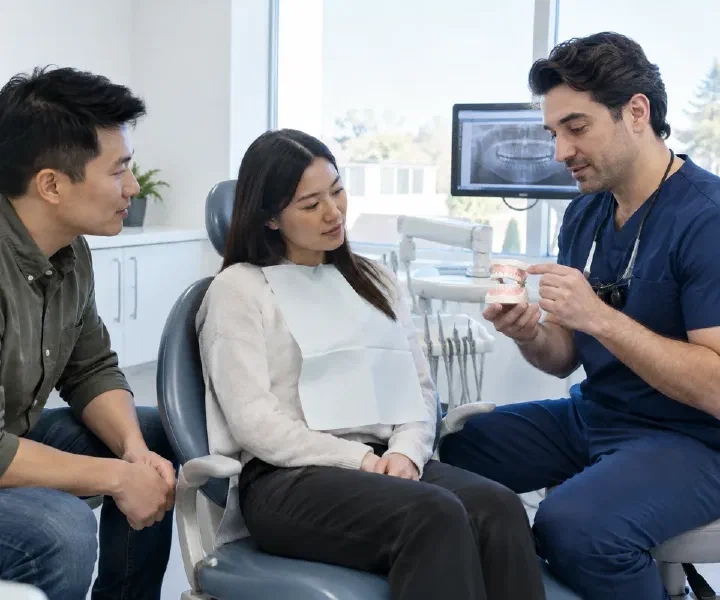
A dentist explaining an urgent tooth removal plan to a patient and companion

Understanding the options

Discuss whether keeping the tooth remains reasonable.

Urgency should focus the assessment without replacing the explanation of options.

Preservation when structure and support allow

Root canal treatment, restoration, or other care may be suitable for some painful teeth. The dentist explains what preserving the tooth would require and its outlook. The comparison should include the final restoration and follow-up rather than describe only the first pain-relieving procedure.

Removal when the findings support it

Extensive fracture, unsuitable remaining structure, severe support problems, or another diagnosis may favour extraction. The reason should be explained in terms of the tooth’s prognosis and your circumstances. A request for quick relief should not substitute for understanding the irreversible nature and relevant alternatives.

What we consider

Check the factors that determine the procedure and setting.

An emergency label does not make every extraction simple.

Root anatomy and nearby structures

Clinical examination and appropriate imaging help assess the roots, surrounding bone, and relevant anatomy. An erupted tooth may still have features that complicate removal. The clinician explains whether a straightforward or surgical approach is anticipated and whether specialist care would be appropriate.

Infection, swelling, and access

The extent of infection, ability to open, and local conditions influence urgent planning. Some situations need escalation or a different sequence. Antibiotics, when indicated, support the overall plan but should not be assumed to replace source treatment or be required before every infected tooth can be removed.

Medical history and medicines

Tell the team about prescribed drugs, allergies, bleeding concerns, relevant medical treatment, and what you have taken for pain. Do not stop blood thinners or other medicines on your own. The provider determines whether coordination or additional precautions are needed for the proposed procedure.

Planning together

Prepare for the actual appointment rather than a generic extraction.

The instructions depend on the anaesthetic plan, complexity, and your circumstances.

Confirm pain control and any sedation arrangements

Local anaesthesia and appropriate comfort measures are discussed before treatment. Sedation requires its own suitability assessment and preparation; it is not automatically available because the extraction is urgent. Follow the team’s instructions about medicines, food, drink, transport, and support for the specific planned appointment.

Discuss the time after treatment

Arrange practical help if needed and ask about the expected effect on eating, work, and other activities. The recommendations depend on the procedure and your health. If a temporary tooth or existing denture is relevant, mention it before extraction so pressure on the healing site can be considered.

The appointment

Understand the removal and follow-up sequence.

The treatment includes haemostasis, instructions, and a plan for concerns afterward.

  1. Confirm consent and the intended approach

    The clinician reviews the tooth, procedure, relevant risks, and alternatives. Ask questions before treatment begins. If the findings require a change in approach or referral, that should be explained rather than continuing solely because an emergency appointment had been reserved.

  2. Remove the tooth and assess the site

    The planned procedure is performed with appropriate anaesthesia and clinical techniques. The provider manages the site according to the findings and explains any sutures or additional care. You should understand the immediate instructions before leaving, including what to do if bleeding does not settle as advised.

  3. Review healing or additional treatment needs

    Some cases require a scheduled review or coordination with another provider. Persistent or worsening symptoms need contact even if no routine review was initially planned. If replacement is appropriate, its timing should reflect healing and the wider dental plan rather than be assumed identical for every extraction.

Practical guidance

Protect healing and recognize when to seek help.

Aftercare should follow the instructions for your actual procedure.

Follow the written cleaning and clot-protection advice

The treating team explains eating, rinsing, smoking precautions, activity, and medication where indicated. Avoid probing or packing the socket with home remedies. If an instruction is unclear, contact the clinic rather than combine advice from unrelated procedures that may not fit your stage of recovery.

Escalate uncontrolled bleeding or worsening symptoms

Contact the provider about bleeding that does not settle with the instructed measures, increasing pain, fever, or swelling. Seek emergency care for breathing or swallowing difficulty, rapidly spreading swelling, or significant systemic illness. A completed extraction does not make every new postoperative symptom routine.

Frequently asked questions

Questions about emergency tooth extractions

Does an infected tooth always need emergency extraction?

No. Some infected teeth can be preserved with appropriate treatment if their structure and support are suitable. Others have a prognosis that favours removal. The dentist identifies the source and compares reasonable options before making the extraction decision.

Can every emergency extraction be done the same day?

No. Anatomy, medical factors, infection extent, available appointments, and the need for referral can affect timing. Contact the clinic for assessment and confirmed arrangements. Same-day completion should not be promised before the procedure’s requirements are known.

Should I stop my blood thinner before the visit?

Do not stop prescribed medication independently. Tell the dental team what you take and provide relevant medical information. The clinician determines whether changes or coordination are needed, balancing the procedure with the risks of altering medication.

Will I need antibiotics before the tooth is removed?

Not automatically. Antibiotic decisions depend on infection findings, systemic symptoms, and medical circumstances. They are not a universal prerequisite for extraction and do not replace appropriate source treatment. Follow the prescribing clinician’s instructions if medication is indicated.

What if I want to be sedated?

Discuss this when contacting the clinic. Sedation requires assessment, appropriate provider arrangements, preparation, and recovery support, so it cannot be assumed available at every urgent visit. Other comfort measures and suitable referral options can be discussed according to the case.

Will the missing tooth need replacing?

That depends on the tooth’s location, the bite, remaining teeth, and your goals. Replacement options and timing can be discussed after the immediate problem is addressed, or before removal when relevant. Not every extracted tooth has the same replacement requirement.

What should make me contact the clinic after extraction?

Uncontrolled bleeding despite the instructed measures, worsening pain, increasing swelling, fever, or other unexpected concerns need advice. Seek emergency care for breathing or swallowing difficulty or rapidly spreading swelling rather than waiting for a routine postoperative appointment.

Real patient results

Before & after smile gallery.

Drag the centre line to compare each real case treated by our dental team. Every smile begins with a personal assessment and a plan shaped around the patient.

Areas We Serve

Neighbourhood dental care, close to home.

Located in Cookstown, Innisfil, our dental team welcomes patients from communities across South Simcoe, Barrie, and northern York Region.

Get directions
  • Cookstown
  • Innisfil
  • Simcoe
  • Lake Simcoe
  • Alcona
  • Stroud
  • Lefroy–Belle Ewart
  • Gilford
  • Churchill
  • Sandy Cove
  • Innisfil Heights
  • Fennell’s Corners
  • Bradford
  • Bradford West Gwillimbury
  • Bond Head
  • Newton Robinson
  • New Tecumseth
  • Alliston
  • Beeton
  • Tottenham
  • Adjala–Tosorontio
  • Everett
  • Loretto
  • Barrie
  • Essa
  • Thornton
  • Baxter
  • Angus
  • Egbert
  • Ivy
  • Utopia
  • York Region
  • East Gwillimbury
  • Queensville
  • Holland Landing
  • Sharon
  • Schomberg
  • Nobleton

Don’t see your community listed? Contact us—we regularly welcome patients from throughout the surrounding region.

Google reviews

Kind words from our patients.

Read what patients have shared about their visits to Cookstown Dental Centre.

A dentist having a friendly consultation with a patient in a bright dental clinic

Your next step

Ready to feel good about your next dental visit?

Whether you are new to the clinic or returning for care, our team is here to make booking simple and answer your questions.

Call Book Now WhatsApp

How can we help?

The Cookstown Dental team is here for you.

Need an appointment, have a question, or want to talk through your options? Choose the next step that works best for you.

Send us a note

We’ll get back to you as soon as we can.