Cookstown Dental Centre
The Cookstown Dental Centre team caring for a patient in a treatment room

Cosmetic Dentistry · Cookstown

Use digital records to make a smile plan easier to discuss.

Digital smile design connects photographs and scans with treatment planning. Understand previews, clinical limits, and the decisions behind a proposed smile.

Request an appointment

Let’s find a time that works.

Need urgent dental help? Call (705) 291-2222.

Digital Smile Design in Cookstown

A digital preview is a conversation tool, not a guarantee.

Digital smile design uses appropriate photographs, scans, and planning tools to help explain possible changes to a smile. The value is not simply seeing a different set of teeth on a screen. Records can help connect tooth proportions, visible gumline, facial features, and the clinical work needed to achieve a proposed change.

At Cookstown Dental Centre, we discuss whether digital records would add useful information to your consultation and which planning methods are appropriate. A simulation cannot replace examination, diagnosis, or informed consent. The plan still needs to account for healthy tooth structure, the bite, tissue response, materials, and maintenance. We explain what the preview represents and which parts of the outcome remain uncertain.


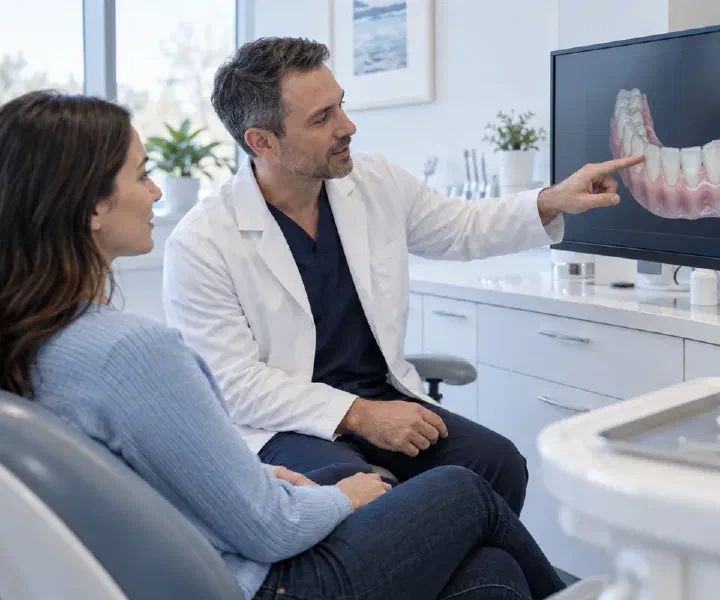
A dentist and patient reviewing an unlabelled digital dental model on a monitor

A closer look

Separate the records, the proposal, and the treatment.

These stages are related but not interchangeable. Understanding their roles helps you ask better questions about what you are shown.

  1. Records of the starting point

    Photographs and scans can document shape, position, and the visible relationships between teeth and surrounding features. Other clinical records may still be needed. Ask why a record is being taken and how it will inform the decision, rather than assuming a scan by itself contains everything required for treatment planning.

  2. A proposed direction

    A digital image or design can illustrate possible proportions, outlines, or arrangements. It helps identify what you prefer and what needs further discussion. The clinician should explain whether the display is an initial concept, a treatment simulation, or a record intended to guide another stage of care.

  3. The clinical route

    Creating the proposed appearance may involve very different procedures, such as tooth movement, bonding, whitening, or a restoration. Each has its own limits and responsibilities. A preview should therefore be connected to a clear explanation of what would actually happen to the teeth, gums, and bite.

What we consider

Check the design against real-world limits.

A visually appealing arrangement must still be suitable for the mouth it is being planned for. These questions help keep the screen and the clinical plan connected.

Tooth structure and materials

A design that changes length, width, or colour may require added material or preparation. The dentist explains what the existing teeth can support and how material thickness affects appearance. A convincing image cannot establish that a particular restoration can be placed without altering healthy structure.

Bite and movement

The way the teeth meet during chewing and jaw movement matters to the durability and comfort of a proposed change. Alignment may need assessment before restorative design is finalized. Ask whether a preview shows only the visible smile or also reflects the functional plan being considered.

Gums and facial context

Tissue health, gum levels, lip movement, and smile display influence the result. A still image captures only one moment. The clinician considers how the smile looks in conversation and function, and explains when tissue treatment or specialist input may be relevant before a design becomes an agreed treatment plan.

Planning together

Use the preview to ask specific questions.

You do not need to understand design software to take part. Focus on the proposed changes and the steps they would require.

Name what looks different

Point out changes you like and any that seem too bright, long, wide, or uniform. Ask which teeth are included and why. Specific feedback helps refine the conversation and avoids accepting a broad visual impression without noticing a detail that matters to you.

Ask what is reversible

Clarify whether the proposal involves trial shapes, tooth preparation, tissue changes, or orthodontic movement. Digital editing is easy; clinical reversal may not be. The distinction should be explicit before a design is treated as approval to start procedures that permanently alter teeth or tissues.

Request the practical sequence

Ask about appointments, provisional stages, healing, costs, and maintenance. If the preview combines several treatments, clarify which are necessary for the proposal and which are optional. A useful design discussion should leave you understanding the process as well as the appearance shown on the screen.

The appointment

Move from a concept to an informed decision.

Digital planning can support different stages of care, but the actual workflow depends on the case and the records available.

  1. Assess before illustrating

    We first establish the concern, review oral health, and discuss options. If digital records would help, their purpose is explained. Existing records may also be useful, particularly when orthodontic or restorative care has been planned elsewhere and should be considered before creating a new proposal.

  2. Review and refine the proposal

    The clinician discusses the design in relation to the findings and your preferences. A physical mock-up or other demonstration may be considered where useful. Ask what still needs confirmation and whether any further assessment could change the treatment sequence or the appearance being proposed.

  3. Confirm the treatment separately

    Agree on the clinical scope, consent, and costs before care begins. The final result is reviewed in the mouth, with attention to fit, function, cleaning, and appearance. A digital record can support that comparison, but it should not replace clinical checks or a discussion of any differences.

Frequently asked questions

Questions about digital smile design

Does a digital preview guarantee my final smile?

No. It illustrates a proposal using available records and assumptions. Teeth, tissues, treatment response, and materials affect the real result. The clinician should explain what the preview can reasonably show and where uncertainty remains.

Is digital smile design a treatment by itself?

It is a planning and communication approach. Achieving a proposed change may involve one or more separate procedures. Ask which treatment steps are being considered, why they are needed, and what preparation or maintenance they involve.

Will everyone need a scan?

No. Records should be selected according to the concern and the information needed. Photographs, an examination, existing records, or another method may be more useful in a particular case. The team can explain the purpose before taking additional records.

Can I change my mind after seeing a design?

Yes. A preview is an opportunity to discuss preferences and alternatives before treatment. Confirm what stage you are approving and whether any clinical work has begun. It should be clear when a design discussion becomes consent for a procedure.

Is a digital design the same as a trial smile?

Not necessarily. A digital preview appears on a screen, while a physical mock-up may let you assess a proposed shape in the mouth where appropriate. Their roles and limits differ, and neither guarantees every feature of the final result.

Does a design account for the bite?

A proper treatment plan must consider function, but a visual preview may show only part of that information. Ask how biting contacts and jaw movement have been assessed and whether orthodontic or restorative input is needed before proceeding.

Can I bring a design from another clinic?

Bring available records and explain what you were told. A new clinician still needs to assess the mouth and understand the proposed work. A previous simulation can inform discussion without automatically establishing that the same treatment is suitable or available.

Real patient results

Before & after smile gallery.

Drag the centre line to compare each real case treated by our dental team. Every smile begins with a personal assessment and a plan shaped around the patient.

Areas We Serve

Neighbourhood dental care, close to home.

Located in Cookstown, Innisfil, our dental team welcomes patients from communities across South Simcoe, Barrie, and northern York Region.

Get directions
  • Cookstown
  • Innisfil
  • Simcoe
  • Lake Simcoe
  • Alcona
  • Stroud
  • Lefroy–Belle Ewart
  • Gilford
  • Churchill
  • Sandy Cove
  • Innisfil Heights
  • Fennell’s Corners
  • Bradford
  • Bradford West Gwillimbury
  • Bond Head
  • Newton Robinson
  • New Tecumseth
  • Alliston
  • Beeton
  • Tottenham
  • Adjala–Tosorontio
  • Everett
  • Loretto
  • Barrie
  • Essa
  • Thornton
  • Baxter
  • Angus
  • Egbert
  • Ivy
  • Utopia
  • York Region
  • East Gwillimbury
  • Queensville
  • Holland Landing
  • Sharon
  • Schomberg
  • Nobleton

Don’t see your community listed? Contact us—we regularly welcome patients from throughout the surrounding region.

Google reviews

Kind words from our patients.

Read what patients have shared about their visits to Cookstown Dental Centre.

A dentist having a friendly consultation with a patient in a bright dental clinic

Your next step

Ready to feel good about your next dental visit?

Whether you are new to the clinic or returning for care, our team is here to make booking simple and answer your questions.

Call Book Now WhatsApp

How can we help?

The Cookstown Dental team is here for you.

Need an appointment, have a question, or want to talk through your options? Choose the next step that works best for you.

Send us a note

We’ll get back to you as soon as we can.