Cookstown Dental Centre
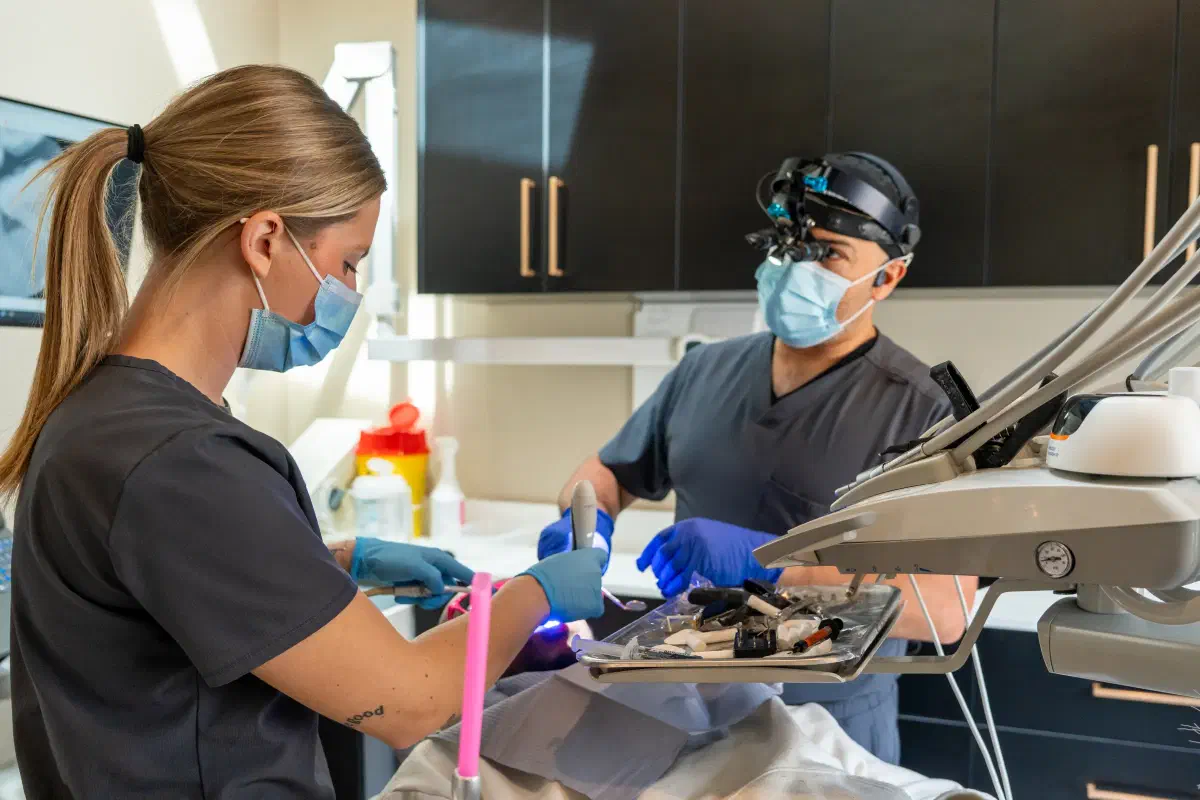
The Cookstown Dental Centre team caring for a patient in a treatment room

General & Family Dentistry · Cookstown

A digital record of the shape of your smile.

Learn how optical dental scans record tooth surfaces, when digital impressions may be useful, and what to expect during scanning and follow-up.

Request an appointment

Let’s find a time that works.

Need urgent dental help? Call (705) 291-2222.

Digital Dental Impressions in Cookstown

See the shape that helps guide your treatment.

A digital dental impression uses an optical scanner to build a three-dimensional record of visible tooth and gum surfaces. Instead of relying on a tray of impression material in suitable cases, the clinician moves a scanning wand around the mouth. The resulting model may help with planning or making an appropriate dental restoration or appliance.

At Cookstown Dental Centre, digital scanning is used when it fits the clinical task. The dentist will explain why a record is needed and whether a digital or conventional impression is more suitable. A scan can make shape easier to discuss on a screen, but it is one part of treatment and does not replace the examination or the checks needed when a restoration or appliance is fitted.

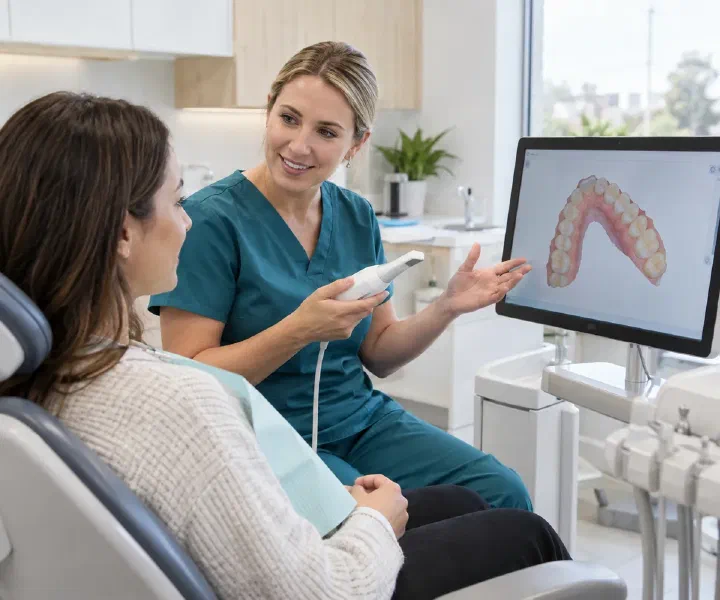
A clinician explaining an optical scanner and a three-dimensional tooth model

What matters most

The scan has a job within a larger plan.

Before an impression is taken, you should know what is being recorded and how that record will be used. Different treatments require different information.

Capture the surfaces needed for planning

The scanner records visible contours that can form a digital model. Depending on the treatment, this may include one area, both arches, and the way the teeth meet. The clinician checks whether the required details have been captured. The model is useful only when it is sufficiently complete for its intended purpose.

Support suitable restorative or appliance work

Digital records may be used for selected restorations, aligners, or other appliances when the workflow is appropriate. The dentist considers the tooth, tissues, and laboratory requirements. Do not assume that every type of appliance or every clinical situation can use exactly the same scan.

Make the conversation more visual

A model can help you see tooth positions or the area being planned. Ask the dentist to point out the relevant feature and explain what it means. A simulation or digital preview should not be interpreted as a guarantee of the final treatment result.

At your appointment

How the digital impression is recorded.

You can ask to see the scanning wand before it is used. Tell the team about gagging, jaw discomfort, or limited mouth opening so the approach can be discussed.

  1. Prepare the area

    The clinician explains the scan and prepares the surfaces as needed. Depending on the procedure, tissues may need to be managed and the area kept clear for an accurate record. The preparation for an impression is not always the same as preparation for the dental treatment that precedes it.

  2. Move the scanner around the teeth

    The wand is guided over the required surfaces while a model develops on the screen. You may be asked to open, close, or bite in a particular way. Short pauses can be discussed. If you feel uncomfortable, use the agreed signal rather than trying to hold still through increasing strain.

  3. Check and complete the record

    The clinician reviews the capture and may rescan an area with missing detail. A bite record or additional information may also be needed. Ask what happens next, whether records go to a laboratory, and when the treatment or fitting appointment is expected.

Two parts of the picture

An optical scan is different from an X-ray scan.

The word scan is used for several dental technologies. Knowing the difference helps you understand both the purpose and the limits of the proposed examination.

Digital impressions record surfaces

Optical impressions use light to record visible shape; they do not use the X-rays used in CBCT imaging. They cannot show everything inside a tooth or beneath the gum. An attractive digital model is therefore not a complete assessment of dental health.

Radiographs examine different structures

Dental X-rays and CBCT are selected for questions about structures that cannot be assessed from an optical surface record alone. The dentist may need both types of information for a particular plan. One does not automatically make the other unnecessary, and each should have a clear clinical purpose.

Practical guidance

Accuracy includes the steps after scanning.

A digital record is useful, but the finished work still needs clinical assessment. Ask about the full process rather than judging the treatment only by the technology used.

The record may need refinement

Moisture, movement, tissue position, and access can affect the capture. The clinician may repeat a small area or decide that another impression method is preferable. These are quality decisions, not necessarily signs that something has gone wrong. The aim is a suitable record for the specific task.

The final fit still needs checking

A restoration or appliance should be assessed in the mouth for the relevant fit, bite, and function. Adjustments or further work may be needed. Digital scanning does not guarantee a same-day result, eliminate laboratory time, or mean that every item will fit without any clinical refinement.

Your questions help define expectations

Ask what the scan fee covers, what follow-up is included, and how records may be shared if another clinician is involved. If you have an older scan, mention it, but understand that changes in the mouth or a different treatment need may require new records.

Frequently asked questions

Your questions about digital dental impressions.

Does a digital impression use radiation?

An optical impression uses light to record visible surfaces rather than the ionizing radiation used for dental X-rays. Confirm which type of scan is being discussed, because CBCT is a different examination. The team can explain why each record is needed for your treatment.

Will I still need an impression tray?

Possibly. Digital scanning suits many situations, but a conventional impression may be more appropriate for a particular clinical task. Ask why the dentist recommends one method. The goal is a useful, accurate record, not using one technology regardless of the circumstances.

Is it comfortable if I have a strong gag reflex?

Some patients find digital scanning easier than a tray, but comfort varies and the wand still needs to enter the mouth. Tell the team about triggers and previous experiences. Pauses, pacing, and an alternative approach can be discussed before the scan begins.

How long does the scan take?

It depends on the area being recorded, the procedure, and whether additional detail is needed. The total appointment may include preparation and other treatment beyond scanning. Ask the clinic for an estimate based on your planned visit rather than relying on a general scan time.

Can the scan detect every cavity?

No. A surface model is not a substitute for a dental examination and appropriate imaging. Some scanners have additional features, but no digital impression should be treated as a complete diagnosis by itself. The dentist interprets the relevant records alongside clinical findings.

Does digital scanning mean my crown is ready immediately?

Not necessarily. The workflow may involve a laboratory and another appointment. Ask about the expected sequence for your particular restoration, including any temporary work and fitting visit. Digital records can support the process without determining the manufacturing time on their own.

Can an old scan be reused?

That depends on its purpose, format, and whether your mouth has changed. A previous model may help with comparison but may not be suitable for making new work. Tell the team where the record was made so they can assess whether obtaining it would be useful.

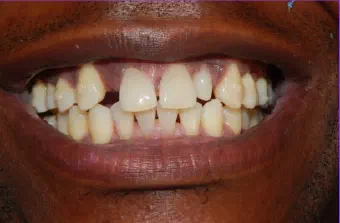
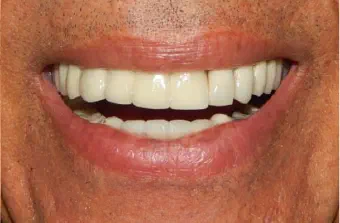
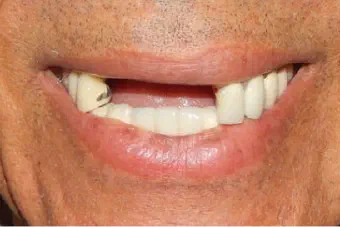
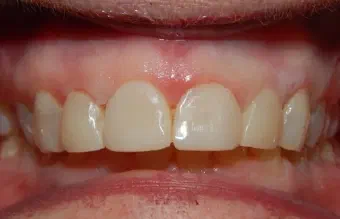
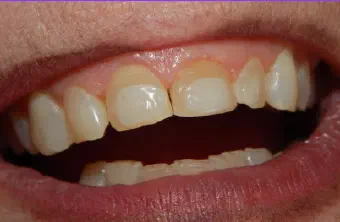
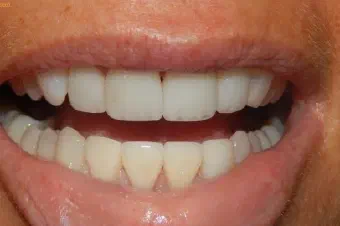
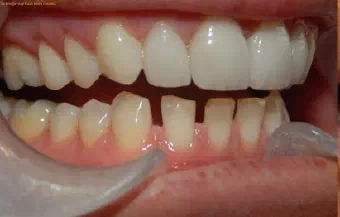
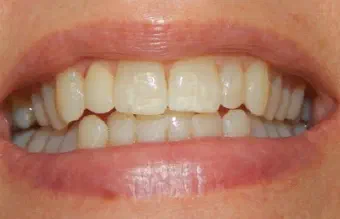
Real patient results

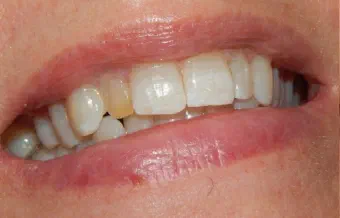
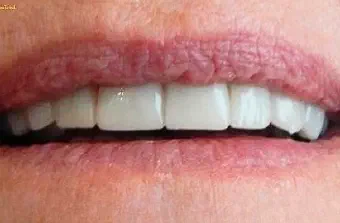
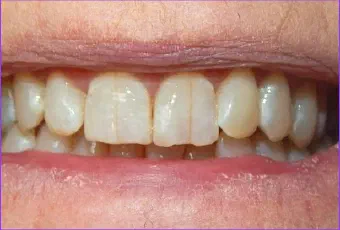
Before & after smile gallery.

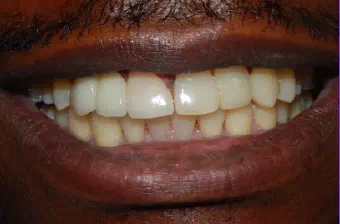
Drag the centre line to compare each real case treated by our dental team. Every smile begins with a personal assessment and a plan shaped around the patient.

Areas We Serve

Neighbourhood dental care, close to home.

Located in Cookstown, Innisfil, our dental team welcomes patients from communities across South Simcoe, Barrie, and northern York Region.

Get directions
  • Cookstown
  • Innisfil
  • Simcoe
  • Lake Simcoe
  • Alcona
  • Stroud
  • Lefroy–Belle Ewart
  • Gilford
  • Churchill
  • Sandy Cove
  • Innisfil Heights
  • Fennell’s Corners
  • Bradford
  • Bradford West Gwillimbury
  • Bond Head
  • Newton Robinson
  • New Tecumseth
  • Alliston
  • Beeton
  • Tottenham
  • Adjala–Tosorontio
  • Everett
  • Loretto
  • Barrie
  • Essa
  • Thornton
  • Baxter
  • Angus
  • Egbert
  • Ivy
  • Utopia
  • York Region
  • East Gwillimbury
  • Queensville
  • Holland Landing
  • Sharon
  • Schomberg
  • Nobleton

Don’t see your community listed? Contact us—we regularly welcome patients from throughout the surrounding region.

Google reviews

Kind words from our patients.

Read what patients have shared about their visits to Cookstown Dental Centre.

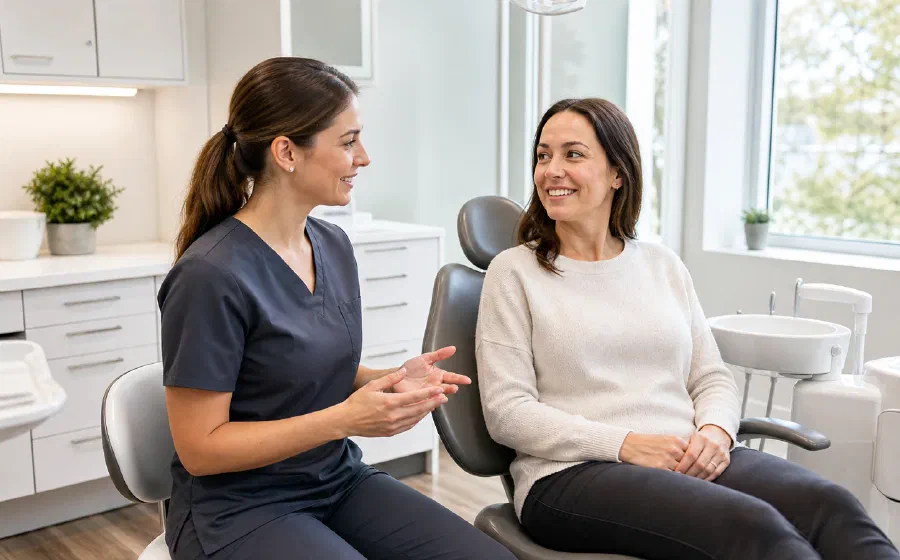
A dentist having a friendly consultation with a patient in a bright dental clinic

Your next step

Ready to feel good about your next dental visit?

Whether you are new to the clinic or returning for care, our team is here to make booking simple and answer your questions.

Call Book Now WhatsApp

How can we help?

The Cookstown Dental team is here for you.

Need an appointment, have a question, or want to talk through your options? Choose the next step that works best for you.

Send us a note

We’ll get back to you as soon as we can.