Cookstown Dental Centre
The Cookstown Dental Centre team caring for a patient in a treatment room

Restorative Dentistry · Cookstown

Replace a damaged denture tooth while checking the appliance around it.

A missing artificial denture tooth may be replaceable when the base and bite remain suitable. Review matching, repair records, fit, and repeat-breakage causes.

Request an appointment

Let’s find a time that works.

Need urgent dental help? Call (705) 291-2222.

Denture Tooth Replacement in Cookstown

A new artificial tooth must fit the denture and the opposing bite.

An artificial tooth can detach, chip, or wear enough to affect a denture’s appearance and function. Replacing that tooth may be possible when the base, remaining teeth, and overall appliance are serviceable. It is different from adding a tooth after a new extraction, which may require changes to the denture design and support.

At Cookstown Dental Centre, we assess the damaged area and the appliance in the mouth before discussing repair. Bring the detached tooth if you have it and avoid gluing it back. Matching shape and shade matters, but so do the attachment to the base and the forces on the replacement. A repeated loss should prompt review of the cause rather than simply another tooth being inserted into the same problem area.


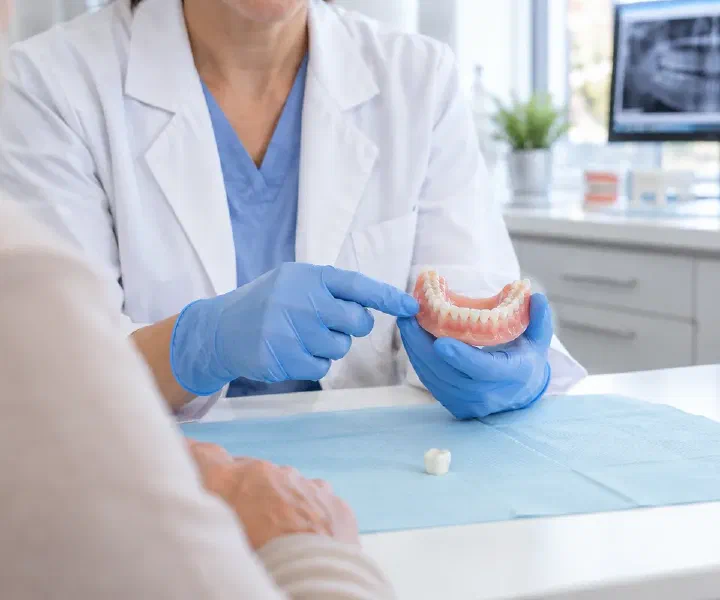
A clinician examining a denture and a detached artificial tooth

Good to know

Clarify which kind of tooth replacement is needed.

The history determines whether this is a material repair or a change to the appliance design.

Replacing an artificial tooth that came away

The clinician checks the detached piece, remaining base, and neighbouring artificial teeth. A replacement or reattachment may be considered according to the material and condition. The old piece can help identify the shape or failure, but reuse should not be assumed without assessment.

Adding a tooth after further tooth loss

A new space from an extraction is a different situation. The existing denture may or may not allow a suitable addition, and the supporting tissues and design need review. The dentist explains whether adapting the current appliance is reasonable or whether a new partial or complete denture is more appropriate.

What we consider

Check why the artificial tooth failed.

The repair needs a serviceable foundation and an appropriate contact pattern.

Base material and available attachment area

The clinician examines cracks, wear, and the material around the missing tooth. If the base is weakened or the area has been repeatedly repaired, another simple addition may have limited value. The expected durability should be discussed before the procedure is selected.

Opposing contacts and loading

The replacement tooth must work with the opposing teeth or denture. A heavy or unfavourable contact may contribute to repeated damage. The dentist checks the bite and relevant habits rather than assuming that the adhesive connection alone explains every detached or fractured artificial tooth.

The condition of the rest of the appliance

Extensively worn teeth, poor fit, or a changed mouth can make a localized replacement less useful. The clinician should assess the whole denture, not only the empty socket in its base. A repair may be reasonable as an interim measure, but that purpose should be clear.

Planning together

Prepare for the repair without altering the pieces.

Keeping the original condition visible helps the assessment and laboratory work.

Bring the tooth and appliance

Store available pieces in a clean container and bring them together. Do not file the base or glue the tooth yourself. A small fragment can still help with diagnosis or matching, although the clinician may recommend a new artificial tooth instead of reusing damaged material.

Discuss appearance and timing

Explain how visible the area is and what matching expectations matter to you. Existing teeth may have worn or changed shade, so an exact match can have limits. Ask about laboratory timing and any interval without the denture after the actual repair needs have been assessed.

The appointment

Fit the new tooth as part of the whole denture.

The process may require records or laboratory work depending on the design and damage.

  1. Select and position the replacement

    The clinician coordinates the appropriate shape, shade, and position with the repair process. Records may be needed to guide the bite or a new addition. The goal is not simply filling the gap, but creating a tooth that integrates with the existing arrangement without an unsuitable contact.

  2. Check the repaired appliance in the mouth

    At return, the denture is assessed for seating, bite, comfort, and the repaired area. Report a tooth that contacts first or feels different during chewing. A visually satisfactory laboratory repair still needs clinical checking before it can be considered an appropriate functional result.

  3. Review a recurring failure

    If the tooth loosens or breaks again, the cause should be reconsidered. The base, bite, support, or overall design may need a different plan. Repeated replacement of the same component is not always the most useful long-term response.

Practical guidance

Protect the repair during handling and daily use.

The care instructions should reflect the material and any other work completed at the same time.

Handle the denture over a protected surface

Drops can damage both the repaired tooth and the base. Follow the recommended cleaning and storage routine and avoid heat or unsuitable products. A repaired appliance is still vulnerable to impact, so ordinary handling precautions remain useful even when the new tooth feels secure.

Maintain reviews for fit and wear

Report rocking, sore spots, or changes in the opposing bite. A stable base helps support the artificial teeth, and tissue changes can alter loading. Ongoing review should consider the whole appliance so the new tooth is not expected to compensate for a denture that no longer fits appropriately.

Frequently asked questions

Questions about denture tooth replacement

Can one missing denture tooth be replaced?

Often it can be assessed for replacement, but suitability depends on the base, design, and bite. The clinician checks the whole appliance before recommending repair. A localized missing tooth does not automatically mean the rest of the denture is serviceable.

Should I bring the detached tooth?

Yes, if available. It may help identify the failure or guide matching. Keep it safely and do not glue it back yourself. The dentist decides whether the piece can be reused or whether a new artificial tooth is more appropriate.

Will the replacement match the other teeth?

The clinician aims for a suitable match, but existing wear, shade changes, and material availability can limit an exact result. Discuss expectations before the repair. Appearance should be considered alongside position and bite function.

Can a tooth be added after I have another natural tooth removed?

Possibly, but that is a design question rather than the same repair as replacing a detached artificial tooth. The appliance, new space, and support need assessment. Some dentures can be adapted; others need a different plan.

Why does the same denture tooth keep breaking?

The base, connection, bite contacts, material, or fit may contribute. The clinician should investigate the pattern. Replacing the tooth repeatedly without reviewing the cause may leave the same forces or weakness in place.

Can I wear the denture with the tooth missing?

Ask the clinic for advice about the particular appliance. Sharpness, damage, instability, and the location matter. Do not assume it is suitable simply because the base still seats, especially if a fragment or loose part remains.

Will the repair be ready the same day?

That depends on the material, records, laboratory work, and clinical checks required. Ask for a case-specific estimate after assessment. A single missing tooth can still involve more than a quick attachment procedure.

Real patient results

Before & after smile gallery.

Drag the centre line to compare each real case treated by our dental team. Every smile begins with a personal assessment and a plan shaped around the patient.

Areas We Serve

Neighbourhood dental care, close to home.

Located in Cookstown, Innisfil, our dental team welcomes patients from communities across South Simcoe, Barrie, and northern York Region.

Get directions
  • Cookstown
  • Innisfil
  • Simcoe
  • Lake Simcoe
  • Alcona
  • Stroud
  • Lefroy–Belle Ewart
  • Gilford
  • Churchill
  • Sandy Cove
  • Innisfil Heights
  • Fennell’s Corners
  • Bradford
  • Bradford West Gwillimbury
  • Bond Head
  • Newton Robinson
  • New Tecumseth
  • Alliston
  • Beeton
  • Tottenham
  • Adjala–Tosorontio
  • Everett
  • Loretto
  • Barrie
  • Essa
  • Thornton
  • Baxter
  • Angus
  • Egbert
  • Ivy
  • Utopia
  • York Region
  • East Gwillimbury
  • Queensville
  • Holland Landing
  • Sharon
  • Schomberg
  • Nobleton

Don’t see your community listed? Contact us—we regularly welcome patients from throughout the surrounding region.

Google reviews

Kind words from our patients.

Read what patients have shared about their visits to Cookstown Dental Centre.

A dentist having a friendly consultation with a patient in a bright dental clinic

Your next step

Ready to feel good about your next dental visit?

Whether you are new to the clinic or returning for care, our team is here to make booking simple and answer your questions.

Call Book Now WhatsApp

How can we help?

The Cookstown Dental team is here for you.

Need an appointment, have a question, or want to talk through your options? Choose the next step that works best for you.

Send us a note

We’ll get back to you as soon as we can.