Cookstown Dental Centre
The Cookstown Dental Centre team caring for a patient in a treatment room

Restorative Dentistry · Cookstown

Improve adaptation when a denture no longer matches the supporting tissues.

A denture reline renews the fitting surface of a suitable appliance. Explore tissue changes, hard and soft materials, preparation, fit checks, and limitations.

Request an appointment

Let’s find a time that works.

Need urgent dental help? Call (705) 291-2222.

Denture Relines in Cookstown

Relining addresses the surface against the gums, not every cause of looseness.

The ridge and soft tissues can change while the denture base retains its original shape. A reline modifies the fitting surface to improve adaptation when the rest of the appliance remains suitable. It can be useful in selected cases, but it does not automatically correct worn artificial teeth, an unsuitable bite, or a damaged framework.

At Cookstown Dental Centre, we assess the mouth and denture before recommending a reline. The material and method depend on tissue condition, healing stage, and the intended role of the procedure. A hard reline, a selected soft lining, and a temporary tissue-management measure are not identical choices. The plan should explain what is being changed, how long the material is intended to serve, and when the result will be reviewed.


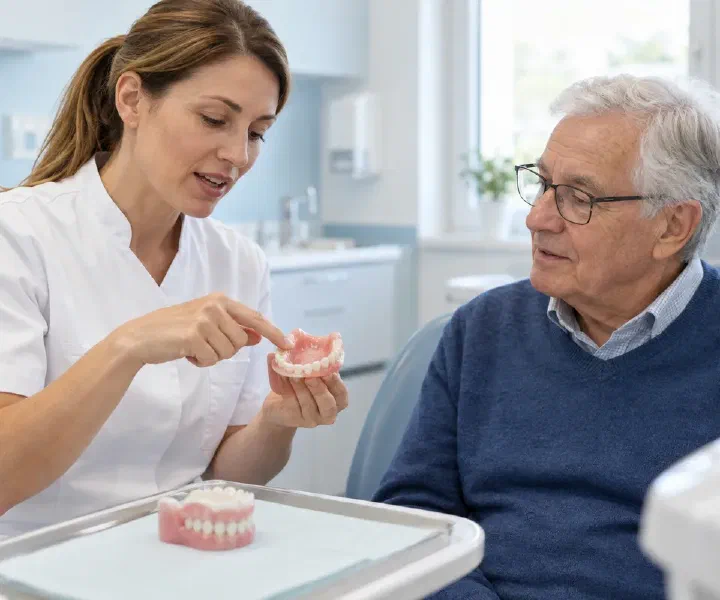
A dentist pointing to the fitting surface of a removable denture

Good to know

Understand why the fit has changed.

A reline is most useful when it addresses an identified mismatch rather than an unexplained symptom.

Tissue and ridge changes

Changes after extraction or over longer periods can leave space beneath the base. The clinician assesses whether the denture can be adapted appropriately to the current support. The amount of adhesive being used or the age of the appliance may signal a concern, but neither independently establishes the right procedure.

Other reasons for instability

Worn teeth, uneven contacts, border problems, or a damaged component can also make a denture move. Relining the inner surface may not resolve those issues. The dentist examines the whole appliance and opposing bite so the recommendation is directed at the cause rather than at looseness as a general label.

What we consider

Confirm that the existing denture is worth adapting.

The fitting surface should not be improved at the expense of keeping an otherwise unsuitable design.

The condition of the artificial teeth

The clinician checks wear, damage, and whether the tooth arrangement still provides useful function and appearance. A reline leaves many of those features unchanged. If the teeth need substantial revision, replacement may be a more reasonable investment than improving only the base adaptation.

The base and overall design

Cracks, previous repairs, extension, and material condition can affect suitability. Some appliances need another procedure or a new design. The dentist explains whether the current base can accept the proposed reline and whether its remaining service life supports that choice.

The health of the supporting tissues

Inflamed or injured tissues may need care before definitive records or a long-term reline. The clinician assesses the cause and may recommend a different interim approach. Recording an unstable tissue condition can produce a fit that becomes inappropriate when the mouth changes or heals.

Understanding the options

Choose the lining material for a defined purpose.

Comfort, durability, and care requirements differ between materials and treatment stages.

A hard reline where suitable

A hard material may be used to renew adaptation in an appropriate serviceable denture. The method can involve clinical and laboratory stages depending on the plan. It still needs a fit and bite review; adding material to the fitting surface does not guarantee stability if another design problem remains.

A soft or temporary lining approach

A resilient material may be considered for selected tissue or comfort needs, with its own cleaning and review requirements. Some materials are intended for a limited period. The clinician should explain the role and maintenance rather than present softness as a universal or permanent solution to every painful denture.

The appointment

Record the current tissues and check the revised fit.

The sequence depends on the technique and whether the mouth is still changing.

  1. Assess and prepare

    The dentist reviews the appliance, bite, tissues, and any healing changes, then explains the proposed reline. Discuss practical timing and whether the denture will need laboratory work. If another treatment is needed first, understand its purpose before expecting a final fit from the reline appointment.

  2. Resurface and fit the appliance

    Appropriate records and the selected method guide the new fitting surface. At delivery or completion, the clinician checks adaptation, borders, contacts, and comfort. Report a pressure point or a bite that feels different; the material change should be evaluated in use rather than judged only by its appearance.

  3. Review and plan further care

    A follow-up may be needed to assess tissue response and adjustment. If the ridge is still changing after extraction, another future fit procedure or replacement may be required. The reline should be described within that healing context rather than promised as the last alteration the denture will ever need.

Practical guidance

Maintain the new surface according to its material.

Care instructions may change when the appliance is relined.

Confirm products and handling

Ask which cleaning tools, solutions, and storage routine suit the new material. A soft liner may need different care from the original acrylic. Avoid heat, home trimming, or adding a separate kit over the professional lining without advice, because those changes can affect the fit and surface.

Report a returning fit problem

Rocking, soreness, odour, peeling material, or a changed bite should be reviewed. The clinician can assess whether the issue relates to material condition, tissue change, or another part of the appliance. Repeating relines is not always the best answer when the teeth or overall design have become unsuitable.

Frequently asked questions

Questions about denture relines

Will a reline make any loose denture fit well?

No. It is useful when the fitting surface is the relevant problem and the rest of the denture remains suitable. Bite, tooth wear, borders, and tissue health also need assessment. Some appliances require a different procedure or replacement.

Is a reline the same as a new denture?

No. A reline changes the fitting surface while retaining much of the existing appliance. The artificial teeth and arrangement generally remain. The dentist should explain which concerns it will address and which features will stay unchanged.

What is the difference between a hard and soft reline?

The materials have different properties, purposes, and care requirements. A soft lining may be considered for selected situations but is not automatically more suitable or permanent. The clinician recommends the material according to the tissues, appliance, and treatment stage.

Can a denture be relined soon after extractions?

A fit or lining procedure may be considered during healing when indicated, but timing and material are individualized. The mouth can continue to change, so later care may still be needed. Follow the treating provider’s plan rather than a fixed online timetable.

How long does a reline take?

The timing depends on the technique, laboratory involvement, tissue preparation, and required checks. Ask for the actual sequence after assessment. A procedure name alone does not establish whether the denture can be returned the same day.

Can I use a home reline kit instead?

Avoid adding material without professional advice. It can change the bite, create pressure, and complicate later care. A loose or sore denture should be assessed so the treatment addresses the cause and uses a suitable material and design.

Does a reline remove the need for future replacement?

No. Teeth, base material, tissues, and the bite can continue to change. A reline may extend useful service in an appropriate appliance, but it does not make every component new or eliminate ongoing review.

Real patient results

Before & after smile gallery.

Drag the centre line to compare each real case treated by our dental team. Every smile begins with a personal assessment and a plan shaped around the patient.

Areas We Serve

Neighbourhood dental care, close to home.

Located in Cookstown, Innisfil, our dental team welcomes patients from communities across South Simcoe, Barrie, and northern York Region.

Get directions
  • Cookstown
  • Innisfil
  • Simcoe
  • Lake Simcoe
  • Alcona
  • Stroud
  • Lefroy–Belle Ewart
  • Gilford
  • Churchill
  • Sandy Cove
  • Innisfil Heights
  • Fennell’s Corners
  • Bradford
  • Bradford West Gwillimbury
  • Bond Head
  • Newton Robinson
  • New Tecumseth
  • Alliston
  • Beeton
  • Tottenham
  • Adjala–Tosorontio
  • Everett
  • Loretto
  • Barrie
  • Essa
  • Thornton
  • Baxter
  • Angus
  • Egbert
  • Ivy
  • Utopia
  • York Region
  • East Gwillimbury
  • Queensville
  • Holland Landing
  • Sharon
  • Schomberg
  • Nobleton

Don’t see your community listed? Contact us—we regularly welcome patients from throughout the surrounding region.

Google reviews

Kind words from our patients.

Read what patients have shared about their visits to Cookstown Dental Centre.

A dentist having a friendly consultation with a patient in a bright dental clinic

Your next step

Ready to feel good about your next dental visit?

Whether you are new to the clinic or returning for care, our team is here to make booking simple and answer your questions.

Call Book Now WhatsApp

How can we help?

The Cookstown Dental team is here for you.

Need an appointment, have a question, or want to talk through your options? Choose the next step that works best for you.

Send us a note

We’ll get back to you as soon as we can.