Cookstown Dental Centre
The Cookstown Dental Centre team caring for a patient in a treatment room

Restorative Dentistry · Cookstown

Clean the appliance and the mouth without damaging either.

Denture cleaning needs the right products and handling for the material. Explore deposits, safe routines, storage, partial-denture care, and professional review.

Request an appointment

Let’s find a time that works.

Need urgent dental help? Call (705) 291-2222.

Denture Cleaning in Cookstown

Removing visible food is only one part of denture hygiene.

Dentures collect food, plaque, and deposits on surfaces that may be difficult to see, including the fitting side against the gums. A cleaning routine needs to care for the appliance and the mouth supporting it. Different materials, metal components, and soft liners may require different products, so a method suitable for one denture is not automatically right for another.

At Cookstown Dental Centre, we can assess deposits, demonstrate cleaning, and explain whether professional care or a fit review is needed. Staining, odour, and soreness can have different causes. Scrubbing harder or using a stronger chemical may damage the appliance without addressing the problem. This page focuses on practical cleaning methods and product suitability within the wider denture-care plan.


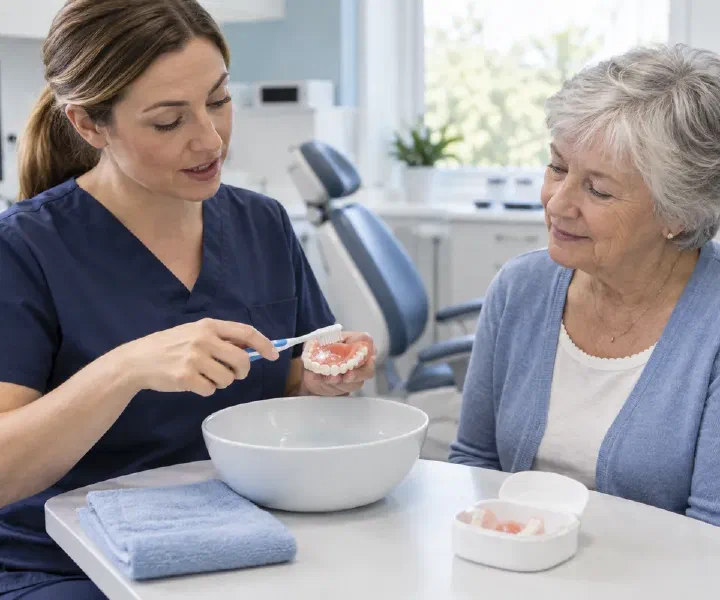
A hygienist demonstrating denture cleaning above a protected basin

Planning together

Identify the appliance before choosing a cleaning product.

Material and design determine which methods are suitable and which can cause damage.

Acrylic bases and artificial teeth

Use the cleaning approach recommended for the denture rather than assuming ordinary toothpaste or a household cleaner is appropriate. Abrasive products can affect surfaces. Ask how to manage stubborn deposits without scratching the material or using heat that could alter the fit.

Metal frameworks and attachment parts

Partial dentures and implant-retained designs can contain components that require specific care. Some chemicals may be unsuitable for metal or other materials. The clinician should explain compatibility and handling so cleaning the acrylic does not inadvertently damage the parts that provide support or retention.

Soft liners and recent treatment

A resilient liner or newly treated mouth may need a different routine and review schedule. Follow the instructions for that material and stage of care. Do not assume a soak or brush used on the old hard base remains appropriate after a liner is added.

Practical guidance

Build a routine that reaches the important surfaces.

The method should be demonstrated if it is difficult to understand or perform.

Clean the denture outside the mouth as instructed

Remove the appliance when directed and clean the teeth, base, and fitting surface with the recommended tools and products. Pay attention to areas where deposits collect. A quick rinse can remove loose food but may not provide the complete daily care the appliance needs.

Care for the mouth and remaining teeth

Clean natural teeth, gums, tongue, and other relevant surfaces according to the clinician’s advice. Partial denture supports need particular attention. Cleaning the appliance alone does not remove plaque from the mouth or address inflammation, decay risk, or a sore area beneath the base.

Make the routine manageable

If grip, vision, or access is difficult, ask about practical adaptations and support. A caregiver can receive instruction with your agreement. The most useful routine is one that can be carried out consistently and safely rather than a complicated set of steps that is abandoned after the appointment.

Good to know

Avoid cleaning methods that change the appliance.

A denture needs intact surfaces and a stable shape to remain serviceable.

Heat and improvised chemicals

Do not boil the denture or use household products without confirming suitability. Heat can distort some materials, and chemicals can affect surfaces or components. Stronger treatment is not automatically better disinfection. Follow the product and clinician’s instructions, including rinsing requirements before the appliance returns to the mouth.

Scraping and aggressive abrasion

Hard deposits or persistent stains should not be removed with knives, metal tools, or forceful scraping. These methods can damage the denture and create rougher surfaces. A professional assessment can distinguish deposits from material changes and decide whether cleaning, polishing, repair, or another procedure is appropriate.

What we consider

Investigate a problem that cleaning does not resolve.

Odour, staining, and discomfort should be assessed in context rather than blamed automatically on hygiene.

Deposits or persistent discolouration

The clinician checks the nature and location of the change and the appliance material. Professional cleaning or polishing may be considered where suitable. Some colour changes are within the material and cannot be scrubbed away safely, so the expected improvement should be explained before treatment.

Soreness or tissue inflammation

A painful area may involve pressure, inflammation, or another condition that needs care. Cleaning is important but is not a universal treatment for every lesion. Report persistent sores or changes in the mouth so the assessment includes the tissues and fit, not just the visible cleanliness of the appliance.

A rough, damaged, or poorly fitting surface

Cracks, wear, and loss of adaptation can make maintenance harder. The denture may need repair, a fit procedure, or replacement. Repeated cleaning appointments should not substitute for addressing an appliance that can no longer be maintained comfortably in its present condition.

Step by step

Combine home care with appropriate professional review.

The appointment should leave you with a practical method and a clear next step.

  1. Review the appliance and your current routine

    Bring the denture and tell the clinician which products you use. Demonstrating the routine can reveal difficult areas or unsuitable methods. The assessment should also consider the mouth and any symptoms so a cleaning recommendation is based on the whole situation.

  2. Agree on care and reassessment

    After any indicated professional care, confirm cleaning, storage, wear, and follow-up instructions. Ask what change would warrant another appointment. Continued reviews help identify deposits, tissue problems, and wear before the only remaining response is a repair or replacement after a larger failure.

Frequently asked questions

Questions about denture cleaning

Can I use ordinary toothpaste on my dentures?

Ask about the specific product and denture material. Some pastes can be too abrasive for appliance surfaces. The clinician can recommend a suitable method and explain how it differs from cleaning your remaining natural teeth.

Is soaking enough without brushing?

The appropriate routine depends on the appliance and product, but a soak should not automatically replace all mechanical cleaning. Follow the demonstrated instructions for the surfaces involved. Deposits and plaque may need a combination of suitable methods.

Can I disinfect a denture in boiling water?

No. Heat can distort denture materials and affect fit. Use the recommended cleaning and storage method instead. If the appliance has already been exposed to heat and feels different, arrange assessment rather than trying to reshape it at home.

How should I clean a partial denture with metal parts?

Use products confirmed as compatible with the framework and other materials, and follow handling instructions. Do not assume a cleaner suitable for an all-acrylic appliance is appropriate. The supporting natural teeth also need careful daily cleaning and review.

What if the denture still smells after cleaning?

Arrange a review of the routine, deposits, appliance condition, and mouth. Odour can have more than one contributor. Stronger chemicals or more forceful scrubbing may not address the cause and can damage the material.

Can professional cleaning remove every stain?

Not necessarily. Surface deposits may be removable, while changes within the material can have different limits. The clinician assesses the stain and explains what is realistic. Persistent colour should not be repeatedly abraded without checking the appliance.

Do soft liners need special care?

Often they require instructions specific to the material and treatment stage. Ask which brush, product, and storage routine are suitable and when the liner should be reviewed. Do not simply continue an old cleaning method after the appliance is modified.

Real patient results

Before & after smile gallery.

Drag the centre line to compare each real case treated by our dental team. Every smile begins with a personal assessment and a plan shaped around the patient.

Areas We Serve

Neighbourhood dental care, close to home.

Located in Cookstown, Innisfil, our dental team welcomes patients from communities across South Simcoe, Barrie, and northern York Region.

Get directions
  • Cookstown
  • Innisfil
  • Simcoe
  • Lake Simcoe
  • Alcona
  • Stroud
  • Lefroy–Belle Ewart
  • Gilford
  • Churchill
  • Sandy Cove
  • Innisfil Heights
  • Fennell’s Corners
  • Bradford
  • Bradford West Gwillimbury
  • Bond Head
  • Newton Robinson
  • New Tecumseth
  • Alliston
  • Beeton
  • Tottenham
  • Adjala–Tosorontio
  • Everett
  • Loretto
  • Barrie
  • Essa
  • Thornton
  • Baxter
  • Angus
  • Egbert
  • Ivy
  • Utopia
  • York Region
  • East Gwillimbury
  • Queensville
  • Holland Landing
  • Sharon
  • Schomberg
  • Nobleton

Don’t see your community listed? Contact us—we regularly welcome patients from throughout the surrounding region.

Google reviews

Kind words from our patients.

Read what patients have shared about their visits to Cookstown Dental Centre.

A dentist having a friendly consultation with a patient in a bright dental clinic

Your next step

Ready to feel good about your next dental visit?

Whether you are new to the clinic or returning for care, our team is here to make booking simple and answer your questions.

Call Book Now WhatsApp

How can we help?

The Cookstown Dental team is here for you.

Need an appointment, have a question, or want to talk through your options? Choose the next step that works best for you.

Send us a note

We’ll get back to you as soon as we can.