Cookstown Dental Centre
The Cookstown Dental Centre team caring for a patient in a treatment room

Restorative Dentistry · Cookstown

Make the first weeks with a denture easier to manage.

Denture aftercare covers adaptation, tissue comfort, cleaning, and follow-up. Know what to expect after delivery and when a fit problem needs assessment.

Request an appointment

Let’s find a time that works.

Need urgent dental help? Call (705) 291-2222.

Denture Aftercare in Cookstown

Receiving the appliance is the start of using it, not the end of care.

A denture can feel unfamiliar when first fitted or after a significant adjustment. Speech, chewing, and the way the appliance rests against the tissues may take practice and review. Aftercare helps distinguish normal adaptation from a pressure point, unstable fit, or another concern that needs professional attention. You should not be expected to endure persistent pain simply to become used to it.

At Cookstown Dental Centre, we explain the routine for your denture and treatment stage, including any different instructions after extractions. Follow-up allows the fit and tissues to be reassessed as you begin using the appliance. This page focuses on the transition after delivery or treatment; long-term cleaning and maintenance continue beyond that initial period and should be planned from the outset.


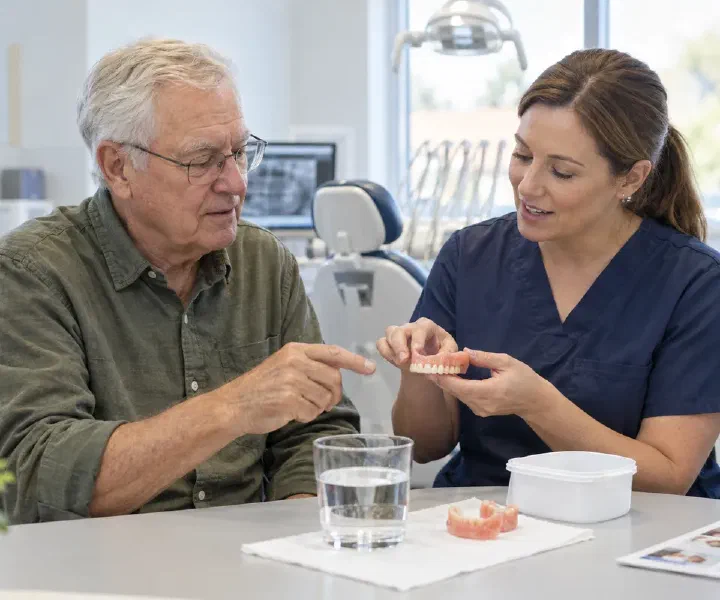
A clinician demonstrating denture handling and aftercare to an older patient

The appointment

Know which stage of aftercare you are in.

The instructions for a healed mouth and a recently treated extraction site may differ.

  1. After a denture is fitted to healed tissues

    The clinician checks fit and contacts and explains insertion, removal, and initial use. Arrange the recommended review and report pressure or instability. An appliance can look well fitted at delivery yet need a targeted adjustment once you have used it during normal speaking and eating.

  2. After extractions with an immediate denture

    Follow the treating provider’s specific instructions for wear, removal, cleaning, and review. These can differ from the usual long-term routine while the sites heal. Do not substitute general overnight advice for the instructions given after surgery, and contact the clinic if those instructions are unclear.

  3. After a reline, repair, or significant adjustment

    The appliance may feel different because its fitting surface or contacts have changed. Ask what response is expected and how to arrange review. Persistent rocking, sharpness, or pain should be assessed rather than dismissed because the denture itself is familiar or was recently repaired.

Practical guidance

Learn the appliance with manageable daily steps.

Practical coaching should reflect your comfort, dexterity, and the denture design.

Eating while you adapt

Follow the advice about food texture, bite size, and chewing technique suited to your stage of care. If you cannot progress comfortably or the appliance repeatedly lifts, tell the clinic. Adaptation involves practice, but a fit problem should not be managed indefinitely by restricting yourself to fewer foods.

Speaking and handling

Practising speech and insertion or removal can help build familiarity. Ask for a demonstration if handling is difficult, especially with a partial denture or attachment system. Do not force the appliance into place by biting if it does not seat as instructed; the fit or path of insertion may need checking.

Managing the daily routine

Keep a case and the recommended cleaning supplies accessible and decide how the routine fits meals and bedtime. If another person assists, invite instruction with your consent. Clear practical steps are more useful than a long list of advice that cannot be performed reliably in your circumstances.

What we consider

Recognize what needs a fit or tissue review.

The pattern of the problem helps determine whether an adjustment or another assessment is appropriate.

A localized pressure point

A sore area can need a targeted adjustment after the tissues and appliance are examined. Describe when it appears and whether it is worsening. Do not file the denture yourself or repeatedly apply improvised padding, which can alter fit and make the true pressure pattern harder to assess.

Instability or a changed bite

Rocking, lifting, or a feeling that one side meets first should be discussed. The clinician assesses the contacts and supporting surfaces. More adhesive is not a universal solution, particularly when a new fit problem reflects healing changes or a design issue that needs professional correction.

A persistent or unusual lesion

Not every sore is caused only by pressure. A lesion that does not heal as expected, a lump, bleeding, or another unusual change needs examination. Aftercare includes checking the mouth itself rather than focusing exclusively on making the appliance feel smoother.

Planning together

Use cleaning and resting instructions suited to the stage.

The appliance material and recent treatment determine the appropriate routine.

Clean without damaging the denture

Use the recommended method and products, handle the appliance over a protected surface, and avoid heat or harsh chemicals that are unsuitable for the material. Clean the mouth and any remaining teeth as advised. A clean-looking appliance does not replace care of the tissues underneath it.

Clarify the wear and storage plan

Ask when to remove the denture, how to store it, and whether your immediate postoperative instructions differ temporarily from the long-term routine. Keep those instructions available. Do not assume that a friend’s schedule or a general online recommendation fits the same treatment stage or appliance.

Understanding the options

Separate adaptation from a need for further treatment.

Some concerns settle with support and time, while others require a clinical change.

Learning a serviceable appliance

Familiarity with speaking, chewing, and handling can improve with suitable coaching and practice. The clinician can review technique and make limited adjustments where indicated. A supportive aftercare plan acknowledges those learning needs without treating every concern as a failure of the denture.

Reassessing a fit that is not working

Continuing pain, instability, or inability to use the appliance can call for a broader review. Healing changes, a reline, a revised design, or another treatment may be relevant. Repeated encouragement to adapt is not enough when the clinical findings show that the fit or function needs to change.

Frequently asked questions

Questions about denture aftercare

How long does it take to get used to dentures?

Adaptation varies with the appliance, mouth, and previous experience. The clinician can discuss expectations and review progress. Persistent pain or instability should not be left untreated simply because there is no universal adjustment period.

Should a new denture hurt?

Some unfamiliar sensations can occur, but sore spots and ongoing pain need assessment. Contact the clinic for a fit review rather than trying to tolerate worsening discomfort. A targeted adjustment may help when a specific pressure or contact problem is identified.

Do I remove an immediate denture on the first night?

Check whether your instructions concern a newly delivered denture, a repair, or an appliance placed immediately after extraction. The first postoperative period can require a different wearing schedule. If the sheet is unclear, ask the treating office when your usual overnight-removal routine should begin.

Can I use adhesive while I am adapting?

Ask whether it is appropriate for your appliance and treatment stage. Adhesive does not correct every fit problem and may be unsuitable for particular healing circumstances. The clinician should explain use and when instability needs assessment instead.

What if I cannot speak comfortably with the denture?

Explain the difficulty at review. Practice may help, but tooth position, contours, or fit can also contribute. The clinician can assess whether coaching, adjustment, or another change is appropriate rather than assuming the problem is only lack of experience.

Can a family member help with aftercare?

Yes, if you want support and consent to their involvement. Ask for a demonstration of handling and cleaning. The routine should remain safe and practical, especially when dexterity or vision makes appliance care difficult.

When does aftercare become routine maintenance?

The transition depends on healing, adaptation, and the appliance’s condition. The clinician will arrange ongoing reviews after initial concerns are settled. Continue examinations and report changes even when the denture has become comfortable and familiar.

Real patient results

Before & after smile gallery.

Drag the centre line to compare each real case treated by our dental team. Every smile begins with a personal assessment and a plan shaped around the patient.

Areas We Serve

Neighbourhood dental care, close to home.

Located in Cookstown, Innisfil, our dental team welcomes patients from communities across South Simcoe, Barrie, and northern York Region.

Get directions
  • Cookstown
  • Innisfil
  • Simcoe
  • Lake Simcoe
  • Alcona
  • Stroud
  • Lefroy–Belle Ewart
  • Gilford
  • Churchill
  • Sandy Cove
  • Innisfil Heights
  • Fennell’s Corners
  • Bradford
  • Bradford West Gwillimbury
  • Bond Head
  • Newton Robinson
  • New Tecumseth
  • Alliston
  • Beeton
  • Tottenham
  • Adjala–Tosorontio
  • Everett
  • Loretto
  • Barrie
  • Essa
  • Thornton
  • Baxter
  • Angus
  • Egbert
  • Ivy
  • Utopia
  • York Region
  • East Gwillimbury
  • Queensville
  • Holland Landing
  • Sharon
  • Schomberg
  • Nobleton

Don’t see your community listed? Contact us—we regularly welcome patients from throughout the surrounding region.

Google reviews

Kind words from our patients.

Read what patients have shared about their visits to Cookstown Dental Centre.

A dentist having a friendly consultation with a patient in a bright dental clinic

Your next step

Ready to feel good about your next dental visit?

Whether you are new to the clinic or returning for care, our team is here to make booking simple and answer your questions.

Call Book Now WhatsApp

How can we help?

The Cookstown Dental team is here for you.

Need an appointment, have a question, or want to talk through your options? Choose the next step that works best for you.

Send us a note

We’ll get back to you as soon as we can.