Cookstown Dental Centre
The Cookstown Dental Centre team caring for a patient in a treatment room

Specialized Care · Cookstown

Fit a nightguard to the teeth and restorations it needs to protect.

Custom nightguards are planned around fit, tooth support, and loading concerns. Learn about records, delivery checks, care, and the limits of a protective appliance.

Request an appointment

Let’s find a time that works.

Need urgent dental help? Call (705) 291-2222.

Custom Nightguards in Cookstown

A custom fit still needs a clear purpose and follow-up.

A custom nightguard is an appliance made from records of your teeth and fitted professionally for an identified protective purpose. It may be considered when clenching or grinding is associated with tooth wear or restoration damage. The design, coverage, material, and instructions depend on the clinical assessment rather than one standard guard being suitable for every mouth.

At Cookstown Dental Centre, we examine the teeth and existing restorations, discuss symptoms, and review relevant sleep or medical history before recommending an appliance. A guard is not a substitute for treating a cracked tooth, gum disease, or a sleep-breathing disorder. It also cannot guarantee that grinding stops. The goal is to provide appropriate protection in suitable cases and check that the device remains comfortable, serviceable, and consistent with the wider care plan.


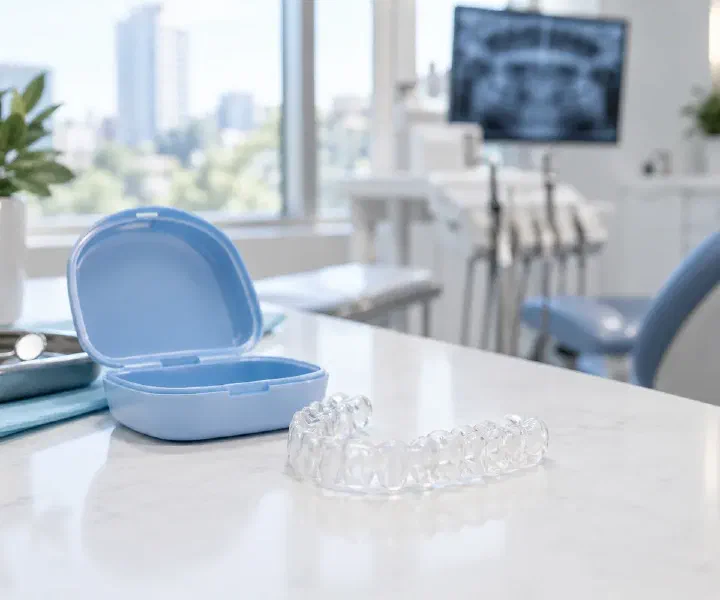
A clear custom dental nightguard beside its open storage case on a clinic counter

Planning together

Establish what the nightguard is intended to protect.

The reason for prescribing it should be more specific than simply noticing tooth wear.

Teeth or restorations exposed to loading

Repeated chips, worn surfaces, or vulnerable restorations may prompt discussion of protection. The dentist checks for other causes and urgent treatment needs. An appliance should complement a suitable restoration plan rather than cover an untreated painful tooth or be offered as the sole answer to every fracture.

A mouth ready for an appliance

Decay, unstable restorations, gum concerns, or planned changes in tooth shape can affect timing and fit. Tell the team about upcoming crowns, fillings, or orthodontic care. Records may need to wait until relevant work is completed so the guard is made for the teeth you will actually have.

What we consider

Choose the design from the clinical findings.

Custom fabrication includes decisions that should be explained in patient terms.

Coverage and arch selection

The clinician decides which teeth the appliance covers and how it will seat and contact the opposing arch. That choice depends on the teeth, restorations, and intended purpose. It should not be made only from convenience or a preference copied from someone else’s device.

Material and functional demands

Different materials and thicknesses may have different indications and limitations. The provider explains the selected design and how it relates to your needs. Softer does not automatically mean more suitable, and a harder material does not guarantee that grinding or pain will stop.

Symptoms and sleep-related concerns

Jaw discomfort, locking, snoring, or suspected breathing pauses may need additional assessment before or alongside appliance planning. A protective nightguard is not automatically sleep-apnea treatment. Explain these symptoms so the proposed device does not replace a medical pathway that addresses a different condition.

The appointment

Expect records, fitting, and an opportunity to check adaptation.

The delivery appointment is part of treatment, not simply collection of a product.

  1. Capture suitable records of the teeth and bite

    Impressions or scans and the required bite information guide fabrication. The clinician checks the condition of the teeth and planned restorations at that stage. If a tooth changes between records and delivery, tell the clinic because the finished appliance may need reassessment before use.

  2. Fit and assess the appliance in the mouth

    The dentist checks seating, retention, coverage, and contacts according to the design. Learn how to insert and remove it without forcing it. Report sharpness, pressure, or a tooth that feels unusually loaded so the fit can be evaluated rather than assuming every tight sensation is desirable.

  3. Review comfort and function after use

    Follow the prescribed wear instructions and attend the planned review. The clinician considers symptoms, fit, and early signs of wear or damage. A device that causes pain or a persistent change in the bite should be reviewed rather than worn indefinitely in the hope that the problem will resolve.

Practical guidance

Keep the appliance clean and protect its shape.

Care instructions should match the actual material supplied.

Use compatible cleaning and storage methods

Ask how to brush or clean the guard, which products are suitable, and how it should dry or be stored. Avoid hot water and improvised chemicals that may alter the material. Keep it away from pets and bring it to dental reviews so the condition can be checked.

Do not reshape a guard that no longer fits

New restorations, tooth movement, or material damage can change seating. Do not heat, trim, or force the appliance into place yourself. Contact the clinic for assessment, especially after a crown or filling changes the contour of a covered tooth.

Good to know

Plan for maintenance without promising a cure.

Protection, symptoms, and the underlying activity may not change in the same way.

Wear or breakage can require servicing

A guard can become worn, cracked, or distorted and may need replacement. Its condition should be interpreted alongside the teeth and symptoms. Damage to the appliance does not by itself quantify every aspect of grinding, but it is useful information for reviewing the protective plan.

Persistent pain needs its own reassessment

A well-fitting device may still be insufficient for another jaw or tooth condition. Contact the provider if symptoms continue or worsen. Broad irreversible bite changes should not be presented as the automatic next step simply because a nightguard did not resolve every complaint.

Frequently asked questions

Questions about custom nightguards

Will a custom nightguard stop teeth grinding?

The main reason for prescribing a protective nightguard is to limit damage to suitable teeth or restorations. You may still clench or grind against it. Ask which teeth need protection and how the dentist will review whether the chosen design remains useful.

How is a custom guard different from a shop-bought one?

It is made from your dental records and fitted with clinical checks appropriate to the design. That does not remove the need for assessment or follow-up. The dentist should explain why an appliance is suitable and which features matter for your teeth.

Should the guard feel tight?

It should seat and retain appropriately without being forced or causing significant pain. The expected feel depends on the design. Report pressure, sharpness, or a tooth that feels unusually loaded so the clinician can assess the fit before continued use.

Can I use it for sleep apnea?

A standard protective nightguard is not automatically a sleep-apnea appliance. Diagnosis and treatment of sleep-disordered breathing follow a different coordinated pathway. Mention snoring, witnessed pauses, or daytime sleepiness before choosing an appliance for grinding protection.

Can I wear it after getting a new crown?

Have the fit checked because the crown may change the covered tooth’s shape. Do not force the old guard over it. Adjustment or replacement may be needed depending on the design and the extent of the restorative changes.

How often should it be replaced?

There is no universal replacement date. Material condition, fit, wear, symptoms, and changes in the teeth determine whether it remains suitable. Bring it to reviews and report cracks or altered seating rather than waiting for a fixed anniversary.

What if it makes my jaw hurt?

Pain is a reason to stop wearing the guard and arrange a review. Bring the device and describe where it hurts, when symptoms begin, and whether your teeth meet differently afterward. The provider can check pressure and design without you trimming or heating the appliance.

Real patient results

Before & after smile gallery.

Drag the centre line to compare each real case treated by our dental team. Every smile begins with a personal assessment and a plan shaped around the patient.

Areas We Serve

Neighbourhood dental care, close to home.

Located in Cookstown, Innisfil, our dental team welcomes patients from communities across South Simcoe, Barrie, and northern York Region.

Get directions
  • Cookstown
  • Innisfil
  • Simcoe
  • Lake Simcoe
  • Alcona
  • Stroud
  • Lefroy–Belle Ewart
  • Gilford
  • Churchill
  • Sandy Cove
  • Innisfil Heights
  • Fennell’s Corners
  • Bradford
  • Bradford West Gwillimbury
  • Bond Head
  • Newton Robinson
  • New Tecumseth
  • Alliston
  • Beeton
  • Tottenham
  • Adjala–Tosorontio
  • Everett
  • Loretto
  • Barrie
  • Essa
  • Thornton
  • Baxter
  • Angus
  • Egbert
  • Ivy
  • Utopia
  • York Region
  • East Gwillimbury
  • Queensville
  • Holland Landing
  • Sharon
  • Schomberg
  • Nobleton

Don’t see your community listed? Contact us—we regularly welcome patients from throughout the surrounding region.

Google reviews

Kind words from our patients.

Read what patients have shared about their visits to Cookstown Dental Centre.

A dentist having a friendly consultation with a patient in a bright dental clinic

Your next step

Ready to feel good about your next dental visit?

Whether you are new to the clinic or returning for care, our team is here to make booking simple and answer your questions.

Call Book Now WhatsApp

How can we help?

The Cookstown Dental team is here for you.

Need an appointment, have a question, or want to talk through your options? Choose the next step that works best for you.

Send us a note

We’ll get back to you as soon as we can.