Cookstown Dental Centre
The Cookstown Dental Centre team caring for a patient in a treatment room

Cosmetic Dentistry · Cookstown

Repair a chipped edge with the whole tooth in mind.

A chipped tooth needs assessment before a cosmetic repair. See how bonding restores suitable edges, checks the bite, and addresses reasons a chip occurred.

Request an appointment

Let’s find a time that works.

Need urgent dental help? Call (705) 291-2222.

Chipped Tooth Bonding in Cookstown

A small chip still deserves a careful look.

A chipped front tooth can feel sharp, catch the light differently, or make you conscious of your smile. Composite bonding may rebuild a suitable edge without covering the entire tooth. Before deciding, the dentist needs to understand how the chip happened, how much tooth remains, and whether there is a deeper crack or injury that changes the care required.

At Cookstown Dental Centre, we discuss the appearance and function of the repair together. We look at colour, edge shape, biting contacts, and habits that may place stress on the tooth. If the damage followed a recent impact or comes with pain, movement, or swelling, tell us when you call so it receives appropriate assessment rather than being booked only as a cosmetic concern.


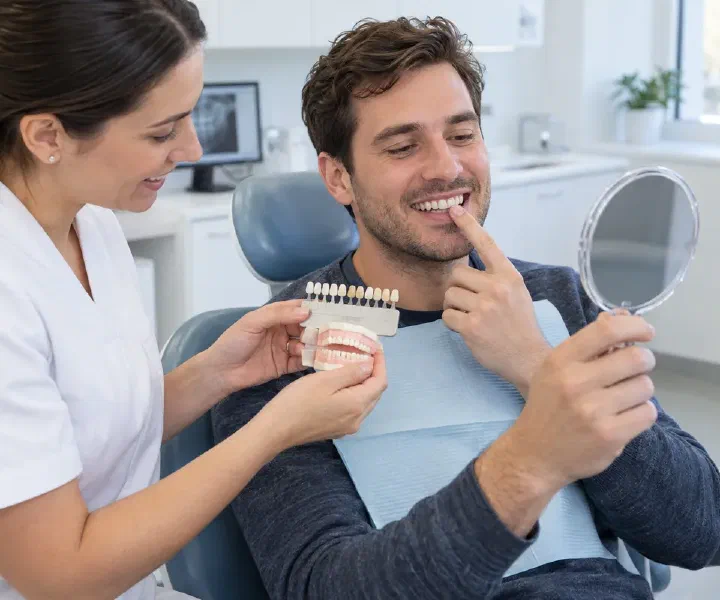
A dentist showing a shade guide to a patient discussing a chipped tooth

Good to know

The story behind the chip matters.

A broken edge may be a single event or a sign of repeated stress. Share the circumstances so the repair addresses more than the visible missing piece.

A recent impact

Tell us when the injury happened and whether the tooth moved, changed colour, or became painful. Bring a recovered fragment if available and follow the clinic’s storage advice. A trauma assessment may be needed before bonding because the appearance of the edge does not reveal everything about the tooth.

Wear or repeated breakage

An edge that chips again and again may be receiving heavy contact or loading from habits such as grinding. The dentist reviews the bite and existing repairs. Simply adding the same amount of material again may not be the best plan if the force that caused the problem remains unaddressed.

A sharp but comfortable edge

Even without pain, an edge can irritate the tongue or lip. Describe that discomfort when booking. Depending on the amount missing and available enamel, options may include a small repair, limited smoothing, or another approach; an examination helps avoid removing or adding more than necessary.

Step by step

From the damaged outline to a finished repair.

For a suitable tooth, direct bonding allows the clinician to shape material on the tooth itself. The exact appointment depends on the extent and condition of the damage.

  1. Agree on shape and shade

    We assess the chip, check tooth health, and discuss how the new edge should fit the smile. A shade is selected with the surrounding teeth in mind. Mention any whitening plans beforehand so the sequence can be considered rather than matching a repair that may soon look different.

  2. Build the missing area

    The tooth is prepared as appropriate and tooth-coloured composite is placed, shaped, and hardened according to the material’s requirements. Moisture control helps the process. We explain whether local anaesthetic or other comfort measures are relevant instead of assuming every chipped edge needs an identical procedure.

  3. Check the edge in use

    The restoration is finished and polished, and biting contacts are reviewed. We look beyond the smile at rest to how the tooth meets its neighbour and opposing teeth. Ask about the feel of the edge and report any persistent catching, roughness, or unusual pressure afterward.

Understanding the options

Choose the smallest suitable repair.

The amount missing is only one factor. Tooth strength, the bite, previous restorations, and the desired change influence what is reasonable.

Bonding or limited smoothing

A very small irregularity may sometimes be managed by careful smoothing, while a missing corner may benefit from adding composite. Smoothing removes tooth structure and cannot replace lost length. We explain which approach fits the edge and how it would affect the outline you want to keep.

More extensive protection

A larger fracture, weak remaining tooth, or deeper problem may require a different restoration or treatment. Veneers and crowns have different preparation and maintenance implications. A recommendation for more coverage should follow the tooth’s condition, not simply the wish to make a repair look less visible.

Planning together

Give the repair a realistic maintenance plan.

Composite is useful because it can be shaped and sometimes repaired, but it is still a material that needs care. We discuss likely responsibilities before treatment.

Avoid using the tooth as a tool

Do not open packages, bite pens, or deliberately test the repair with hard objects. Tell us about work or sports habits that put the front teeth at risk. Protection may be part of the plan where appropriate, but no restoration can make a tooth immune to injury.

Keep daily cleaning comfortable

Brush and clean between teeth using the advice provided. A well-finished repair should allow normal hygiene, although the exact technique depends on the location. If floss shreds or an edge irritates your lip, arrange a review rather than attempting to polish or file the material at home.

Review wear and bite changes

Contact us if the repair chips, feels high, or develops persistent sensitivity. At examinations, we can check the material and revisit any relevant grinding or bite concerns. A small adjustment or repair may be possible in some cases, but the cause of a change needs assessment first.

Frequently asked questions

Questions about chipped tooth bonding

Can a chipped tooth always be bonded?

No. The size and depth of the fracture, available enamel, bite, and tooth health determine suitability. A small visible chip can occasionally have a more significant injury behind it. The dentist assesses the tooth before recommending a cosmetic repair.

Should I call immediately after a tooth injury?

Call promptly about a recent impact, especially with pain, movement, a changed bite, or swelling. Explain the event rather than requesting bonding alone. Significant head injury or serious medical symptoms require appropriate urgent medical attention first.

Will the new edge match my tooth?

The material is selected and shaped to blend with the surrounding tooth, but a perfectly invisible match cannot be guaranteed. Lighting, translucency, and the size of the repair affect appearance. Discuss your expectations before the shade and shape are finalized.

Does bonding remove much healthy enamel?

Direct bonding can be conservative in suitable cases, but preparation requirements vary. Ask what will be altered on your tooth and why. A general description of bonding should not be taken as a promise that no tooth preparation will be needed.

What if the same edge keeps breaking?

Repeated breakage deserves a review of bite contacts, habits, tooth structure, and the existing restoration. A different design or approach may be needed. Replacing the same repair without considering the cause can leave the original problem unresolved.

Can I whiten after the tooth is repaired?

Whitening and composite respond differently, which can affect the colour match. Discuss plans before bonding so timing can be coordinated. If whitening is considered later, the dentist can explain whether the existing repair may need reassessment.

Can a small damaged repair be fixed?

Sometimes composite can be polished, added to, or repaired, depending on the defect and tooth beneath it. An examination distinguishes a surface issue from a deeper fracture or decay. Do not use home adhesives or filing tools on the tooth.

Real patient results

Before & after smile gallery.

Drag the centre line to compare each real case treated by our dental team. Every smile begins with a personal assessment and a plan shaped around the patient.

Areas We Serve

Neighbourhood dental care, close to home.

Located in Cookstown, Innisfil, our dental team welcomes patients from communities across South Simcoe, Barrie, and northern York Region.

Get directions
  • Cookstown
  • Innisfil
  • Simcoe
  • Lake Simcoe
  • Alcona
  • Stroud
  • Lefroy–Belle Ewart
  • Gilford
  • Churchill
  • Sandy Cove
  • Innisfil Heights
  • Fennell’s Corners
  • Bradford
  • Bradford West Gwillimbury
  • Bond Head
  • Newton Robinson
  • New Tecumseth
  • Alliston
  • Beeton
  • Tottenham
  • Adjala–Tosorontio
  • Everett
  • Loretto
  • Barrie
  • Essa
  • Thornton
  • Baxter
  • Angus
  • Egbert
  • Ivy
  • Utopia
  • York Region
  • East Gwillimbury
  • Queensville
  • Holland Landing
  • Sharon
  • Schomberg
  • Nobleton

Don’t see your community listed? Contact us—we regularly welcome patients from throughout the surrounding region.

Google reviews

Kind words from our patients.

Read what patients have shared about their visits to Cookstown Dental Centre.

A dentist having a friendly consultation with a patient in a bright dental clinic

Your next step

Ready to feel good about your next dental visit?

Whether you are new to the clinic or returning for care, our team is here to make booking simple and answer your questions.

Call Book Now WhatsApp

How can we help?

The Cookstown Dental team is here for you.

Need an appointment, have a question, or want to talk through your options? Choose the next step that works best for you.

Send us a note

We’ll get back to you as soon as we can.