Cookstown Dental Centre
The Cookstown Dental Centre team caring for a patient in a treatment room

Restorative Dentistry · Cookstown

Bring the broken denture pieces for a fit and damage assessment.

A fractured denture needs more than glue. Review clean handling, repair suitability, fit problems, laboratory steps, and what may prevent another break.

Request an appointment

Let’s find a time that works.

Need urgent dental help? Call (705) 291-2222.

Broken Denture Repair in Cookstown

A repaired denture should fit the mouth, not just fit back together.

A denture can crack after a drop, split during use, or lose a tooth or part of its base. The break may be accidental, but repeated fracture can also point to an unstable fit, worn material, or uneven loading. Joining the pieces without assessing those factors can leave the same problem in place.

At Cookstown Dental Centre, we examine the denture and the tissues it rests on before discussing repair. Keep all available pieces and avoid home adhesives or filing. Some fractures can be repaired through an appropriate clinical and laboratory process, while others make replacement a more reasonable option. The time required depends on the damage and the work needed; a repair should not be promised solely from a telephone description.


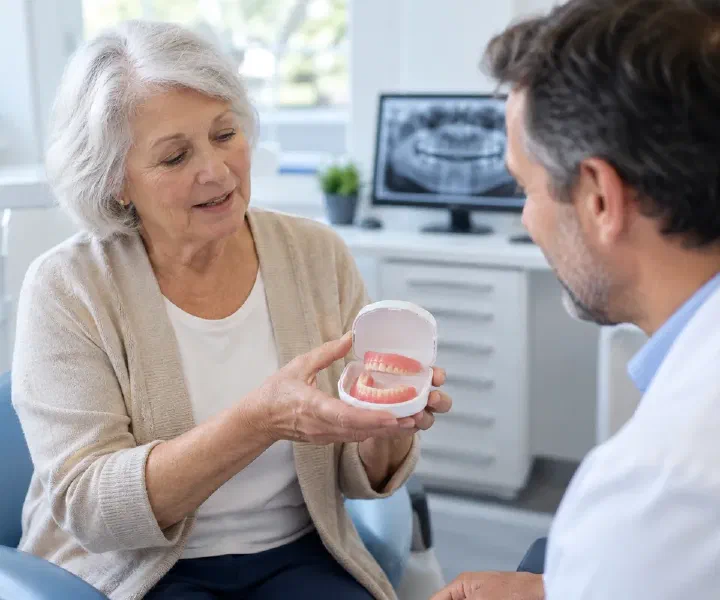
A patient discussing a damaged denture with a dental professional

Planning together

Protect the pieces and tell us what happened.

Useful information can make the assessment more focused and reduce avoidable damage before the visit.

Keep every available fragment

Place the pieces in a clean container and bring them with the denture. Do not try to join them with household glue, which can alter the fit and complicate repair. Even a small fragment may help the clinician understand the break, although not every piece can necessarily be reused.

Describe the event and earlier problems

Say whether the appliance was dropped, broke while chewing, or had already developed a crack. Mention looseness, sore spots, previous repairs, and changes in how the teeth meet. A fracture during ordinary use may need a broader fit assessment than a single accidental impact on a hard surface.

Explain how the loss affects daily life

Tell the clinic whether you can eat comfortably, have another appliance, or have important practical needs while the denture is away. Interim arrangements depend on the case. A spare should be checked for suitability rather than assumed safe simply because it once fitted.

What we consider

Assess repairability beyond the fracture line.

The material and the condition of the mouth both influence whether repair is worthwhile.

The base and remaining material

The clinician checks the location and extent of the fracture, missing pieces, and the overall condition of the acrylic or framework. A localized break may be manageable, while extensive damage can limit the value of repair. The expected durability should be discussed before investing in another repair of an already compromised appliance.

Fit against the supporting tissues

The ridge and gum tissues change over time, and a denture that rocks can be repeatedly stressed. Repairing the base may not correct that poor adaptation. The dentist assesses whether adjustment, a reline, another procedure, or replacement should accompany or follow the repair.

The artificial teeth and bite

Worn teeth, altered contacts, or a damaged opposing appliance can affect function and loading. These findings may explain why the denture broke during use. A repair should be evaluated in the mouth rather than judged only by whether the laboratory can make the fracture line look continuous again.

Understanding the options

Decide whether repair offers a useful serviceable result.

The aim is to restore a maintainable appliance within the limits of its existing design.

Repairing a suitable denture

An appropriate repair may replace missing material or reconnect a fracture through a controlled process. The clinician explains any need for impressions, records, or laboratory work. A repaired area can remain visible or have limitations, and it should not be guaranteed to behave exactly like an entirely new appliance.

Replacing or revising an unsuitable appliance

If the denture is extensively worn, repeatedly fractured, or poorly designed for the present mouth, replacement may offer a more sensible route. A reline or other revision may be relevant in selected cases. Compare the expected benefit and maintenance, not only the immediate cost of joining the pieces.

The appointment

Allow time for the repair and its clinical check.

Turnaround depends on the actual work and available laboratory arrangements.

  1. Assessment and repair instructions

    The dentist establishes the damage, fit, and appropriate repair scope and obtains records if needed. Ask whether the appliance must stay with the clinic and what can be used meanwhile. The treatment estimate should distinguish the material repair from any additional work needed to improve fit or function.

  2. Delivery and fit review

    The repaired denture is checked for seating, comfort, contacts, and the repaired area. Report pressure, rocking, or a change in biting. A laboratory repair is not complete simply because the pieces have been reunited; its performance in the mouth still needs assessment and any indicated adjustment.

Practical guidance

Reduce the chance of another fracture.

Practical handling and timely fit reviews can help, although no denture is unbreakable.

Handle the appliance over a protected surface

Follow the recommended cleaning routine and use care over a sink or hard countertop. Avoid hot water and products unsuitable for the material. A simple protective handling habit can reduce accidental drops without changing the appliance or relying on a home repair kit if another break occurs.

Seek review when fit or function changes

A denture that rocks, needs increasing adhesive, or develops recurring sore spots should be assessed. Do not wait for a second fracture to mention the change. Regular review helps identify wear and tissue changes that may require a different solution from another material repair.

Frequently asked questions

Questions about broken denture repair

Can a denture broken in half be repaired?

Sometimes, depending on the material, damage, fit, and whether the pieces are available. The clinician needs to assess the appliance and mouth. A clean-looking break alone does not establish that repair will provide a durable or comfortable result.

Should I use a home denture repair kit?

Avoid home gluing or reshaping. It can alter the position of the pieces, create rough areas, and complicate professional repair. Keep the fragments safely and contact the clinic for advice about assessment and any suitable interim arrangements.

Can I wear the broken denture until the appointment?

Ask the clinic about your particular appliance. A sharp, unstable, or fragmented denture can injure tissues or create other problems. Do not continue using it merely because you can hold the pieces together or temporarily make it feel stable.

Will the repair be completed the same day?

That depends on the fracture, records required, laboratory work, and availability. Same-day completion should not be guaranteed before assessment. Ask for an estimate after the clinician has determined what repair and fit checks are needed.

Why did it break while I was eating normally?

Poor fit, worn material, loading, or another factor may contribute, although the cause needs assessment. The dentist checks the appliance and bite rather than assuming it was only the food. Addressing the reason can matter as much as repairing the crack.

Does a repair also make a loose denture fit better?

Not automatically. Joining fractured material and improving the tissue fit are different tasks. A reline, adjustment, or replacement may need separate consideration. The clinician should explain whether those procedures are part of the proposed plan.

When is replacement better than another repair?

Repeated fractures, extensive wear, poor fit, or a changed mouth can reduce the value of repeated repairs. The decision is individualized. Compare expected function, longevity, maintenance, and cost rather than using the denture’s age alone as the reason.

Real patient results

Before & after smile gallery.

Drag the centre line to compare each real case treated by our dental team. Every smile begins with a personal assessment and a plan shaped around the patient.

Areas We Serve

Neighbourhood dental care, close to home.

Located in Cookstown, Innisfil, our dental team welcomes patients from communities across South Simcoe, Barrie, and northern York Region.

Get directions
  • Cookstown
  • Innisfil
  • Simcoe
  • Lake Simcoe
  • Alcona
  • Stroud
  • Lefroy–Belle Ewart
  • Gilford
  • Churchill
  • Sandy Cove
  • Innisfil Heights
  • Fennell’s Corners
  • Bradford
  • Bradford West Gwillimbury
  • Bond Head
  • Newton Robinson
  • New Tecumseth
  • Alliston
  • Beeton
  • Tottenham
  • Adjala–Tosorontio
  • Everett
  • Loretto
  • Barrie
  • Essa
  • Thornton
  • Baxter
  • Angus
  • Egbert
  • Ivy
  • Utopia
  • York Region
  • East Gwillimbury
  • Queensville
  • Holland Landing
  • Sharon
  • Schomberg
  • Nobleton

Don’t see your community listed? Contact us—we regularly welcome patients from throughout the surrounding region.

Google reviews

Kind words from our patients.

Read what patients have shared about their visits to Cookstown Dental Centre.

A dentist having a friendly consultation with a patient in a bright dental clinic

Your next step

Ready to feel good about your next dental visit?

Whether you are new to the clinic or returning for care, our team is here to make booking simple and answer your questions.

Call Book Now WhatsApp

How can we help?

The Cookstown Dental team is here for you.

Need an appointment, have a question, or want to talk through your options? Choose the next step that works best for you.

Send us a note

We’ll get back to you as soon as we can.