Cookstown Dental Centre
The Cookstown Dental Centre team caring for a patient in a treatment room

Cosmetic Dentistry · Cookstown

Understand the spaces at your gumline.

Small dark spaces between teeth can have different causes. Review black triangle assessment, bonding, gum health, and alignment options in Cookstown.

Request an appointment

Let’s find a time that works.

Need urgent dental help? Call (705) 291-2222.

Black Triangle Closure in Cookstown

Closing a space starts with understanding why it is there.

A black triangle is a dark-looking space between neighbouring teeth near the gumline. It is different from a gap that extends all the way between two teeth. Tooth shape, the position of the contact point, gum changes, and past orthodontic treatment can all influence its appearance. The right response depends on the cause and on whether the space is simply noticeable or also traps food and makes cleaning difficult.

At Cookstown Dental Centre, we assess the teeth and supporting tissues before discussing cosmetic changes. The conversation may include improving gum health, reshaping a contact with bonding, orthodontic assessment, or accepting a space that cannot be predictably eliminated. A useful plan should protect cleaning access and realistic tooth proportions as well as address what you see in the mirror.


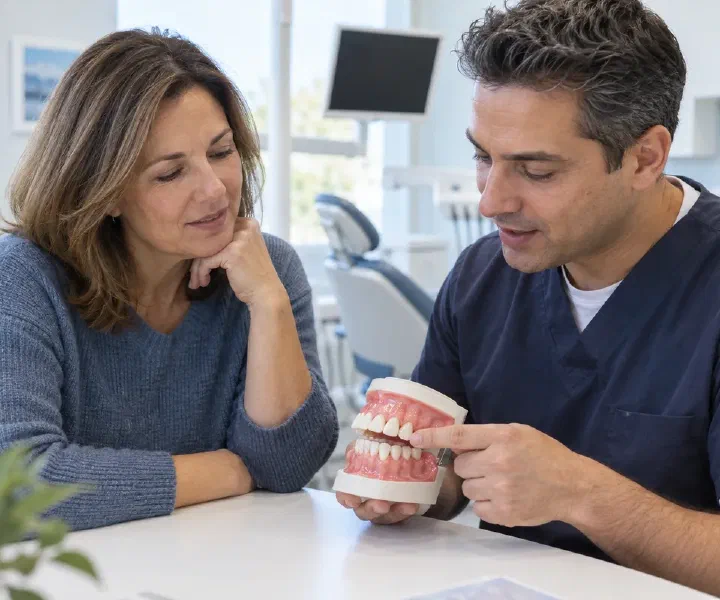
A patient and dentist discussing gumline spaces on a dental model

What we consider

Look at the space from three directions.

A photograph can show the appearance, but it cannot establish the condition of the gums or supporting bone. An examination gives the visible space its clinical context.

The shape of the teeth

Some teeth taper toward the gumline, leaving a wider opening beneath their contact. Adding material may change that outline, but it also changes tooth width. We assess whether a proposed contour would look proportionate and remain cleanable rather than assuming that filling the entire dark area is always desirable.

The health of the tissues

Bleeding, inflammation, recession, or previous periodontal changes deserve assessment before cosmetic treatment. Tell us whether the space has appeared recently or changed over time. Improving appearance alone does not address an active gum problem, and stable tissue health helps make the proposed outcome easier to judge.

The position of the contact

The way neighbouring teeth meet affects both the appearance of the opening and the possible options. Teeth that have moved or been aligned may need a different discussion from teeth with a longstanding shape difference. The dentist explains whether an orthodontic opinion could add useful information.

Understanding the options

Compare appearance with maintenance.

There may be more than one reasonable approach. We explain the expected change, the limitations, and how daily cleaning would work afterward.

A carefully shaped bonded contact

Composite bonding may reduce selected spaces by changing the outline and contact between teeth. The amount added needs to suit the bite, proportions, and cleaning access. Ask what reduction is realistic and whether a smaller improvement would create a more natural, manageable result than attempting complete closure.

A plan involving other care

Gum treatment or tooth movement may be relevant when tissue health or positioning contributes to the space. Some situations need specialist assessment, and not every opening can be fully corrected. We discuss these considerations before committing to a cosmetic addition that could obscure the underlying issue.

The appointment

Make the decision visible and understandable.

Planning should help you judge the proposed change before treatment is carried out. The exact records and demonstrations depend on the case.

  1. Describe the concern

    Point out the spaces that bother you and explain whether food trapping, speech, or cleaning is also an issue. Photographs of an earlier smile can sometimes clarify when things changed. We discuss your priorities without assuming every visible space needs treatment or has the same significance.

  2. Assess and discuss the outline

    The dentist reviews the teeth, gums, bite, and relevant records. A model, photograph, or trial outline may help explain the proposed width and shape. Ask how the contact would be cleaned and whether any gum or orthodontic care should happen before the cosmetic decision is finalized.

  3. Review the result and access

    If bonding is chosen, the contacts and surfaces are finished and checked. We explain the cleaning technique and arrange review as appropriate. Tell us if floss catches, food consistently packs into an area, or the bite feels changed; those details matter even when the appearance seems improved.

Practical guidance

Keep the surrounding tissues part of the plan.

The space and its restoration, if any, should remain easy to monitor. Regular care helps distinguish a material issue from a change in the tissues.

Practise the cleaning method

Ask the team to demonstrate how to clean beneath or around the new contact without forcing a product through. The right tool depends on the shape of the area. A cosmetic improvement should not leave you unsure how to remove plaque or worried that ordinary cleaning will damage the result.

Report a new change

Contact us about bleeding that persists, a rough edge, new food trapping, or a space that seems to be returning. A change may involve the bonding, the tooth position, or the gum tissues. An examination is more useful than repeatedly comparing photographs and assuming the repair has simply failed.

Plan future dental work together

If you are considering whitening, aligners, or other restorations, discuss the sequence before bonding. Later treatment can affect shade matching or tooth contacts. Coordinating the decisions can reduce avoidable rework while keeping the appearance, bite, and maintenance of the whole smile in view.

Frequently asked questions

Questions about black triangle closure

Are black triangles always caused by gum disease?

No. Tooth shape and contact position can also contribute, but gum health still needs assessment. A newly appearing or enlarging space deserves attention, especially with bleeding or recession. The cause cannot be established from its colour or size alone.

Can bonding close every black triangle?

No. Suitability depends on tooth proportions, the contact, the bite, and tissue health. Adding too much material can create bulky teeth or cleaning difficulties. The dentist can explain whether a partial improvement is more appropriate than attempting complete closure.

Will the gums grow back after the gap is filled?

Bonding changes the contour of the teeth; it should not be presented as a way to guarantee regrowth of gum tissue. We explain what is being altered and what appearance is realistic for your particular space.

Is this the same as closing a front-tooth gap?

Not exactly. A black triangle is near the gumline below a contact, while another gap may extend along the whole side of the tooth. The assessment and possible changes overlap, but the shape and cleaning considerations differ.

Could orthodontic treatment be relevant?

Sometimes. Tooth position and contact relationships can contribute to an opening. An orthodontic assessment may help compare options, but movement does not guarantee full closure. The dentist can explain why referral or monitoring is being considered.

How do I clean around bonding in this area?

Use the technique demonstrated for the finished contact and surrounding space. Ask which floss or interdental tool fits without forcing it. Persistent catching, bleeding, or food trapping should be reviewed rather than managed by avoiding the area.

How long does the cosmetic improvement last?

Bonding can wear, stain, or need repair, and gums or tooth positions can change. Longevity varies with the situation and care. Regular examinations help monitor both the material and the tissues that originally shaped the space.

Real patient results

Before & after smile gallery.

Drag the centre line to compare each real case treated by our dental team. Every smile begins with a personal assessment and a plan shaped around the patient.

Areas We Serve

Neighbourhood dental care, close to home.

Located in Cookstown, Innisfil, our dental team welcomes patients from communities across South Simcoe, Barrie, and northern York Region.

Get directions
  • Cookstown
  • Innisfil
  • Simcoe
  • Lake Simcoe
  • Alcona
  • Stroud
  • Lefroy–Belle Ewart
  • Gilford
  • Churchill
  • Sandy Cove
  • Innisfil Heights
  • Fennell’s Corners
  • Bradford
  • Bradford West Gwillimbury
  • Bond Head
  • Newton Robinson
  • New Tecumseth
  • Alliston
  • Beeton
  • Tottenham
  • Adjala–Tosorontio
  • Everett
  • Loretto
  • Barrie
  • Essa
  • Thornton
  • Baxter
  • Angus
  • Egbert
  • Ivy
  • Utopia
  • York Region
  • East Gwillimbury
  • Queensville
  • Holland Landing
  • Sharon
  • Schomberg
  • Nobleton

Don’t see your community listed? Contact us—we regularly welcome patients from throughout the surrounding region.

Google reviews

Kind words from our patients.

Read what patients have shared about their visits to Cookstown Dental Centre.

A dentist having a friendly consultation with a patient in a bright dental clinic

Your next step

Ready to feel good about your next dental visit?

Whether you are new to the clinic or returning for care, our team is here to make booking simple and answer your questions.

Call Book Now WhatsApp

How can we help?

The Cookstown Dental team is here for you.

Need an appointment, have a question, or want to talk through your options? Choose the next step that works best for you.

Send us a note

We’ll get back to you as soon as we can.