
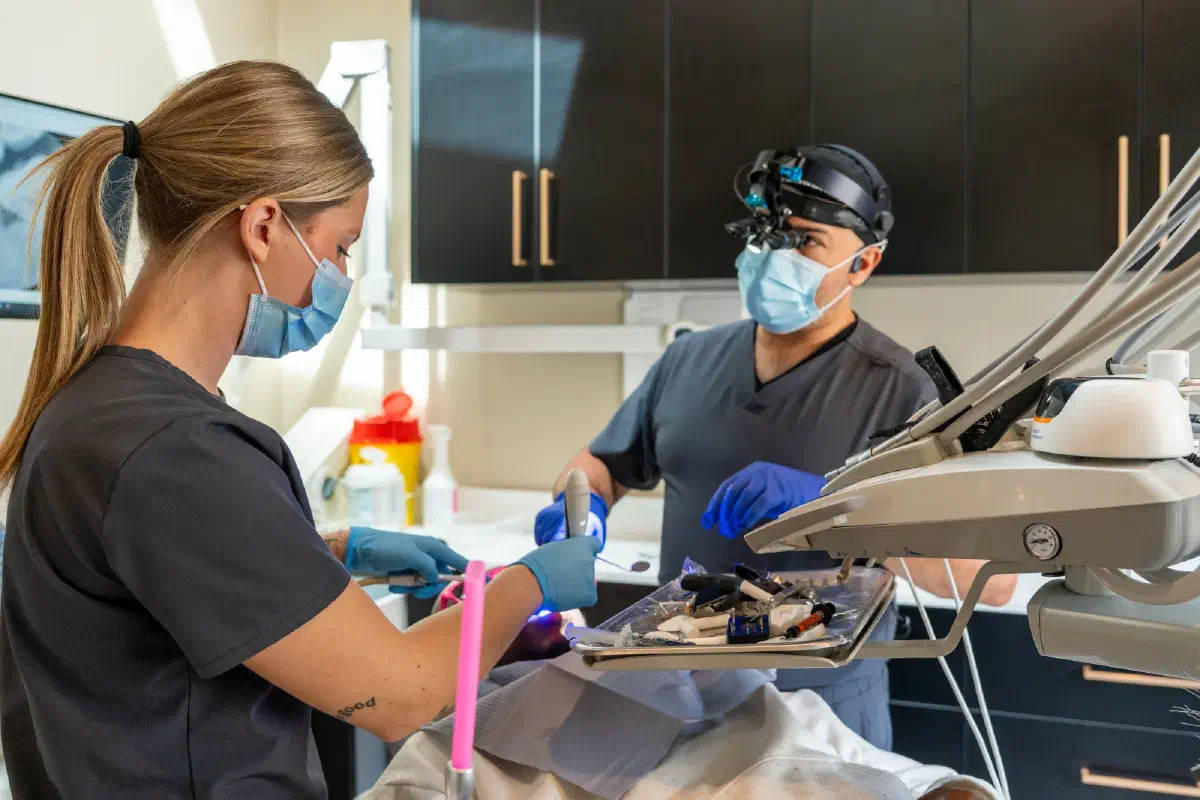

Sedation dentistry offers a range of techniques to help patients stay relaxed during dental procedures.
Different types of sedation dentistry explained include:
- Minimal Sedation: Uses nitrous oxide or oral sedatives, helping you stay calm yet aware.
- Moderate Sedation: Typically involves oral or IV medications, keeping you semi-aware with minimal memory of the procedure.
- Deep Sedation: Delivers a near-unconscious state, ideal for extensive treatments.
- General Anesthesia: Used for major procedures, involves complete unconsciousness.
Discover how these sedation methods can make dental visits comfortable and stress-free in the article.
Understanding Sedation Dentistry
Let’s get straight to it. [[Sedation dentistry](https://cookstowndental.com/sleep-sedation-dentistry/sedation-dentistry-for-comfort/)](https://cookstowndental.com/sleep-sedation-dentistry/sleep-dentists-near-me/) is a game-changer for anyone who finds visiting the dentist stressful. It’s not just about reducing pain—it’s about transforming the whole experience. At its core, sedation dentistry employs medications to help you relax during dental procedures. This is particularly useful if you experience any anxiety, have a low pain threshold, or need extensive work done.
Here’s why it’s special:
- You remain awake but incredibly relaxed, creating a space where the dentist can work effectively without causing discomfort.
- It’s perfect for people who struggle with fear or have a gag reflex that interferes with treatments.
- Sedation means fewer appointments. More work gets done in one go.
From minor tension to full-blown anxiety, sedation dentistry matches your needs with just the right amount of relaxation. It’s not the same as general anesthesia. You’ll be in a calm state, not unconscious, allowing us to communicate if needed.
Types of Sedation Used in Dentistry
In your journey through sedation dentistry, understanding the types of sedation can arm you with the knowledge to make informed decisions. Different levels of sedation cater to different needs, ensuring you get the most appropriate care.
Minimal Sedation
Here’s where you’ll start if you experience mild anxiety. Minimal sedation keeps you feeling relaxed and calm.
- Involves taking a pill like diazepam.
- You’ll remain awake but utterly relaxed.
- Perfect for simple procedures or those needing just a bit of easing.
Moderate Sedation
Moving up the scale, moderate sedation suits those who need a deep level of calm but still stay responsive.
- Often administered through a pill or IV for faster effects.
- It leaves you with little memory of the procedure.
- Ideal for those who fear dental visits or need prolonged treatments.
Deep Sedation
For more involved cases, deep sedation places you on the edge of consciousness.
- Allows for comprehensive procedures with minimal stress.
- While you can be roused, you won’t remember much about the procedure.
- Managed with precise control to ensure safety.
Each level of sedation takes into account factors like the complexity of the procedure and your personal anxiety levels, ensuring the approach is as effective as possible.
Nitrous Oxide (Laughing Gas)
No need to stress over dental visits with nitrous oxide, commonly known as laughing gas. Quick and easy, it’s particularly useful for those facing minor procedures.
- You breathe this through a small mask over your nose.
- Relaxation kicks in within minutes—leaving you awake but carefree.
- Once the mask’s off, the effects fade quickly, letting you resume normal activities.
Nitrous oxide stands out for its swift action and easy adaptability. It’s especially beneficial for kids or adults with mild treatment apprehensions. The real win? You’re back on your feet in no time.
Oral Sedation
Oral sedation offers another straightforward approach for easing into dental procedures. Here, the focus is on simplicity and effectiveness.
- Anti-anxiety medications like diazepam are given to induce a tranquil state.
- Different doses cater to your specific needs based on anxiety levels and procedural demands.
Oral sedation ensures a more comfortable and efficient process. It highlights the balance between individual comfort and procedural efficiency, helping you get through those longer treatment sessions with ease.
Intravenous (IV) Sedation
Let’s delve into IV sedation, a method that offers precision and control. This option is excellent for those who need more than minimal sedation but less than general anesthesia.
- Rapid onset: It starts to work quickly, making it ideal for longer or more involved procedures.
- Controlled dosage: Dentists can adjust sedation levels in real time, ensuring you stay comfortable throughout.
- Deep relaxation: You won’t fully lose consciousness, but you will remember little to nothing.
IV sedation is your ally if dental visits typically fill you with dread. Managing extensive dental work becomes a breeze, transforming potentially overwhelming procedures into manageable experiences.
General Anesthesia in Dentistry
General anesthesia places you in a deep sleep state and is reserved for major dental surgeries or specific cases where other sedation types aren’t enough.
- Full unconsciousness ensures no discomfort during significant procedures.
- Suitable for complex cases such as corrective jaw surgery or significant restorations.
- Requires careful monitoring and is often performed in a hospital setting.
This option is key when extensive dental work is necessary and aligns with your needs if you have particular medical conditions or severe anxiety. Though less common in routine dentistry, it ensures comprehensive care when the situation demands.
Choosing the Right Sedation Option
Selecting the right sedation option demands understanding your anxiety levels, the procedure’s complexity, and your health history. It’s about aligning your specific needs with the appropriate method.
- Discuss your fears and past experiences with dental work.
- Your dentist will evaluate your medical history, including any medications you take.
- Consider the procedure’s duration and your comfort level.
Empower yourself with this information. Partner with your dentist to ensure the sedation plan aligns seamlessly with both your personal and procedural needs. Your comfort is paramount.
Selecting the appropriate sedation method ensures a smoother, less stressful dental journey.
Benefits and Risks of Sedation Dentistry
Like any medical treatment, sedation dentistry encompasses both benefits and risks. Let’s lay them out:
Benefits:
- Reduces anxiety and enhances comfort.
- Allows for more dental work in fewer visits—efficiency at its best.
- Controls gag reflex and movement during intricate procedures.
Risks:
- Potential side effects like nausea or drowsiness, vary by individual.
- In rare cases, complications can occur, necessitating experienced oversight.
Prioritize open dialogues with your dentist to navigate these aspects efficiently. Understanding both sides helps make informed decisions, ensuring sedation dentistry works for you—not against you.
Conclusion
Sedation dentistry paves the way for a more comfortable dental experience, transforming apprehensive visits into manageable ones. We’ve walked through the essentials, exploring each type and how it can seamlessly fit into your dental care plan. By understanding these options, you empower yourself to choose wisely, prioritizing comfort and effective treatment. Consult with your dental team—your pathway to pain-free dentistry starts with making informed decisions that align with your needs.